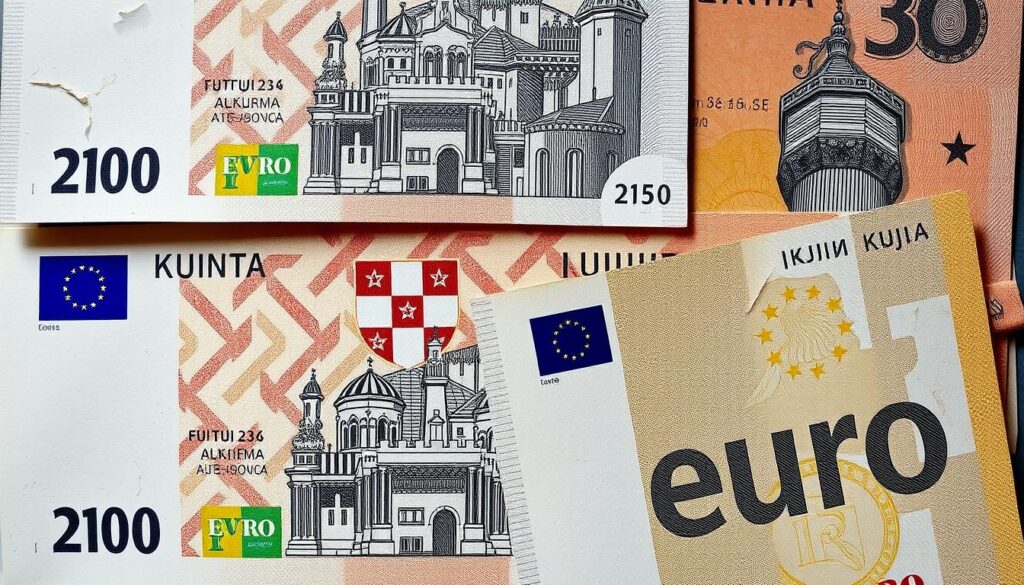
Stand Januar 2023, Kroatien hat den Euro offiziell als Währung eingeführt.. Diese Änderung markierte einen bedeutenden Wandel in seinem Währungssystem. Kroatische Kuna (HRK) wurde ersetzt durch Euro (EUR), wodurch Transaktionen für Touristen erleichtert wurden. Es trug auch dazu bei, die kroatische Wirtschaft stärker in die Europäische Union zu integrieren.
Diese Änderung ist sowohl für Reisende als auch für Unternehmen wichtig. Sie erfahren mehr über die Geschichte des Kroatische Kuna und das neue Euro Währung. Außerdem erhalten Sie Tipps zur Verwaltung Ihrer Währung. Geld in Kroatien.
Wichtigste Erkenntnisse
- Kroatien hat die Euro als offizielle Währung im Januar 2023.
- Der Kroatische Kuna wurde durch den Euro ersetzt, was den Zahlungsverkehr vereinfachte.
- Der Euro ist in Cent unterteilt und existiert in verschiedenen Banknoten- und Münzwerten.
- das Verständnis des Kroatisches Währungssystem ist für Reisende und Unternehmen von entscheidender Bedeutung.
- Durch diese Änderung wird die kroatische Wirtschaft noch stärker in die Europäische Union integriert.
Die aktuelle Währungslage in Kroatien
Der Beitritt Kroatiens zum Euro hat das Land für Handel und Tourismus attraktiver gemacht. Es ist wichtig, die wichtigsten Ereignisse und ihre Auswirkungen zu kennen.
Historische Euro-Einführung Kroatiens im Januar 2023
Kroatien führte den Euro am 1. Januar 2023 ein. Diese große Umstellung war Teil der Bemühungen, der EU beizutreten. Eurozone. Es machte Kroatiens Die Wirtschaft wird stabiler und attraktiver für Investoren..
Doppelte Zirkulationsperiode und Übergangszeitplan
Zunächst wurden sowohl der Euro als auch die kroatische Kuna verwendet. Dadurch konnten sich alle an den Euro gewöhnen. Nach dem 14. Januar 2023 wurde nur noch der Euro akzeptiert.
Auswirkungen auf Tourismus und internationalen Handel
Der Euro hat es Kroatien leichter gemacht für Touristen aus Eurozone Länder für einen Besuch. Sie müssen kein Geld umtauschen. Für Unternehmen ist die Nutzung der Euro hat Transaktionen vereinfacht und Risiken reduziert.
Es ist wichtig, diese Veränderungen zu verstehen. Das hilft, egal ob Sie eine Reise planen oder in Kroatien investieren.
Geschichte der kroatischen Währung
Die Währungsgeschichte Kroatiens ist reich an wichtigen Ereignissen. Sie begann mit der Jugoslawischer Dinar und führte den Euro ein. Diese Entwicklung zeigt, wie die Wirtschaft des Landes wuchs und sich dem europäischen Markt anschloss.
Von jugoslawischen Dinar zu kroatischen Dinar (1991-1994)
Vor der Euro-Euro-Klasse hatte Kroatien von 1994 bis 2023 die kroatische Kuna. Davor wurde die [fehlende Angabe] verwendet. Jugoslawischer Dinar während Jugoslawiens. Nach der Unabhängigkeit 1991 hatte Kroatien kurzzeitig eine eigene Währung, den 1000 Euro. Kroatischer Dinar, Es wurde aber nicht oft benutzt.
Die Kuna-Ära (1994–2022)
Die kroatische Kuna wurde 1994 eingeführt und war fast 30 Jahre lang die offizielle Währung. Sie war in 100 Lipa unterteilt. Banknoten und Münzen das die kroatische Kultur und Geschichte präsentierte.
Kroatiens Weg zur Eurozonen-Mitgliedschaft
Im Januar 2023 trat Kroatien der Eurozone, Das war ein großer Schritt in den wirtschaftlichen Beziehungen zu Europa. Es gab eine Zeit, in der sowohl die Kuna als auch der Euro akzeptiert wurden.
| Währung | Verwendeter Zeitraum | Besondere Merkmale |
|---|---|---|
| Jugoslawischer Dinar | Vor 1991 | Verwendet während der jugoslawischen Ära |
| Kroatischer Dinar | 1991-1994 | Kurz nach der Unabhängigkeit verwendet |
| Kroatische Kuna | 1994-2023 | Kroatische Kultur und Geschichte im Fokus |
| Euro | 2023–heute | Marks Integration in die Eurozone |
Das kroatische Währungssystem verstehen: Das Erbe der kroatischen Kuna
Die kroatische Kuna war mehr als nur Geld. Sie war Ausdruck der kroatischen Kultur. Auch wenn sie durch den Euro ersetzt wurde, ist ihr Einfluss auf die kroatische Geschichte noch immer spürbar.
Kuna-Banknoten und ihre kulturelle Bedeutung
Die Kuna war in 100 Lipa unterteilt. Ihre Banknoten zeigten kroatische Motive und berühmte Persönlichkeiten. Diese Banknoten waren mehr als nur Geld; sie waren ein Mittel, um das kroatische Erbe zu teilen.
Sie zeigten Bilder von kroatischen Landschaften, kulturellen Symbolen und wichtigen historischen Persönlichkeiten. Diese Bilder machte Kuna-Banknoten besonders.
Kuna-Münzen und ihre Nennwerte
Kuna-Münzen Sie waren ein wichtiger Bestandteil des kroatischen Währungssystems. Es gab sie in verschiedenen Werten, und sie wurden täglich verwendet. Jede Münze hatte ihr eigenes Design, das die kroatische Kultur und Geschichte widerspiegelte.
Die Münzen wurden von 1 Lipa auf 1 Kuna aufgewertet. Später kamen noch höhere Werte hinzu.
Sammlerwert der Kuna nach der Euro-Umstellung
Da der Euro nun die Hauptwährung ist, sind Kuna-Gegenstände bei Sammlern sehr begehrt. Sie betrachten diese Gegenstände als ein Stück kroatischer Geschichte. Ihr Wert hängt von ihrem Zustand, ihrer Seltenheit und der Nachfrage ab.
| Konfession | Material | Sammlerwert |
|---|---|---|
| 1 Kuna | Neu-Messing | $5-$10 |
| 5 Kuna | Kupfer-Nickel | $10-$20 |
| 100 Kuna | Silber | $50-$100 |
Die kroatische Kuna mag zwar nicht mehr so bekannt sein, besitzt aber nach wie vor einen hohen kulturellen und historischen Wert. Sie ist bei Sammlern und Geschichtsinteressierten gleichermaßen beliebt.
Der Euro als Kroatiens neue offizielle Währung
Kroatien hat die Euro als offizielle Währung. Dieser Schritt verdeutlicht die enge Verbindung zur europäischen Wirtschaft. Sie werden sehen, wie sich diese Veränderung auf die kroatische Wirtschaft und den Alltag auswirkt.
Kroatische Euro-Münzen: Design und nationale Symbole
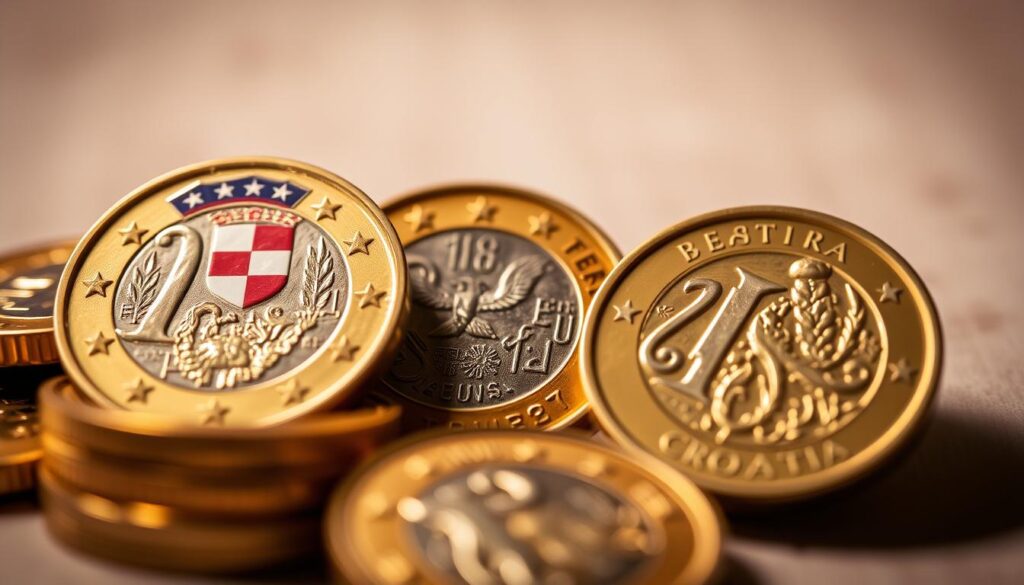
Kroatische Euro-Münzen nationale Identität mit europäischer Einheit verbinden. Kroatische Nationalbank ausgewählte Designs, die zeigen nationale Symbole und Motive. Diese Münzen sind mehr als nur Geld; sie repräsentieren Kroatiens Geschichte und Werte.
- Die Münzen weisen einzigartige kroatische Designs auf und sind daher bei Sammlern sehr beliebt.
- Jede Münze hat ihr eigenes Design, das verschiedene Aspekte der kroatischen Kultur hervorhebt.
In ganz Kroatien im Umlauf befindliche Euro-Banknoten
Euro-Banknoten werden in der Eurozone verwendet und sind in Kroatien akzeptiert. Sie haben Architekturstile der europäischen Geschichte. Dadurch sind sie in Kroatien leicht zu erkennen und zu vertrauen.
- Es sind Banknoten in den Stückelungen 5 €, 10 €, 20 €, 50 €, 100 €, 200 € und 500 € erhältlich.
- Der Banknoten sind sicher und verfügen über Sicherheitsvorkehrungen. Fälschung.
Wirtschaftliche Vorteile der Euro-Einführung für Kroatien
Der Euro-Einführung wird bringen wirtschaftliche Vorteile Für Kroatien ergeben sich Vorteile wie niedrigere Transaktionskosten, mehr Handel mit Ländern der Eurozone und eine höhere wirtschaftliche Stabilität. Dies bedeutet eine besser vernetzte und stabilere Wirtschaft für Kroatien.
- Reisen und Tourismus werden einfacher, wenn kein Währungsumtausch mehr nötig ist.
- Die ausländischen Investitionen werden mit Kroatiens Mitgliedschaft in der Eurozone.
Informationen zum Wechselkurs in Kroatien für Reisende
Planen Sie eine Reise nach Kroatien? Wissenswertes aktuelle Wechselkurse ist der Schlüssel zum Umgang mit Ihren Finanzen. Da in Kroatien der Euro gilt, ist der Geldwechsel einfacher. Dennoch ist es wichtig, den Wechselkurs im Auge zu behalten. Euro in USD Bewerten Sie das, insbesondere wenn Sie aus den Vereinigten Staaten kommen.
Aktuelle Euro-USD-Wechselkurse
Der Euro zu USD Wechselkurs ist für Reisende unerlässlich. Der Preis hat sich in letzter Zeit geändert. Sie können den Aktuelle Zinssätze und Finanznachrichten Websites oder mit Währungsumrechner-Apps.
Diese Raten im Auge behalten hilft Ihnen zu wissen, wann Tauschen Sie Ihr Geld um.
Historische Trends des Kuna-Wechselkurses
Vor der Euro-Einführung nutzte Kroatien die Kuna. Die Kenntnis des historischen Wechselkurses der Kuna zum US-Dollar kann Aufschluss über zukünftige Euro-Kurse geben. Auch wenn die Kuna nicht mehr existiert, kann ihre Geschichte uns Orientierung bieten.
Nutzung von Währungsrechner-Apps in Kroatien
Währungsumrechner-Apps Sie sind für Reisende unverzichtbar. Sie zeigen Echtzeitpreise an und helfen Ihnen so bei der Entscheidungsfindung. kluge Geldentscheidungen. Apps wie XE Währungsrechner und Google Währungsrechner sind beliebt.
Prognose von Wechselkursschwankungen
Prognose Wechselkursänderungen Dazu gehört die Analyse von Wirtschaft, Politik und Markttrends. Genaue Zinssätze lassen sich schwer vorhersagen. Doch wer sich über Finanznachrichten und Expertenmeinungen auf dem Laufenden hält, kann zukünftige Entwicklungen besser einschätzen.
Operationen des kroatischen Währungssystems und der Zentralbank
Um das zu begreifen Kroatisches Währungssystem, Wir müssen uns die Rolle der Zentralbank ansehen. Kroatische Nationalbank ist auch nach dem Beitritt Kroatiens zur Eurozone von entscheidender Bedeutung.
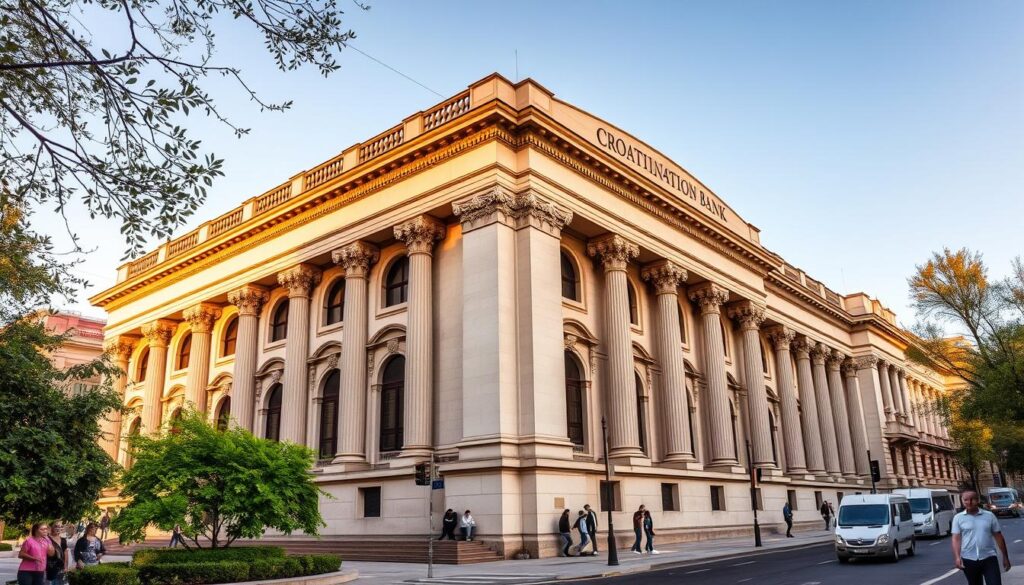
Die Rolle der kroatischen Nationalbank nach dem Euro
Der Kroatische Nationalbank ist entscheidend für Finanzstabilität in Kroatien. Obwohl Kroatien zur Eurozone gehört, arbeitet die Bank mit der Europäischen Zentralbank zusammen. Sie stellen Geldpolitik das Kroatien hilft.
Kroatiens Geldpolitik innerhalb der Eurozone
Die Zugehörigkeit zur Eurozone bedeutet, dass Kroatien den Richtlinien der Europäischen Zentralbank folgt. Geldpolitik. Dies trägt zur Stabilität und Wettbewerbsfähigkeit der kroatischen Wirtschaft in Europa bei.
Finanzstabilitätsmaßnahmen und -vorschriften
Die kroatische Nationalbank ergreift Maßnahmen zur Stabilisierung der Finanzen. Sie reguliert Banken, Beobachten Sie die Finanzmärkte und bauen Sie eine solide finanzielle Basis auf.
| Messen | Beschreibung | Auswirkungen |
|---|---|---|
| Bankenregulierung | Aufsicht über Bankgeschäfte | Gewährleistet die Stabilität der Bank |
| Finanzmarktüberwachung | Kontinuierliche Überwachung der Finanzmärkte | Verhindert Marktvolatilität |
| Finanzinfrastruktur | Wartung von Zahlungssystemen | Ermöglicht reibungslose Transaktionen |
Die Rolle der kroatischen Nationalbank kennen und Finanzstabilität Maßnahmen helfen Ihnen, das kroatische Währungssystem in der Eurozone zu verstehen.
Währungsumtauschmöglichkeiten in Kroatien
Reisende nach Kroatien Es gibt viele Möglichkeiten, Währungen umzutauschen. Sie können wählen aus Banken zu digitalen Plattformen. Die Kenntnis dieser Optionen hilft Ihnen, Ihr Geld während Ihrer Reise gut zu verwalten.
Banken vs. Wechselstuben: Vergleich der Gebühren
Banken Und Wechselstuben sind die wichtigsten Orte für den Währungsumtausch. Banken bieten unter Umständen bessere Kurse für größere Transaktionen an. Wechselstuben, Andere hingegen haben längere Öffnungszeiten und sind an mehr Orten vertreten. Prüfen Sie immer die Preise und Gebühren, bevor Sie sich entscheiden.
| Austauschmethode | Durchschnittsrate | Gebühren |
|---|---|---|
| Banken | 1 EUR = 1,10 USD | 1-2% |
| Wechselstuben | 1 EUR = 1,08 USD | 2-5% |
Flughafen- und Hoteltauschdienste
Geldwechseln an Flughäfen oder in Hotels ist zwar einfach, aber nicht die beste Option. Sie erhalten weniger. Geld und mehr Gebühren zahlen. Es ist besser, nur einen kleinen Teil für den unmittelbaren Bedarf umzutauschen und für den Rest Geldautomaten oder digitale Zahlungsmethoden zu nutzen.
“Die Nutzung von Flughafen- oder Hoteltauschdiensten sollte aufgrund der ungünstigen Kurse und hohen Gebühren auf Notfälle beschränkt bleiben.”
Nutzung von Geldautomaten in Kroatien: Gebühren und Verfügbarkeit
In Kroatien gibt es überall Geldautomaten, sodass man problemlos an die Landeswährung kommt. Achten Sie aber auf Gebühren Ihrer Bank und des Geldautomatenbetreibers.
Digitale Zahlungs- und Austauschplattformen
Digitale Zahlungsplattformen werden immer beliebter. Sie bieten gute Konditionen und niedrigere Gebühren als herkömmliche Methoden. Außerdem können Sie Ihre Finanzen online oder über Apps verwalten.
Zusammenfassend lässt sich sagen, dass es in Kroatien viele Möglichkeiten zum Währungsumtausch gibt. Sie können die für Sie beste Option wählen, sei es Bequemlichkeit, ein guter Wechselkurs oder niedrige Gebühren.
Das Bankensystem in Kroatien für amerikanische Besucher
Als Amerikaner, der Kroatien besucht, erwartet Sie ein gut ausgebautes Bankensystem, das Ihre finanziellen Bedürfnisse erfüllt. Kroatische Banken bieten Dienstleistungen an, die Ihnen die Verwaltung Ihrer Finanzen während Ihrer Reise erleichtern.
Große Banken, die in ganz Kroatien tätig sind
Kroatien hat mehrere große Banken. Sie bieten Dienstleistungen an wie: Devisenhandel und Geldautomatendienste. Zu den bekannten Banken gehören die Zagrebačka banka und die Privredna banka Zagreb, und Erste & Steiermärkische Bank.
| Name der Bank | Dienstleistungen für Touristen | Englische Unterstützung |
|---|---|---|
| Zagrebačka banka | Geldwechsel, Geldautomatendienste | Ja |
| Privredna banka Zagreb | Währungsumtausch, Kreditkarten | Ja |
| Erste & Steiermärkische Bank | Geldautomatendienste, Online-Banking | Ja |
Öffnungszeiten und Serviceleistungen der Banken für Touristen
Öffnungszeiten der Bank In Kroatien sind die Öffnungszeiten wochentags von 8:00 bis 19:00 Uhr und samstags von 8:00 bis 13:00 Uhr. Banken in Touristengebieten haben oft längere Öffnungszeiten. Die meisten Banken sprechen Englisch, was die Einreise für amerikanische Besucher erleichtert.
Nutzung von US-Kreditkarten und Banking-Apps
UNS Kreditkarten werden weitgehend akzeptiert in Kroatien, insbesondere an Touristenorten. Sie können auch Ihre Banking-Apps für Bargeldabhebungen oder -zahlungen.
Internationale Bankpartnerschaften
Einige kroatische Banken kooperieren mit internationalen Banken. Dies kann Transaktionen vereinfachen und Gebühren reduzieren. Es empfiehlt sich, dies vorab bei Ihrer Bank zu erfragen. Um sich über eventuelle Gebühren zu informieren, sollten Sie sich vor Reiseantritt informieren. oder Einschränkungen.
Praktische Geldtipps für amerikanische Reisende nach Kroatien
Bei der Vorbereitung Ihrer Reise nach Kroatien ist es wichtig, sich mit der lokalen Währung und den Zahlungsgewohnheiten vertraut zu machen. Kroatien gehört nun zur Eurozone, was für Reisende einige Neuerungen mit sich bringt.
Bargeld vs. Karte: Zahlungspräferenzen in verschiedenen Umgebungen
In Kroatien werden sowohl Bargeld als auch Karten akzeptiert, dies hängt jedoch vom jeweiligen Ort ab. Große Einrichtungen wie Restaurants, Hotels und Geschäfte akzeptieren gängige Kreditkarten wie American Express, Visa und Mastercard. Kleinere Läden, lokale Märkte und ländliche Gebiete bevorzugen hingegen oft Bargeld.
Trinkgeldgewohnheiten und -erwartungen in Kroatien
In Kroatien ist Trinkgeld üblicher als in den USA, aber dennoch gern gesehen. Im Restaurant sind 101 TP3T ein höflicher Richtwert. Für Reiseleiter sind 5–10 Euro pro Tag üblich, je nach Servicequalität.
Vermeidung von Betrug und Abzocke beim Währungsumtausch
Um auf der sicheren Seite zu sein, tauschen Sie Geld in Banken oder nutzen Sie Geldautomaten. Achten Sie auf Wechselstuben mit zu guten, um wahr zu sein-Kursen. Sie könnten hohe Gebühren verlangen oder ungünstige Konditionen anbieten. Überprüfen Sie daher immer die Gebühren und Konditionen, bevor Sie etwas unternehmen.
Finanzielle Notfalldienstleistungen für Touristen
In Notfällen ist der Zugang zu finanzieller Hilfe entscheidend. Viele kroatische Banken bieten Dienstleistungen für Touristen an, beispielsweise Hilfe bei Verlust oder Diebstahl von Karten. Informieren Sie außerdem Ihre Bank. Bank, die Sie meiden möchten Probleme.
| Service | Durchschnittliche Kosten/Trinkgeld | Anmerkungen |
|---|---|---|
| Restaurantservice | 10% | Höflichkeit für guten Service |
| Reiseleiter | 5-10 Euro/Tag | Standard für guten Service |
| Geldautomaten | Variable Gebühren | Erkundigen Sie sich bei Ihrer Bank. |
Mit diesen Spartipps wird Ihre Reise nach Kroatien noch schöner. Genießen Sie Ihre Zeit dort!
Regionale Währungspraktiken in ganz Kroatien
Reise durch Kroatien Das zeigt Ihnen, wie unterschiedlich die Währungspraktiken sein können. Diese Unterschiede ergeben sich aus dem Tourismus, den lokalen Geschäftspraktiken und Ihrem jeweiligen Standort.
Währungsverwendung in Zagreb im Vergleich zu touristischen Küstenregionen
In Zagreb, Sie werden sowohl alte als auch neue Zahlungsmethoden sehen. Bargeld ist für kleinere Einkäufe immer noch am besten geeignet. Aber, Küsten-Touristengebiete Städte wie Dubrovnik und Split akzeptieren mehr Zahlungsarten. Das liegt daran, dass sie viele Besucher aus dem Ausland anziehen.
Ländliches Kroatien und Währungsakzeptanz
In ländliche Gebiete, Bargeld ist die beste Wahl. Kleine Läden und Märkte akzeptieren oft nur Bargeld. Daher ist es ratsam, die Landeswährung mitzuführen.
Grenzregionen und Flexibilität bei mehreren Währungen
Grenzregionen sind gegenüber verschiedenen Währungen aufgeschlossener. Beispielsweise akzeptieren Orte in der Nähe von Slowenien häufiger Euro.
Inselökonomien und Zahlungssysteme
Inseln wie Hvar Und Korčula Wir haben gelernt, viele Zahlungsarten zu akzeptieren. Bargeld dabei zu haben ist aber trotzdem gut. Das gilt besonders für kleinere Läden oder außerhalb der Stoßzeiten.
Die Kenntnis dieser regionalen Unterschiede macht das Reisen In Kroatien ist es einfacher. Es trägt zu einer besseren Reise bei.
Abschluss
Bei der Planung Ihrer Reise nach Kroatien, Kenntnisse über die Währung ist entscheidend. Die Einführung des Euro hat Geldangelegenheiten für alle vereinfacht. Man kann jetzt problemlos Orte wie Zagreb, Genießen Sie die Inseln oder besuchen Sie die Nationalparks.
Mit dem Euro müssen Sie kein Geld umtauschen, was Ihre Ausgaben vereinfacht. Sie können fast überall mit Karte bezahlen. Auch Geldautomaten sind leicht zu finden. Es ist sehr hilfreich, die Wechselkurse zu kennen und zu Beginn Ihrer Reise etwas Bargeld in der Landeswährung dabei zu haben.
Etwas über die Geschichte und das Währungssystem Kroatiens zu lernen und sich ein wenig zu informieren Geld Mit ein paar Tipps wird Ihre Reise noch schöner. Egal, ob Sie lokale Spezialitäten probieren, kulturelle Sehenswürdigkeiten besichtigen oder die Natur genießen möchten – gut vorbereitet wird Ihr Besuch unvergesslich.
Häufig gestellte Fragen
Was ist die offizielle Währung Kroatiens?
Der Offizielle Die Währung Kroatiens ist der Euro.. Sie wurde im Januar 2023 eingeführt und ersetzte die kroatische Kuna.
Was war die kroatische Kuna und warum wurde sie ersetzt?
Die kroatische Kuna war von 1994 bis 2022 die Währung Kroatiens. Sie wurde durch den Euro ersetzt. Dieser Schritt erfolgte im Zuge des Beitritts Kroatiens zur Europäischen Union und zur Eurozone.
Wie wirkte sich die Umstellung von der Kuna auf den Euro auf den Tourismus in Kroatien aus?
Der Euro erleichterte Touristen das Reisen. Der Aufwand für den Geldwechsel wurde deutlich reduziert. Dadurch wurde Kroatien für europäische Besucher attraktiver, was den Tourismus ankurbelte.
Sind Kuna-Banknoten und -Münzen noch gültig?
Nein, die Kuna wird nicht mehr als Geld verwendet., Kuna Banknoten und Münzen Sie sind heute Sammlerstücke. Sie besitzen Wert als ein Stück kroatischer Geschichte.
Was sind die Besonderheiten der kroatischen Euro-Münzen?
Kroatische Euro-Münzen haben spezielle Designs und Symbole. Euro-Banknoten, Sie sind jedoch in der gesamten Eurozone gleich.
Wie kann ich mein Geld in Euro umtauschen, wenn ich nach Kroatien reise?
Sie können Ihr Geld in Banken, Wechselstuben oder an Geldautomaten umtauschen. Digitale Zahlung Plattformen bieten Ihnen außerdem eine bequeme Möglichkeit, Ihr Geld zu verwalten.
Werden US-Kreditkarten in Kroatien weitgehend akzeptiert?
Ja, US-Kreditkarten werden in Kroatien weitgehend akzeptiert. Dies erleichtert amerikanischen Touristen den Umgang mit ihren Finanzen.
Welche praktischen Spartipps gibt es für Reisende nach Kroatien?
Es ist wichtig zu wissen, wann man bar oder mit Karte zahlt. Sich dessen bewusst sein Trinkgeld für Zollbeamte Und Betrug vermeiden kann Ihre Reise erheblich bereichern.
Wie funktioniert die kroatische Nationalbank innerhalb der Eurozone?
Die Kroatische Nationalbank arbeitet mit der Europäischen Zentralbank zusammen. Sie gewährleisten Finanzstabilität und Maßnahmen umsetzen, die Kroatien zugutekommen.
Gibt es in Kroatien regionale Unterschiede bei den Währungspraktiken?
Ja, die Zahlungsmethoden variieren in Kroatien. Von Zagreb über die Küstenregionen bis hin zu den ländlichen Gebieten – wenn Sie diese Unterschiede kennen, können Sie sich besser zurechtfinden.
Kann ich in Kroatien weiterhin Währungsumrechner-Apps zur Verwaltung meiner Finanzen nutzen?
Ja, Währungsumrechner-Apps sind nach wie vor nützlich. Sie helfen Ihnen, kluge finanzielle Entscheidungen zu treffen, insbesondere beim Beobachten der... Euro-USD-Kurs.

Adam G
Dieser Beitrag wurde von Adam G. verfasst, einem erfahrenen Finanzjournalisten mit einer Leidenschaft für die Erklärung von Währungskursen und Marktbewegungen.
 English
 简体中文
简体中文 Español
 Deutsch
 Français
 العربية
 Polski