
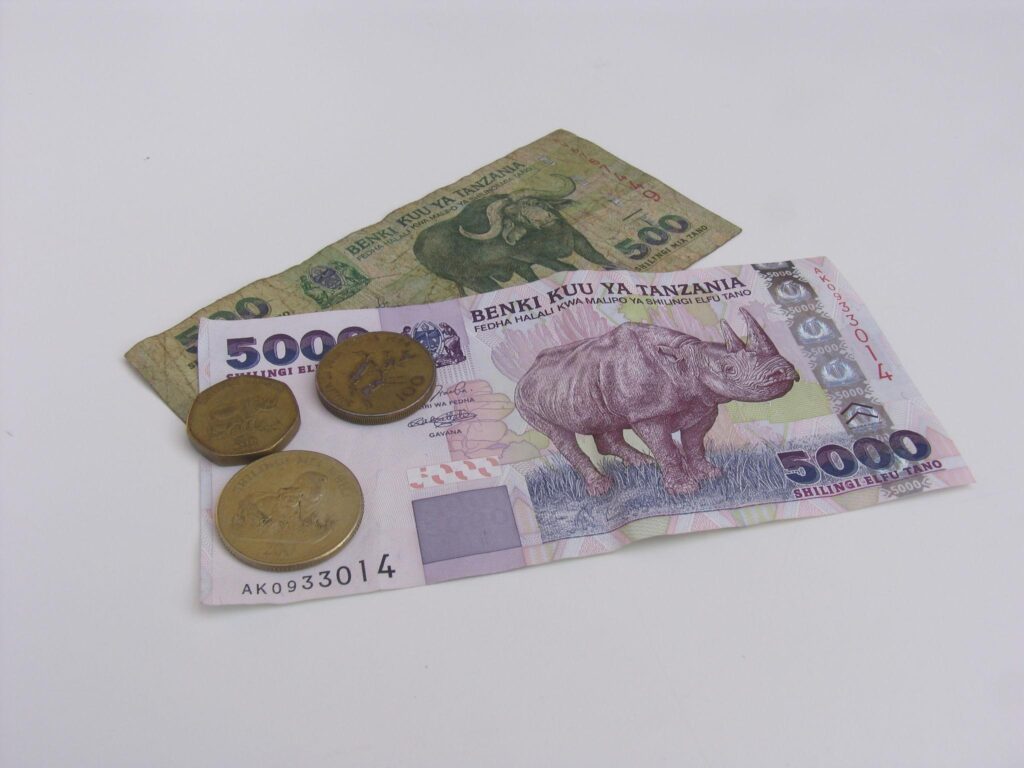
Did you know carrying a million units of a certain legal tender might only buy a fancy dinner? When you travel in East Africa, you’ll deal with lots of bills that look like a fortune.
Understanding the tanzanian money is key for any traveler going to the plains. Knowing the tanzanian shilling helps you pay right prices at markets or lodges.
This guide gives you a clear view of the tanzania currency and useful tips for your trip. We’ll cover managing your money and what to expect in the region’s wild places.
Knowing your finances lets you enjoy the wildlife’s beauty without worrying about money. You’ll learn the best ways to get cash and avoid money problems during your stay.
Key Takeaways
- The shilling is the main money for daily expenses.
- Carry small bills for tips and rural market buys.
- High-end hotels and tour operators often take major credit cards.
- Exchange rates change often, so check them daily.
- Keep your cash safe in a travel belt in crowded spots.
- Always tell your bank before using cards abroad.
1. Understanding the Tanzanian Shilling (TZS)
Exploring Tanzania’s financial scene means learning about the Tanzanian Shilling.
What Is the Official Currency of Tanzania?
The Tanzanian Shilling is Tanzania’s official currency. The Bank of Tanzania, the central bank, issues and controls it. Knowing about the Tanzanian Shilling is key for anyone handling money in Tanzania.
The Currency Code and Symbol
The Tanzanian Shilling’s code is TZS, and its symbol is TSh. These are important for telling the Tanzanian Shilling apart from other currencies in financial dealings.
Brief History of the Tanzanian Shilling
The Tanzanian Shilling started in 1966, taking over from the East African Shilling. Since then, the currency has seen changes in its look and security.
| Year | Event | Description |
|---|---|---|
| 1966 | Introduction | The Tanzanian Shilling was introduced, replacing the East African Shilling. |
| 1980s | Currency Revaluation | The Tanzanian Shilling underwent revaluation to stabilize the economy. |
| Recent Years | Design Updates | The currency has seen updates in its design and security features to combat counterfeiting. |
2. Current Exchange Rate Tanzania: USD to TZS
Knowing the current exchange rate between USD and TZS is key for anyone planning a trip to Tanzania or involved in Tanzanian trade. The rate between the US dollar and the Tanzanian shilling changes often. This is due to many economic factors.
Today’s Exchange Rate
As of the latest updates, 1 USD is about 2,578.5030 TZS. You can find the current rate on reliable sites like Xe and Wise. These tools give you the latest info.
It’s important to use trusted services for currency conversion. Xe and Wise are reliable sources for real-time rates. They help you keep up with currency market changes.
Historical Exchange Rate Trends
Looking at the USD to TZS exchange rate history gives valuable insights. The Tanzanian shilling’s value against the US dollar has changed over time. This is due to factors like inflation, GDP growth, and monetary policy changes.
- The exchange rate has generally trended downwards. This shows the TZS has lost value against the USD over the years.
- There have been times of stability, followed by big changes. These changes happen in response to economic news and global trends.
Factors Affecting the Exchange Rate
Many factors influence the USD to TZS exchange rate. Some key ones include:
- Economic indicators: Things like inflation, GDP growth, and employment rates in Tanzania affect the TZS value.
- Monetary policy: The Bank of Tanzania’s decisions on interest rates and money supply also impact the currency’s value.
- Global market trends: Changes in global commodity prices, especially for Tanzania’s main exports like gold and coffee, can affect the exchange rate.
- Political stability: Political events and stability in Tanzania and globally can also impact investor confidence and, consequently, the exchange rate.
3. Tanzanian Banknotes: Designs and Denominations
Tanzanian banknotes are more than just money. They show off the country’s culture and history. Each note has its own design, highlighting Tanzania’s beauty, famous people, and important places.
Current Banknote Series in Circulation
The Bank of Tanzania prints banknotes in different values. These include 500, 1,000, 2,000, 5,000, and 10,000 Tanzanian shillings. This makes it easier for people to buy and sell things all over the country.
Key Features of Current Banknotes:
- Each note has its own color to avoid mistakes.
- They feature important Tanzanians and famous spots.
- They also have special security features to stop fake money.
Security Features You Should Know
There are special features on Tanzanian banknotes to make sure they’re real. These include:
- Watermark: A hidden image of the Tanzanian coat of arms or a famous person in the paper.
- Security Thread: A thin strip that shines under UV light.
- Microprinting: Tiny text that’s hard to copy with regular printing.
Notable Figures and Landmarks on Banknotes
Tanzanian banknotes celebrate important people and places. They give a peek into the country’s past and culture. For instance:
- The 1,000 shilling note has Julius Nyerere, Tanzania’s first president.
- The 10,000 shilling note shows the Uhuru Torch monument, a sign of freedom.
These designs make the banknotes beautiful. They also show Tanzania’s rich history and culture.
4. Coins in Tanzania: What You Need to Know
Traveling to or doing business in Tanzania? Knowing about Tanzanian coins is key. Coins are a big part of the country’s money system. They’re used every day in transactions all over.
Available Coin Denominations
Tanzanian coins come in different values. You’ll see 50, 100, 200, and 500 Tanzanian shillings coins often. These coins are everywhere and play a big role in the local economy.
| Denomination (TZS) | Common Usage |
|---|---|
| 50 | Small purchases, like buying snacks or local candies. |
| 100 | Used for minor transactions, such as buying a newspaper or a small item from a local shop. |
| 200 | Often used for everyday items like a bottle of water or a simple meal at a local eatery. |
| 500 | Used for slightly larger purchases or as change in transactions. |
Usage and Circulation of Tanzanian Coins
Coins are widely accepted in Tanzania for small transactions. They’re great for buying everyday items from markets or street vendors. The Tanzanian coins are made to last and are easy to spot, making them popular.
As stated by the Bank of Tanzania, coins are key to the country’s money system. They make exchanging money easy for locals.
“The use of coins in Tanzania enhances the efficiency of transactions, especially for small purchases.”
When you visit Tanzania, you’ll see coins used a lot in daily business. Getting to know the different coin values will help make your shopping easier.
5. How to Use a Tanzania Currency Converter
To make the most of your money in Tanzania, learning to use a currency converter is key. Whether you’re here for work or fun, knowing the exchange rates and how to convert your money to Tanzanian Shilling (TZS) is essential.
Thanks to digital tools, converting money is now easier and more accessible. You can find reliable online currency converters that give you accurate and up-to-date exchange rates.
Best Online Currency Converter Tools
For converting currency, you need a tool that’s accurate and up-to-date. Xe and Wise are two top choices. They’re known for their accuracy and easy-to-use interfaces.
Xe is a favorite among travelers and businesses. It has a detailed currency converter for many currencies, including Tanzanian Shilling. Xe also has historical data and exchange rate charts for tracking changes.
Wise is known for being transparent and having low fees. It has a simple currency converter that lets you convert at the real exchange rate, with little markup.
Converting USD to Tanzanian Shilling
Many people convert USD to TZS. To do this well, use a reliable currency converter that shows the current exchange rate. Both Xe and Wise can help you convert USD to TZS quickly and accurately.
When converting USD to TZS, remember that exchange rates change often. It’s smart to check the current rate before you make any transactions.
Understanding Real-Time vs. Interbank Rates
When using a Tanzania currency converter, you might see “real-time rates” and “interbank rates.” Knowing the difference is key for getting a good deal on currency conversions.
Real-time rates are the current market exchange rate. These rates change often because of market shifts.
Interbank rates are the rates banks and financial institutions use to exchange currencies. These rates are more stable and are often seen as the standard for currency exchange.
Understanding real-time and interbank rates helps you make better choices when converting your currency to TZS.
6. Where to Exchange Tanzanian Money
Knowing where to exchange your money in Tanzania can save you time and money. When you arrive, you have several options to exchange your foreign currency for Tanzanian Shilling (TZS).
Currency Exchange at Tanzanian Banks
Banks in Tanzania are a reliable place to exchange currency. Major banks like National Bank of Commerce, CRDB Bank, and Stanbic Bank offer good rates. It’s wise to compare rates to find the best deal.
Banking hours are from 9 AM to 4 PM on weekdays. Some banks work on Saturdays too. Be ready for long queues, especially during busy travel times.
Authorized Forex Bureaus
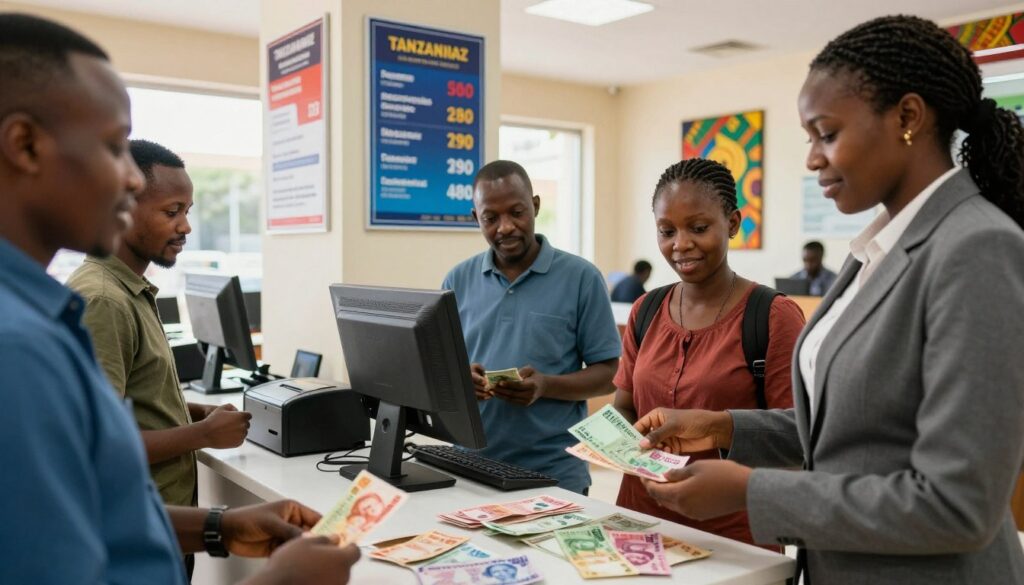
Forex bureaus are also a good choice for exchanging currency. They are common in tourist spots and big cities like Dar es Salaam and Arusha. They often have better rates and quicker service than banks.
But, only use authorized forex bureaus to avoid scams. Look for the Bank of Tanzania license number displayed clearly.
Airport Exchange Services
At Julius Nyerere International Airport, you can exchange currency at the airport’s forex bureaus. While it’s convenient, the rates might not be as good as in the city.
It’s smart to exchange only what you need first. Then, look for better rates in the city.
Hotels and Alternative Exchange Options
Many hotels in Tanzania will exchange currency for guests. But, the rates might not be as good as banks or forex bureaus. This is handy if you’re staying at a hotel and don’t want to go out.
Also, some money transfer services and ATMs let you withdraw Tanzanian Shillings with your card. Just watch out for the fees.
| Exchange Option | Exchange Rates | Convenience | Security |
|---|---|---|---|
| Banks | Competitive | Moderate | High |
| Forex Bureaus | Competitive | High | High (if authorized) |
| Airport Services | Less Competitive | High | High |
| Hotels | Less Competitive | High | High |
“When exchanging currency, it’s not just about finding the best rate; it’s also about ensuring you’re doing so securely and with minimal fees.”
7. The Role of the Tanzanian Central Bank
The Tanzanian Central Bank is key in shaping the country’s economy. It does this through its monetary policies and currency regulation. The Bank of Tanzania keeps the economy stable, regulates the financial sector, and watches over the Tanzanian shilling (TZS).
The bank’s main goal is to keep prices stable. This is vital for a healthy economy. It uses different tools to manage inflation, keep the financial system stable, and ensure its health.
Bank of Tanzania’s Monetary Policy
The Bank of Tanzania’s monetary policy aims to control money supply and interest rates. It uses tools like setting interest rates and regulating bank reserves. This helps maintain economic stability.
Key components of the monetary policy include:
- Setting the discount rate to influence interest rates in the economy
- Regulating the reserve requirements for commercial banks to control liquidity
- Conducting open market operations to manage the money supply
Currency Regulation and Oversight
The Bank of Tanzania also oversees the Tanzanian currency. It manages currency supply, keeps the currency’s integrity, and fights counterfeiting.
Key aspects of currency regulation include:
- Issuing new currency and withdrawing old currency from circulation
- Maintaining the security features of Tanzanian banknotes and coins
- Monitoring and controlling currency exchange to prevent illegal activities
Recent Policy Changes and Updates
The Bank of Tanzania updates its policies to meet changing economic needs. Recent changes aim to boost financial stability and improve the financial system’s efficiency.
Some of the recent updates include:
- Adjustments to the monetary policy framework to better manage inflation
- Enhancements to the regulatory framework for banks and financial institutions
- Initiatives to improve financial inclusion and access to financial services
8. Tanzania Economy and Currency Value
The Tanzanian economy is key to the value of its currency, the Tanzanian Shilling (TZS). Exploring the economy shows many factors affect the currency’s worth.
Economic Indicators Affecting Currency Value
Indicators like inflation rates, GDP growth, and trade balances greatly influence the Tanzanian Shilling’s value. Inflation rates, for example, can lower the currency’s value by reducing its buying power.
Other important indicators include the country’s foreign exchange reserves and interest rates. These can sway the currency’s value by affecting investor confidence and capital flow.
Inflation Rates and Purchasing Power
Inflation is a major factor in the Tanzanian Shilling’s purchasing power. Rising inflation means money’s value drops, reducing what you can buy. High inflation can make the currency weaker.
The Bank of Tanzania watches inflation closely. It uses monetary policies to keep prices stable.
GDP Growth and Currency Stability
A growing economy, shown by GDP growth, can boost the Tanzanian Shilling. It attracts foreign investment and improves trade balances. But, a slow GDP growth can cause currency instability.
Tanzania’s GDP growth comes from sectors like agriculture, mining, and tourism. A stable, growing economy is vital for a strong currency.
9. Tanzania Foreign Exchange Market Overview
Tanzania’s foreign exchange market is key to its economy. It’s shaped by trade balances, inflation, and foreign investment.
How the Tanzanian Forex Market Operates
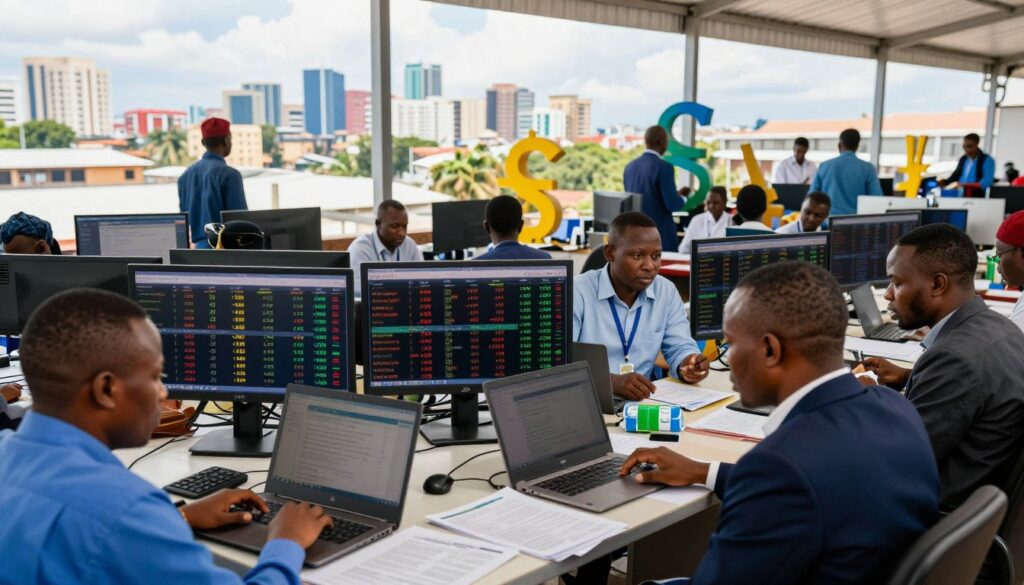
The Bank of Tanzania oversees the Tanzanian Forex market. It allows the exchange of the Tanzanian Shilling (TZS) for other currencies, like the US Dollar (USD).
Market Hours and Trading: The Forex market in Tanzania is open weekdays. Banks and Forex bureaus handle most trading.
Major Trading Pairs Involving TZS
The USD/TZS pair is the most traded. It’s used for international deals and reflects the US Dollar’s strength against the Tanzanian Shilling.
| Currency Pair | Description | Trading Volume |
|---|---|---|
| USD/TZS | US Dollar to Tanzanian Shilling | High |
| EUR/TZS | Euro to Tanzanian Shilling | Moderate |
| GBP/TZS | Pound Sterling to Tanzanian Shilling | Low |
Market Participants and Liquidity Levels
Commercial banks, Forex bureaus, and traders are involved. Liquidity is higher during busy times.
10. Tanzanian Forex Trading for International Investors
The Tanzanian forex market is a unique place for international investors. It’s key to know the opportunities, rules, and risks before diving in.
Opportunities in Tanzania Forex Trading
Tanzanian forex trading has many chances for international investors. The country’s economy is growing fast, and trade is increasing. This makes the market lively for trading the Tanzanian Shilling (TZS) against big currencies like the USD.
Key opportunities include:
- Diversifying your investment portfolio
- High returns because of market ups and downs
- More demand for Tanzanian goods and services
To make the most of these chances, keep up with market trends and economic signs that affect the TZS exchange rate.
Regulations for Foreign Traders
Foreign traders must follow the rules set by the Bank of Tanzania and other bodies. Knowing these rules is crucial for legal and smooth trading.
Some key rules include:
- Registering with the Bank of Tanzania
- Following anti-money laundering (AML) and know-your-customer (KYC) rules
- Sticking to trading limits and reporting rules
It’s wise to talk to local experts or lawyers to make sure you’re following all Tanzanian forex rules.
Risks and Considerations
While Tanzanian forex trading has its perks, it also has downsides. Market ups and downs, economic instability, and rule changes can affect your money.
Key risks to consider:
- Changes in exchange rates because of economic issues
- Risks from politics and rules
- Not enough money in the Tanzanian forex market
To lessen these risks, do deep research, spread out your investments, and keep up with Tanzania’s economy and politics.
11. Practical Tips for Handling Tanzania Currency
To navigate Tanzania with ease, familiarize yourself with the Tanzanian Shilling.
Best Practices for Tourists and Travelers
When traveling to Tanzania, it’s essential to have some local currency, Tanzanian Shillings (TZS), for initial expenses. This includes transportation from the airport and tips.
You can exchange your money upon arrival at the airport or withdraw cash from ATMs. It’s advisable to have some USD or EUR with you for exchange. These currencies are widely accepted.
How to Identify Counterfeit Money
To avoid counterfeit Tanzanian Shillings, check for security features. Look for watermarks, holograms, and security threads.
Ensure that the banknotes have the correct texture and color. If a note feels suspiciously smooth or the color seems off, it might be counterfeit.
ATM Withdrawals and Card Payments in Tanzania
ATMs are widely available in major cities and tourist areas. You can use your debit or credit card to withdraw Tanzanian Shillings.
Be aware that some ATMs may charge a withdrawal fee. Your bank may also charge a foreign transaction fee.
Currency Restrictions When Traveling
There are no major restrictions on bringing foreign currency into Tanzania. However, you must declare amounts exceeding $10,000 USD.
When leaving Tanzania, you can reconvert unused Tanzanian Shillings at airports or banks. It’s advisable not to exchange too much money to avoid this issue.
| Currency | Exchange Rate (approx.) | Acceptance |
|---|---|---|
| USD | 1 USD = 2,300 TZS | Widely accepted in tourist areas |
| EUR | 1 EUR = 2,600 TZS | Accepted in major cities and tourist areas |
| TZS | – | Local currency, used everywhere |
12. Conclusion
Now you know more about the Tanzanian shilling. This knowledge helps you deal with money when you visit Tanzania.
The Tanzanian economy affects its currency’s value. Things like inflation and GDP growth play a big role.
When you exchange money, use places like forex bureaus or banks. They offer the best rates for Tanzanian currency.
Knowing the current exchange rate and the security of Tanzanian banknotes improves your experience. It makes managing money easier.
Understanding the Tanzanian economy and its currency helps you make better choices while traveling. It’s all about being informed.
FAQ
What Is the Official Currency of Tanzania?
In East Africa, the Tanzanian Shilling is the legal tender. It’s used for everything from local purchases to safari bookings. While some places accept foreign currencies, the Shilling is key for daily life.
The Currency Code and Symbol
The Tanzanian Shilling’s code is TZS. You’ll see the TSh symbol in local shops and on price tags. Knowing these helps you quickly understand prices and financial statements.
Brief History of the Tanzanian Shilling
The Shilling replaced the East African Shilling in 1966. Since then, it has evolved with the Tanzanian economy. It symbolizes national sovereignty under the central bank’s management.
Today’s Exchange Rate
The Tanzanian Shilling’s exchange rate changes daily. It shows how many shillings one U.S. Dollar buys. Keeping up with these rates is crucial for budgeting or managing investments.
Historical Exchange Rate Trends
The Shilling’s value has seen ups and downs against major currencies. Reviewing history helps understand the currency’s stability. This knowledge aids in making informed exchange decisions.
Factors Affecting the Exchange Rate
Several factors influence the Tanzanian Shilling’s value. These include trade balance, foreign investment, and global commodity prices. Tanzania’s gold and agricultural exports also impact the Shilling’s strength.
Current Banknote Series in Circulation
Tanzania has banknotes in 500, 1,000, 2,000, 5,000, and 10,000 shilling denominations. Each note has unique colors and sizes for easy identification.
Security Features You Should Know
Look for motion thread, watermarks, and color-shifting ink to spot genuine banknotes. Genuine notes feel crisp and have intricate designs.
Notable Figures and Landmarks on Banknotes
Banknotes celebrate Tanzania’s heritage. You’ll see portraits of leaders and landmarks like the House of Wonders in Zanzibar.
Available Coin Denominations
Tanzania has coins for smaller transactions in 50, 100, 200, and 500 shilling denominations. The 500 shilling coin is becoming more common.
Usage and Circulation of Tanzanian Coins
Coins are useful for tipping, local transport, and small purchases. They are durable and essential for everyday transactions.
Best Online Currency Converter Tools
Use reliable tools like XE or OANDA for accurate exchange rates. The Bank of Tanzania’s website also provides real-time updates.
Converting USD to Tanzanian Shilling
Input the USD amount you want to exchange to see the Tanzanian Shilling equivalent. This helps estimate your purchasing power.
Understanding Real-Time vs. Interbank Rates
Keep in mind that currency converters show interbank rates. The rate you get as a consumer will be slightly lower due to fees.
Currency Exchange at Tanzanian Banks
Commercial banks like CRDB Bank and NMB Bank offer safe and competitive exchange rates. They provide a secure environment for transactions.
Authorized Forex Bureaus
Authorized forex bureaus in major cities offer faster service and sometimes better rates. Ensure they are officially licensed.
Airport Exchange Services
Exchange counters at Julius Nyerere International Airport or Abeid Amani Karume International Airport are convenient. However, they may have higher commissions than downtown bureaus.
Hotels and Alternative Exchange Options
High-end hotels like the Serena Hotel offer exchange services. But their rates are often less favorable than those at dedicated exchange offices.
Bank of Tanzania’s Monetary Policy
The Bank of Tanzania manages the Shilling’s value and ensures its integrity. It sets monetary policy to foster economic growth.
Currency Regulation and Oversight
The central bank strictly regulates forex activities. This ensures the financial system’s transparency and adherence to international standards.
Recent Policy Changes and Updates
Stay informed about Bank of Tanzania’s directives. New regulations can impact the availability and cost of Tanzanian money.
Economic Indicators Affecting Currency Value
The Tanzanian Shilling’s value is tied to the economy’s health. Indicators like trade balance, foreign investment, and tourism sector performance are crucial.
Inflation Rates and Purchasing Power
The Bank of Tanzania aims to keep inflation low. Rising inflation reduces your purchasing power, making it essential to monitor these shifts.
GDP Growth and Currency Stability
Strong GDP growth leads to currency stability. Tanzania’s investments in infrastructure and energy contribute to economic stability.
How the Tanzanian Forex Market Operates
The Tanzanian forex market trades the Shilling against other currencies. It involves the central bank, commercial banks, and licensed bureaus.
Major Trading Pairs Involving TZS
The USD/TZS pair is the most traded. However, there’s also significant activity in EUR/TZS and GBP/TZS, especially in tourism and international aid.
Market Participants and Liquidity Levels
Participants include large corporations, government agencies, and international investors. While liquidity is lower than in major markets, it’s sufficient for most needs.
Opportunities in Tanzania Forex Trading
International investors can benefit from Tanzania’s volatile and growing markets. They often compare the Shilling’s value to regional neighbors.
Regulations for Foreign Traders
The Bank of Tanzania and CMSA oversee forex trading. International investors must comply with specific regulations regarding fund movement.
Risks and Considerations
Trading Tanzanian money involves risks like exchange rate volatility and political shifts. Conduct thorough research and consult local experts before engaging in large transactions.
Best Practices for Tourists and Travelers
Carry a mix of Tanzanian Shilling cash and a debit/credit card. Use newer U.S. Dollar bills (post-2006) for better exchange rates.
How to Identify Counterfeit Money
Inspect banknotes for the silver security thread and watermark. If a note feels smooth or blurry, it might be counterfeit.
ATM Withdrawals and Card Payments in Tanzania
ATMs are common in cities, operated by banks like Absa Bank Tanzania. Cards are accepted in major hotels and malls, but you’ll need cash for smaller places and rural areas.
Currency Restrictions When Traveling
Be aware of laws on exporting Tanzanian money. There are no limits on foreign currency, but specific rules apply to Tanzanian Shilling exports. Always check current customs declarations to avoid border issues.
What is the official tanzania currency and its code?
The official currency is the Tanzanian Shilling. Its code is TZS, and it’s often represented by the TSh symbol.
Where is the best place to perform a tanzanian money exchange?
For secure transactions and competitive rates, visit authorized forex bureaus or established banks like CRDB Bank or NMB Bank.
How can I check the latest exchange rate tanzania has to offer?
Use a reliable currency converter like XE or check the Bank of Tanzania’s website for the current exchange rate.
What denominations are available for tanzanian banknotes?
Banknotes are available in 500, 1,000, 2,000, 5,000, and 10,000 shilling denominations. Each has unique security features.
Are tanzanian coins still used for daily transactions?
Yes, coins are used for small purchases. The most common denominations are 50, 100, 200, and 500 shillings.
What role does the tanzanian central bank play in the tanzania economy?
The Bank of Tanzania manages the money supply, sets monetary policy, and regulates forex to ensure economic stability.
Can I use a tanzanian currency converter to see the interbank rate?
Yes, most converters show the interbank rate. However, the rate you receive as a consumer will be slightly lower due to fees.
Is tanzanian forex trading open to international investors?
Yes, international investors can participate in Tanzanian forex trading, provided they follow local regulations.
What affects the tanzanian currency value on the global market?
The Tanzanian Shilling’s value is influenced by the economy, including inflation, GDP growth, and global market prices for Tanzanian exports.
How can I avoid counterfeit currency in tanzania?
Always check for the giraffe watermark and 3D security thread in banknotes. Use reputable sources for exchange to avoid counterfeit.

Adam G
This post was created by Adam G, a seasoned financial writer with a passion for explaining currency exchange and market movements
 English
 简体中文
简体中文 Español
 Deutsch
 Français
 العربية
 Polski