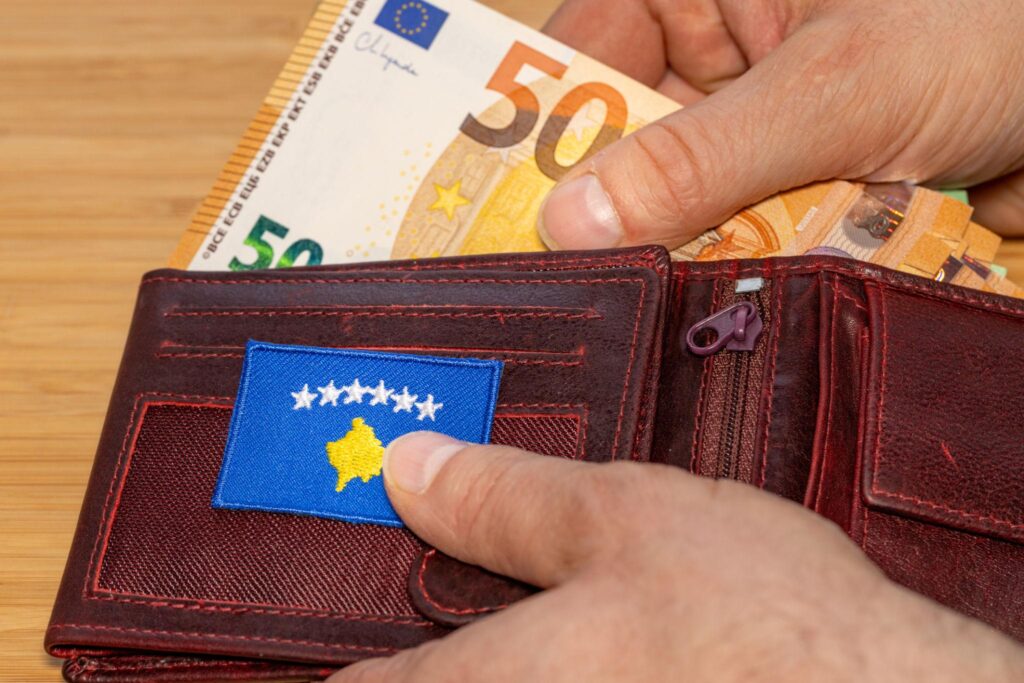
Nearly 90% of transactions in this Balkan nation happen without official banking approval in Frankfurt. Many think joining the European Union is needed to use the euro. But Kosovo has its own monetary system that breaks the mold.
Travelers are often surprised to find euros in their pockets when they arrive. This de facto use of a European Union currency has shaped local commerce for over 20 years. It brings stability, a rare find in the region.
Understanding Kosovo’s financial system is key for anyone interested in its economy. By looking at the shift from the German mark, we see how this small state keeps its finances in check. This guide helps you navigate managing money in a place that’s not part of the eurozone.
Key Takeaways
- The nation uses a foreign tender without a formal agreement with the European Central Bank.
- This started as a practical solution to economic instability after the late 1990s conflict.
- Residents enjoy clearer prices and lower costs when trading with neighbors.
- The local government can’t control interest rates or print money.
- Experts see this as a unique example of regional economic integration.
The Current Monetary Landscape in Kosovo
Kosovo’s monetary history is a story of adapting and surviving. After the late 1990s conflict, its financial system collapsed. Local and international leaders had to find quick, stable solutions to replace the unstable Yugoslav dinar.
Kosovo didn’t follow the usual path of eurozone countries with years of economic preparation. Instead, it made quick, practical choices. This was crucial for starting commerce again and rebuilding trust in the economy.
Historical Context of Currency Usage
Right after the conflict, the German mark became the main currency. It was a stable anchor for a people who had lost trust in their own currency. This change was key to stopping hyperinflation and getting markets running again.
“Money is the most important tool for building a stable society after a period of deep instability.” — Anonymous Economist
The use of the German mark led to Kosovo adopting the euro when Germany did. This move has been a key part of Kosovo’s financial identity ever since.
The De Facto Adoption of the Euro
Kosovo uses the euro as its main currency, but without an official deal with the European Central Bank. This de facto adoption sets Kosovo apart from official eurozone countries. Without a treaty, Kosovo can’t shape monetary policy or get access to certain funds.
Still, using the euro has brought price stability to Kosovo. It has made trade with neighbors easier and tied the local economy to Europe. This practical choice remains the base of Kosovo’s financial life.
Does Kosovo Use the Euro Officially
Does Kosovo officially use the euro, or is it just a practical choice? The euro is everywhere in daily life, but its official status is more complex. It’s key to understand the difference between everyday use and official agreements.
Distinction Between Unilateral Adoption and Eurozone Membership
Kosovo uses the euro but isn’t part of the Eurozone. This is called unilateral adoption. Unlike Eurozone members, Kosovo doesn’t help decide on European money policies.
Kosovo doesn’t get to vote on interest rates or financial rules. This means it doesn’t have the usual Eurozone benefits. Still, using the euro was a smart move to keep the economy stable after big changes.
Legal Status of the Euro in the Kosovo Financial System
In the kosovo financial system, the euro is the only legal money for official deals. Every government budget and bank operation is in euros. This makes Kosovo’s economy closely tied to Europe, even without an official agreement.
So, when we ask does kosovo adopt euro rules, it’s clear Kosovo uses the euro but without EU legal protections. The kosovo official currency is the euro, helping keep trade and investment stable. Here’s a table showing the main differences between Kosovo’s situation and being a Eurozone member.
| Feature | Formal Eurozone Member | Kosovo (Unilateral) |
|---|---|---|
| ECB Participation | Full Voting Rights | No Participation |
| Monetary Policy | Coordinated with ECB | Independent/Passive |
| Legal Tender | Official Eurozone Status | De Facto Usage |
| Liquidity Access | Guaranteed by ECB | Limited/None |
The Role of the Central Bank of Kosovo
Managing a national economy without its own currency is complex. The Central Bank of Kosovo (CBK) acts as the main regulator. It keeps the financial system stable, even without traditional tools. Since Kosovo uses the euro, the bank must find unique ways to keep financial integrity.
Monetary Policy Constraints and Capabilities
The CBK has big challenges with kosovo monetary policy. Kosovo doesn’t have its own currency, so the bank can’t change interest rates or control money supply. These actions are usually for countries with their own money.
Instead, the bank focuses on macro-prudential supervision. It checks the health of banks to keep them stable. This helps the economy by making things predictable for everyone.
Regulation of Cash Transactions and Banking
Keeping kosovo finance in check means following strict rules. The central bank uses tough guidelines to manage cash and stop illegal money moves. This builds trust in banks.
The bank’s main jobs include:
- Licensing and supervision of banks and insurance companies.
- Watching cash flow to follow anti-money laundering rules.
- Keeping financial stability by checking payment systems.
- Handling foreign exchange reserves to protect against outside problems.
The Central Bank of Kosovo tackles the euro-based economy’s challenges well. Its dedication to transparent regulation keeps the financial sector strong, even without usual tools.
Economic Implications of Using the Euro
The kosovo economy uses a special money system that affects its place in the region. Using a well-known currency helps avoid the ups and downs of local money. This setup is good for local businesses and foreign investors.
Impact on Inflation and Price Stability
Using the euro helps keep prices steady in Kosovo. The European Central Bank controls the euro, protecting against inflation. This stability is a cornerstone of the country’s financial plan.
But, the country must follow the European Central Bank’s money policies. This means local leaders can’t change interest rates when the economy slows down. So, the euro in balkan region is tied to European money decisions.
Trade Relations and the Balkans Economy
Trade gets easier for the balkans economy with the euro. Using the same money as big trading partners cuts down on costs and risks. This makes moving goods and services across borders smoother.
The euro in balkan region also helps local businesses compete better. They can set prices for exports more easily, drawing in European buyers. This makes the balkans economy stronger by linking deeper with the European market.
Challenges of the Kosovo Monetary System
The Kosovo monetary system has unique challenges. It doesn’t have a deal with the European Central Bank. This means it lacks the usual support that most economies get.
Local authorities must deal with financial issues without the usual tools. This is because Kosovo is not part of the eurozone kosovo framework.
Lack of Access to European Central Bank Liquidity
A big worry for the local economy is not having a lender of last resort. In the eurozone kosovo, the central bank helps banks in crises. Without this, banks must rely on their own funds and private sources.
Financial stability in an unilaterally adopted currency environment requires extreme discipline, as the safety net of a central bank is effectively absent.
Managing Foreign Exchange Reserves
Keeping foreign exchange reserves stable is key for the kosovo monetary system. Kosovo can’t control the kosovo euro exchange rate. So, it must have enough reserves to handle economic shocks.
This means being careful with money and banking rules. It helps protect the whole economy.
The following table shows the main differences between being in the eurozone and not:
| Feature | Formal Eurozone Member | Unilateral Adoption |
|---|---|---|
| ECB Liquidity Access | Full Access | None |
| Monetary Policy Influence | Shared Voting Rights | No Influence |
| Kosovo exchange rate Control | N/A (Shared) | Market-Driven |
| Financial Oversight | ECB Supervised | National Authority |
Without a formal kosovo euro exchange rate system, Kosovo must stay very careful. It focuses on good banking rules and enough reserves. This helps reduce risks in its current financial setup.
Public Perception and Daily Financial Life
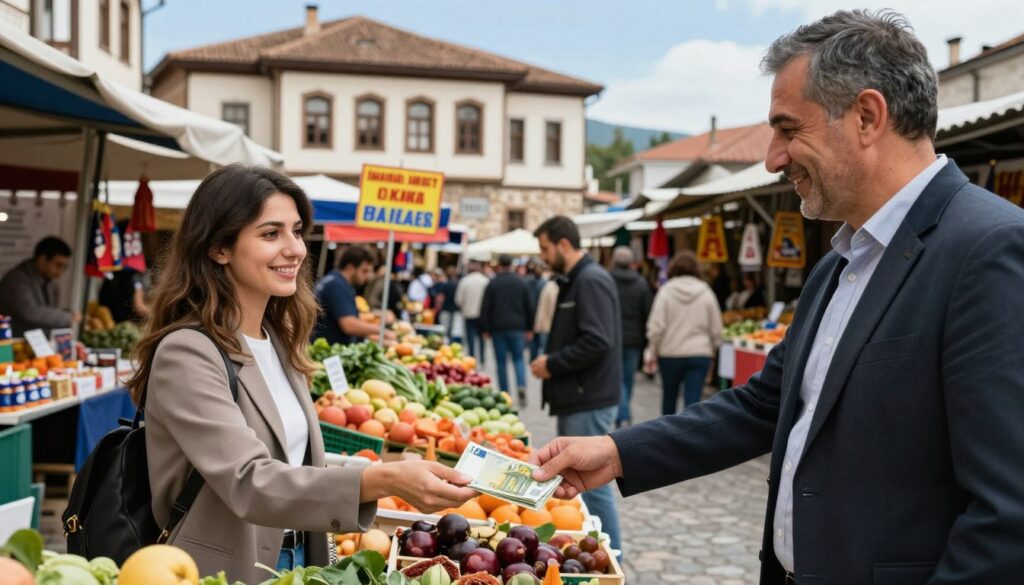
The euro in kosovo today is more than just money. It’s the lifeblood of every market and shop. While many have smoothly transitioned to a unified currency, financial habits vary widely. People widely accept the euro for all their daily needs.
How Citizens Interact with the Euro
In cities like Pristina, digital banking and contactless payments are on the rise. Younger folks often use mobile apps and cards for shopping. They find these methods more convenient.
In contrast, rural areas stick to cash. People there use it for everything, from groceries to local services. This shows how technology is adopted at different rates across the country.
- Digital Payments: Growing popularity in urban hubs for retail and dining.
- Cash Transactions: Still the primary method for small-scale trade and rural commerce.
- Banking Access: Increasing availability of ATMs, though cash remains essential for daily life.
The Persistence of Informal Cash Economies
Even with modern banking, cash economies are still common. Small businesses and service providers often prefer cash to avoid fees. This keeps physical euro in kosovo notes crucial for the economy.
Using cash is not just about ease. It’s also a cultural preference. Many feel safer with cash in hand. As the financial scene evolves, the mix of digital and cash use will likely stay a key part of life here.
International Perspectives on Kosovo Euro Adoption
The use of the euro in Kosovo without a formal agreement has caught the eye of the world. The local economy uses this european currency in kosovo, but without a legal treaty, it’s a unique situation. Global institutions keep a close eye on it.
European Union Stance on Unilateral Euroization
The European Union has a clear view on unilateral euro use. They say the european union currency is for countries that have gone through the formal accession process.
This view is based on the euro being a shared project with strict rules. The European Union worries about:
- No formal monetary agreement with the European Central Bank.
- The local financial system can’t join Eurozone liquidity mechanisms.
- Following fiscal discipline without the Eurozone’s support.
The European Union has made it clear that using the euro by third countries is not the same as being part of the Eurozone or its institutions.
IMF and World Bank Assessments of Kosovo Finance
The International Monetary Fund (IMF) and the World Bank regularly check on Kosovo’s finance. They look at the long-term stability of the current system and the risks without a lender of last resort.
Experts say the kosovo euro adoption brings price stability but limits managing economic shocks. The european currency in kosovo means no adjusting interest rates or devaluing the currency to help exports.
The kosovo euro adoption is still a topic of discussion. International groups keep watching how this european union currency affects the Balkan region’s stability.
Recent Developments in Kosovo Monetary Policy
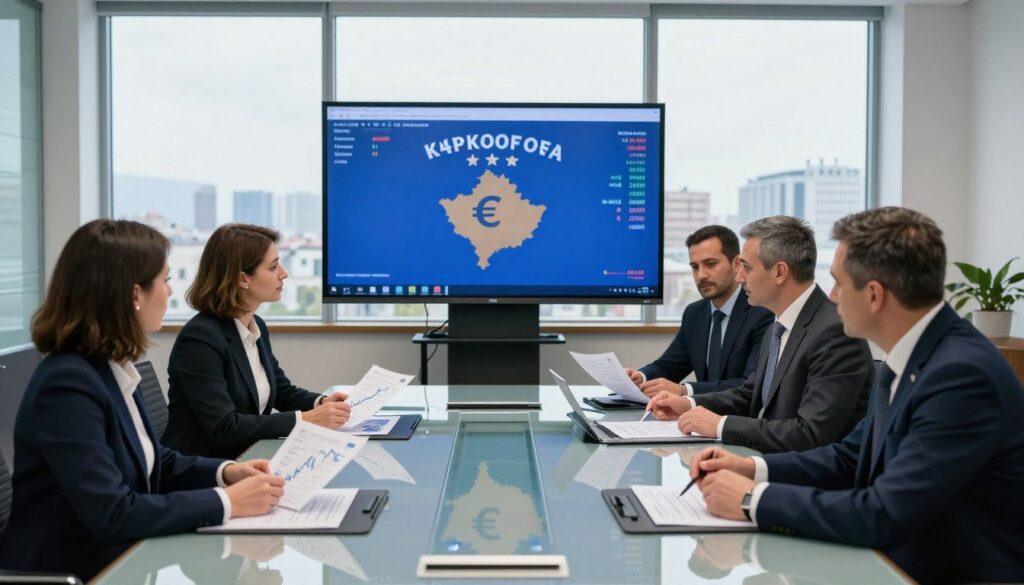
Kosovo’s monetary policy is now under closer watch and change. These updates aim to improve financial oversight and follow global standards. The goal is to keep the financial system stable, despite global challenges.
New Regulations on Currency Circulation
The government has put in place stricter guidelines for managing cash. These rules aim to boost transparency and cut down risks from the informal economy. Officials hope to better control financial activities in the area.
Now, banks must focus on following new rules. They need to report all cash transactions accurately. This change is essential for the national financial system’s integrity.
Diplomatic Reactions to Financial Policy Shifts
The updates to Kosovo’s currency have caught the eye of the international community. People are watching how these changes affect the country’s European integration goals. The talks often revolve around balancing local needs with global financial expectations.
Some global partners worry about possible economic problems. They stress the importance of clear communication to prevent harm to the local people. The evolution of Kosovo’s monetary policy is key in its talks with the European Union and the world.
Future Outlook for the Kosovo Economy
The nation is looking to join European institutions more closely. This means a big change in how it handles money. Leaders are thinking about what’s best for the country’s economy as it moves forward.
Potential Paths Toward Formal Integration
Going fully into Europe means changing how money is managed. The idea of euro adoption in kosovo is being talked about a lot. To join fully, Kosovo must meet certain rules set by the European Central Bank.
Changing to meet these standards might mean big changes in banking rules. This could help Kosovo get more help from international groups. It shows a commitment to being open and stable financially.
Long-term Sustainability of the Current Model
The current system has kept prices stable, helping businesses and people. But, it can’t always help in tough times. Experts say it works well now but might struggle later.
To keep things stable, Kosovo needs to balance its current setup with the need for strong rules. If it stays in the kosovo eurozone without being fully part of it, it must be very careful with money. Here’s a table showing the main differences between now and joining fully.
| Feature | Current Informal Status | Formal Integration Path |
|---|---|---|
| Monetary Control | Limited/None | Coordinated with ECB |
| Financial Stability | Market-driven | Institutional support |
| EU Accession | Ongoing negotiation | Full alignment |
| Policy Flexibility | Highly restricted | Standardized framework |
The future of euro adoption in kosovo depends on matching laws with European ones. Making the financial sector stronger now will help Kosovo, no matter what path it chooses.
Conclusion
Since 2002, Kosovo has used the euro as its monetary anchor. This choice brings stability to businesses and residents in the region.
Using the euro alone poses challenges for Kosovo’s Central Bank. They face the issue of not having direct access to the European Central Bank’s liquidity. This makes long-term financial planning difficult.
Policy makers must find a way to manage these issues while keeping the local banking sector strong. This is crucial for the country’s financial health.
Discussions about joining the European Union will shape Kosovo’s financial future. The use of the euro will be a key topic in these talks. Reforms will help manage reserves and support economic growth.
Those interested in the Balkans economy should keep an eye on updates from the European Commission and local authorities. These changes offer insights into the region’s stability. Share your thoughts on how this monetary model affects citizens’ daily lives in the comments below.
FAQ
Does Kosovo use the euro as its legal currency?
Yes, the euro is the only legal currency in Kosovo. It’s used for all daily transactions, like salaries and shopping.
Is Kosovo one of the official eurozone countries?
No, Kosovo is not an official eurozone member. It uses the euro without a formal agreement with the European Central Bank.
Can I use other currencies like the US Dollar or the British Pound in Kosovo?
While some places might accept other currencies, the euro is the most widely accepted. For everyday needs, you’ll need euros.
How does the kosovo euro exchange rate work?
Kosovo’s euro value is the same as in other countries. There’s no internal exchange rate because it uses the euro directly.
What is the official kosovo monetary policy regarding the euro?
Kosovo’s monetary policy is unique. The Central Bank can’t print money or set interest rates. It focuses on banking stability instead.
Why did the region choose euro adoption in Kosovo instead of a domestic currency?
After the conflict, Kosovo needed stability fast. Adopting the euro helped avoid inflation and made trade easier in the Balkans.
Does the Central Bank of Kosovo have a relationship with the European Central Bank?
Kosovo’s Central Bank doesn’t get direct support from the European Central Bank. But it follows many ECB standards to keep the economy stable.
Is the european union currency in kosovo expected to change soon?
There are no plans to change Kosovo’s currency. The euro is seen as stable and key for Kosovo’s EU integration.

Adam G
This post was created by Adam G, a seasoned financial writer with a passion for explaining currency exchange and market movements
 English
 简体中文
简体中文 Español
 Deutsch
 Français
 العربية
 Polski