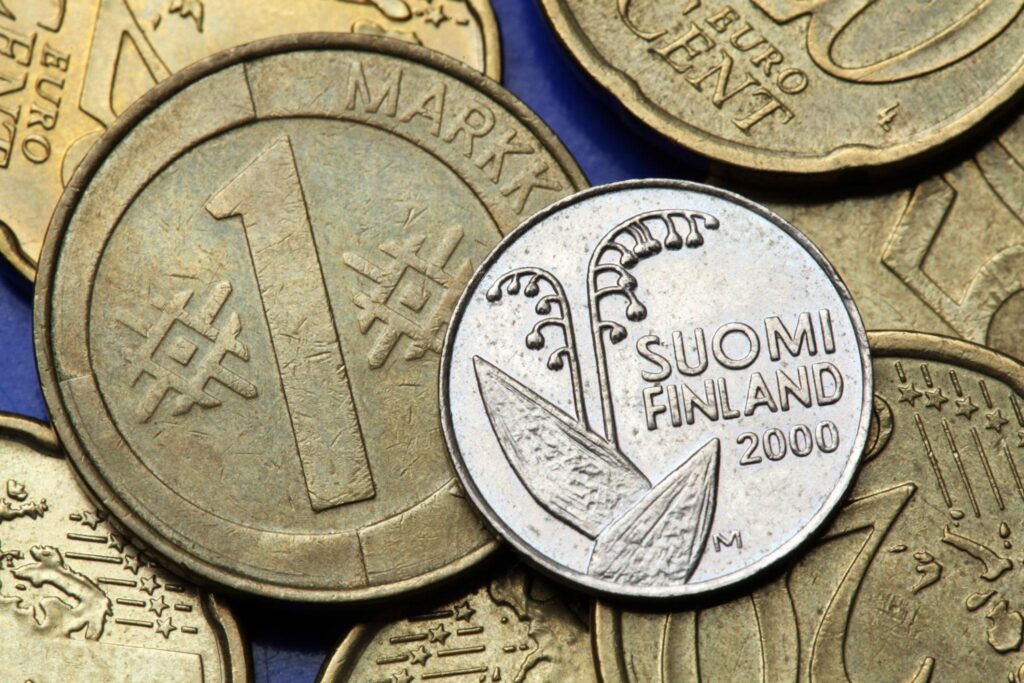
Did you know over 340 million people in Europe use the same money? When you head north, you’ll find the currency of finland is the euro. This change happened in 2002, making a big impact on the Nordic economy.
The finnish currency is the only money you can use in Finland. Whether you’re in Helsinki or Lapland, you’ll need this money. It makes traveling easier for visitors from abroad.
When planning your budget, remember the finland currency code is EUR. Knowing this code makes using banking apps and exchange services simple. Getting your finances ready before you go makes your trip smoother. Learning about the finland currency is the first step to a worry-free trip to the Nordics.
Key Takeaways
- The euro is the official and only legal tender used in the country.
- The international identifier for your transactions is the EUR code.
- Cashless payments are widely accepted in almost every shop and cafe.
- Always check your bank’s exchange rates before traveling abroad.
- Having a small amount of physical cash is helpful for remote areas.
The Current State of the Currency of Finland
Traveling through the Nordic region means using the euro in Finland. This shared currency makes transactions smooth for everyone. It keeps your money dealings consistent and reliable across the country.
Adoption of the Euro as the Official Legal Tender
Finland adopted the euro on January 1, 2002. This was a big step for the nation. It replaced the Finnish markka and showed Finland’s commitment to the European Union’s economy.
This change made Finland part of a bigger, more stable financial area. Now, you can use the euro in most of Europe. This makes traveling easier. It also helps businesses and people manage their money better without needing to change currency all the time.
The Role of the Euro in the Modern Finnish Economy
The euro is key to Finland’s economic stability. It makes transactions cheaper and prices clearer. This stability means you can shop or pay for services without surprises.
Also, using the euro in Finland makes your travel spending easy to predict. The euro is a big part of Finnish life. It connects the local economy to the world while keeping finnish money safe and easy to use for all.
The Historical Transition from the Finnish Markka
The Finnish markka was the heart of Finland’s economy for 140 years. It was more than money; it was a symbol of national pride. Knowing its history helps us understand Finland’s financial journey.
The Legacy of the Finnish Markka
The finland old currency started in 1860, when Finland was part of the Russian Empire. For over a century, it went through many changes. It was the main finnish currency until the 21st century.
Many Finns still miss the markka. It reminds them of a time when Finland was more independent. Even though it’s gone, its impact on Finland’s money history is still felt.
The Timeline of the Euro Adoption Process
The move to the euro was a two-step process. It was designed to keep the economy stable while switching to a new currency.
- 1999: The euro was first used for banking and accounting.
- 2002: Euro banknotes and coins were introduced, replacing the markka.
- 2002: A short time allowed people to exchange their markka for euros.
Public Sentiment During the Currency Switch
People felt both excitement and doubt when the euro came. Many loved the markka, seeing it as a part of their heritage. But they also saw the euro as making trade and travel easier.
In the end, most people saw the euro as a step forward for economic integration. The finland old currency is now a collector’s item. The switch marked a big change in Finland’s financial history.
The Euro in Finland Today
When you travel through Finland, you’ll see the euro is more than currency. It’s a symbol of national identity and European unity. The euro in finland is used for all daily transactions, from high-end boutiques in Helsinki to local markets.
Standardization of the Euro Across the Eurozone
The euro is used in many countries, but banknotes are the same everywhere in the Eurozone. This makes traveling and trading easier. Consistency is key for everyone.
- Banknotes feature common architectural designs representing different eras.
- Security features are uniform to help you verify authenticity easily.
- The physical size and color coding remain identical across all participating countries.
Unique Finnish Design Elements on Euro Coins
While banknotes are the same, coins show off local culture. Finnish coins have unique national symbols. You’ll see these designs often:
The heraldic lion is on the one-euro coin. The two-euro coin has swans in flight, showing Finland’s natural beauty. These designs keep the country’s heritage alive in Europe.
How the Euro Symbol is Used in Finnish Commerce
In business, the finland currency symbol is clear on price tags and menus. Businesses want to be open about costs. Look for the finland euro currency symbol after numbers, like “10,00 €.
This makes budgeting easier while you explore. Knowing these signs helps you move through the Finnish market with confidence.
Understanding Finland Currency Exchange Rates
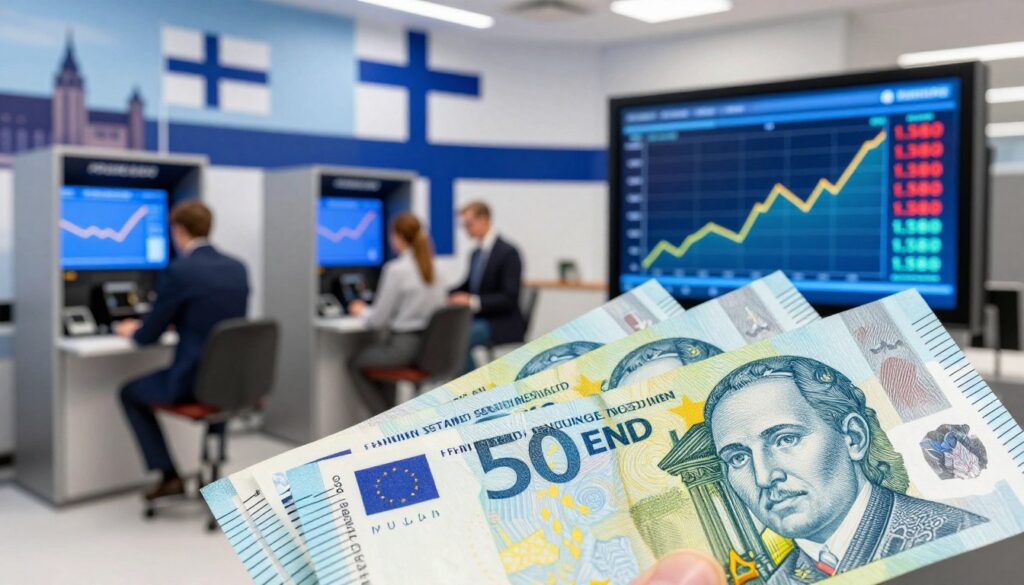
Managing your budget in Finland starts with knowing the local currency. Keeping an eye on the finland currency exchange rate helps you spend wisely. This way, your money goes further during your trip.
Factors Influencing the Euro Exchange Rate
The euro’s value changes due to global economic factors. The European Central Bank’s interest rate decisions are key. Trade balances and political stability also affect the euro’s value against the US dollar.
Watch these trends before you go. Economic reports can show changes that impact your spending power. Knowing these helps you get the best exchange rates.
How to Use a Finland Currency Converter Effectively
A good finland currency converter is key for accurate cost calculations. These tools give you real-time data to avoid price confusion. Make sure your converter is updated often.
“An investment in knowledge pays the best interest.”
When you arrive, you’ll see ATMs called “Otto” machines. They’re great for cash, but check your bank’s fees first. Balancing card payments with cash is important for finland currency conversion.
Where to Find Reliable Foreign Exchange Rates in Finland
Finding accurate foreign exchange rates in finland is easy. Major banks in city centers offer good rates. Reputable exchange bureaus are also good, but compare their rates with the market.
| Exchange Method | Convenience | Typical Fees |
|---|---|---|
| Local Bank | High | Low to Moderate |
| Airport Kiosks | Very High | High |
| Otto ATM | High | Variable |
Avoid exchanging at tourist spots or airports to save money. Exchanging at banks is safer for your budget. Keep your receipts and watch your accounts to stay in control.
Banknotes and Coins in Circulation
When you travel through Finland, you’ll see euro banknotes and coins. These help you pay for things every day. Knowing about finnish money makes managing your money easier while you explore.
Denominations of Finnish Euro Banknotes
The euro system has the same paper money everywhere in the Eurozone. You’ll often use banknotes in finland from 5 to 500 euros.
The finland banknotes come in 5, 10, 20, 50, 100, 200, and 500 euros. The 500-euro note is legal but not often used because it’s worth a lot.
The Specifics of Finnish Euro Coin Designs
Euro banknotes look the same everywhere, but coins have unique designs. When you collect coins in finland, you’ll see symbols that show the country’s history.
The most common finnish euro coin shows the heraldic lion. The 1 and 2 euro coins often have the cloudberry plant or the swan, Finland’s national bird.
These finland coins are accepted in the whole Eurozone, not just in Finland. You can spot them by the special artwork on the back.
Security Features to Identify Authentic Currency
It’s easy to avoid fake money if you know what to look for. Real banknotes have advanced security features you can check by touch and sight.
Look for the raised print on the notes. It feels different. Also, hold the note up to the light to see a watermark and security thread.
The holographic strip on higher notes changes when you tilt it. Being careful helps keep your money safe while you’re there.
Financial Policy and the Bank of Finland
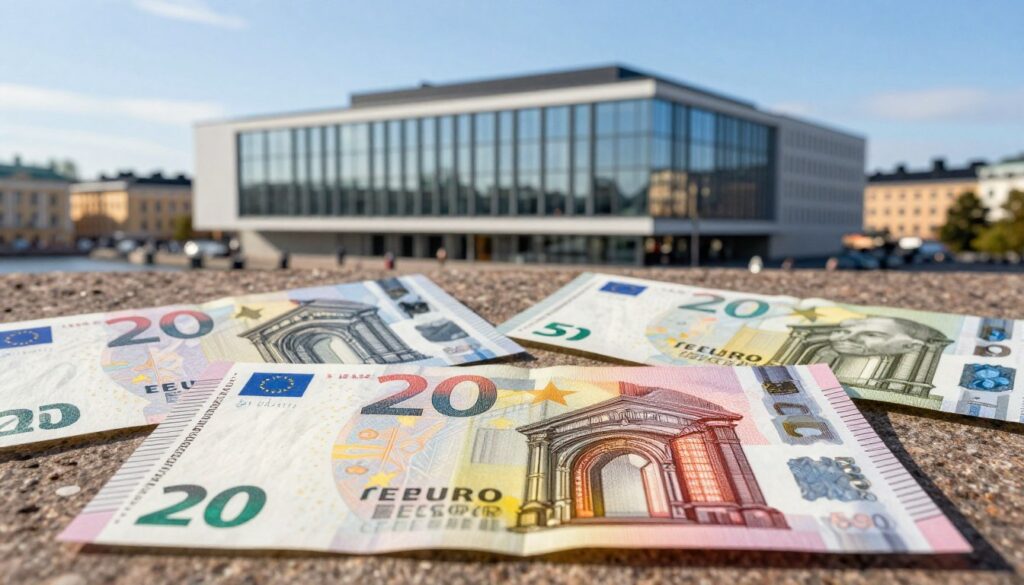
The Bank of Finland is key to Finland’s financial health. It’s the oldest central bank in the world after Sweden’s. It keeps the economy stable while dealing with global challenges.
The Role of the Bank of Finland in the Eurosystem
The Bank of Finland plays a big role in the Eurosystem. This group includes the European Central Bank and eurozone countries’ banks. It manages the bank of finland currency and payment systems.
The bank also does a lot of research. This helps make decisions in the complex market. It shows how Finland’s interests are looked after in the eurozone.
Finnish Monetary Policy Within the European Central Bank
Creating finnish monetary policy is tricky. It must balance Finland’s needs with eurozone goals. The Governor of the Bank of Finland helps set interest rates and inflation targets.
“The independence of the central bank is the cornerstone of a stable and predictable economic environment for all citizens.”
Working with the European Central Bank helps Finland. It gets a stable currency for trade and investment. This unity keeps prices stable for growth.
Economic Oversight and Stability Measures
The bank watches over the financial system closely. It checks the health of banks and the financial system. This keeps risks low and protects everyone’s interests.
The table below shows how the bank keeps things stable:
| Function | Primary Goal | Impact on Economy |
|---|---|---|
| Monetary Policy | Price Stability | Controls Inflation |
| Financial Oversight | Systemic Safety | Prevents Bank Failures |
| Currency Management | Cash Availability | Ensures Liquidity |
The finnish monetary policy aims for a stable environment. It makes sure your money is safe, whether for business or travel. This is what makes finland finance strong.
Practical Tips for Travelers in Helsinki
When you arrive in Helsinki, knowing how to handle your money makes your trip easier. Finland is very digital, with most payments made electronically. You won’t need much cash during your stay.
Managing Currency in Helsinki and Beyond
Even though digital payments are common, it’s smart to have some finland money for small things or emergencies. Most places accept major cards without a problem. Use your card for most of your spending for better security and ease.
Tipping is not usual in Finland. Service charges are usually included in bills at restaurants and hotels. A small thank you is nice if service is outstanding, but it’s not expected.
Using ATMs and Credit Cards in Finland
Getting cash is easy with ATMs all over the city and smaller towns. You can withdraw euros with your international card. Check with your bank about any fees for foreign transactions before you go.
Using your card for currency in helsinki is often the cheapest way. Most places support contactless payments, making things like buying coffee or tickets quick. Make sure your card has a PIN for some kiosks.
Avoiding Common Currency Exchange Pitfalls
When you need to exchange money, avoid airport kiosks. They charge high fees and give bad rates. It’s better to use an ATM to get euros directly from your account.
Watch out for “Dynamic Currency Conversion” when paying by card. It lets you pay in your currency, but it’s often more expensive. Always choose to pay in euros for the best rate.
| Payment Method | Usage Frequency | Best For |
|---|---|---|
| Credit/Debit Card | Very High | Daily purchases and dining |
| Mobile Wallets | High | Quick transit and small items |
| Cash (Euros) | Low | Small markets or emergencies |
Digital Finance and Cashless Trends
The way we handle money is changing fast, thanks to digital tech. You won’t need paper bills or coins much in Finland. This change makes managing money easier and more efficient.
The Shift Toward a Cashless Society in Finland
Finland is leading the way as a cashless society. Most places, from fancy shops to small stalls, prefer digital payments. You’ll mostly use cards or digital devices to pay.
This means your trip will be smooth. You won’t need to carry lots of finland money. Digital payments are the norm for locals and visitors alike.
Mobile Payment Adoption and Digital Wallets
Mobile wallets and contactless tech have changed how we pay. Just tap your phone or watch to pay quickly. This contactless convenience is everywhere in daily life.
Popular apps let you see your spending instantly. This helps you control your budget in Finland’s lively cities. Your phone is your main financial tool on your travels.
The Future of Physical Money in the Finnish Market
Even though cash is still legal, it’s less needed as digital payments grow. Many sellers prefer electronic payments to avoid cash risks. Some small businesses might only accept cards.
For travelers, the future of money in Finland is digital. Rely on your credit cards and mobile apps for expenses. These modern trends will make your visit easy and worry-free.
Comparing the Euro to the Finnish Markka
When Finland switched to the euro, you might have wondered how your money’s value changed. This big move changed the face of Finland finance. On the day of the switch, the exchange rate was set at 5.94573 markka to 1 euro.
Purchasing Power Parity Over the Decades
Purchasing power parity shows how much money can buy in goods and services. Before the euro, the finnish markka saw ups and downs due to inflation and global trends. Switching to the euro brought more stability for everyone.
The table below shows how the two currencies compared during the switch:
| Feature | Finnish Markka | Euro |
|---|---|---|
| Status | National Currency | Supranational Currency |
| Exchange Rate | 5.94573 per Euro | Base Unit |
| Scope | Domestic Use | Eurozone-wide |
The Economic Shift from National to Supranational Currency
Switching to a supranational currency is a big change. Finland’s economy became part of a bigger market by adopting the euro. This move cut down costs and risks in international trade.
- Increased transparency in pricing across European borders.
- Greater economic stability through shared monetary policy.
- Simplified travel and commerce for citizens within the Eurozone.
Legacy of the Markka in Modern Finnish Finance
Even years later, the finnish markka still holds a special place in Finland. Many still use it as a mental guide for big purchases. This keeps the past connected to today’s Finland finance.
The euro to finnish markka change is still talked about today. Though the old currency is gone, its legacy lives on. It shows Finland’s successful move onto the global stage.
Economic Impact of the Euro on Finland
How has adopting a shared currency affected Finland’s wealth? Since joining the European Union in 1995, Finland has moved towards a common currency. The finnish euro is now a key part of Finland’s financial identity.
Trade Benefits Within the European Single Market
Joining the European Single Market has opened doors for Finnish exporters. It has made trading with neighbors more predictable. This stability helps deepen ties across Europe.
Businesses no longer need to worry about currency changes for each deal. This makes supply chains smoother and prices better for consumers. The euro finland system helps international trade flow more easily.
Challenges and Opportunities for Finnish Businesses
Being in a competitive world market has its ups and downs. Small businesses must meet tough standards to compete with bigger European companies. But, this challenge can push them to innovate and modernize.
The finnish euro makes companies focus on being more productive. They can’t just rely on cheaper currency to stay ahead. This leads to more investment in technology and people. Companies that adapt well can grow and succeed globally.
Long-term Economic Growth and Stability
Using a common currency has protected Finland from outside economic shocks. Being tied to the European Central Bank’s strong monetary policy helps control inflation and supports growth. This stability is key to Finland’s steady economic performance.
The euro finland story shows how a small, open economy can do well in a big union. Regular checks keep the financial system strong, even in tough times. This stability is reflected in Finland’s consistent economic growth.
| Economic Metric | Pre-Euro Era | Post-Euro Era |
|---|---|---|
| Currency Volatility | High | Low |
| Trade Barriers | Significant | Minimal |
| Market Access | Limited | Extensive |
| Monetary Control | National | Supranational |
Conclusion
Traveling to a new country means you need to be ready for money matters. Now, you know how to use the euro with ease in Finland.
Learning about the euro and Finland’s economy shows you value the local culture. You’re set to use digital payments and keep cash for small purchases.
Good financial planning makes your trip smooth. Use what you’ve learned to manage your money well as you enjoy Finland’s culture and views.
We encourage you to share your money management tips in the comments. Your stories help others get ready for their trips to this lovely area.
FAQ
What is the official currency of Finland and its international code?
The official currency of Finland is the euro. It has the code EUR. Since 2002, the euro is the only money used in Finland, replacing the markka.
Can I still use the Finnish markka or exchange it for euros?
The Finnish markka was used for over 140 years. It’s no longer used. But, you can still exchange it for euros. The rate is fixed at 5.94573 FIM to 1 EUR.
Where is the best place to find a reliable finland currency exchange rate?
For the best exchange rate, check with big banks like Nordea or OP Financial Group. If you’re traveling, Forex Bank at Helsinki Airport or the Helsinki Central Railway Station offers good rates.
How can I recognize the finland euro currency symbol and authentic banknotes?
The euro symbol is €. Banknotes have security features like watermarks and holograms. Coins in Finland have unique designs, like the cloudberry flower.
Is it necessary to use a finland currency converter before my trip?
Yes, a currency converter is very helpful. It lets you plan your budget. Use tools like XE.com or OANDA for real-time rates.
What is the best way to manage currency in Helsinki for a traveler?
Carry a card and some cash. ATMs are everywhere. Always choose to be charged in euros to avoid high fees.
How does finnish monetary policy affect the value of the euro in Finland?
Finland’s money policy is coordinated with the European Central Bank. This keeps the euro stable and controls inflation, affecting its value in Finland.
Is Finland a cashless society, or do I still need finland coins?
Finland is moving towards a cashless society. While coins and notes are still used, most people prefer digital payments. Even small markets accept digital payments.
Where can I get information about bank of finland currency regulations?
Visit the Bank of Finland Museum in Helsinki for information. They have resources on the euro transition and Finland’s financial history.

Adam G
This post was created by Adam G, a seasoned financial writer with a passion for explaining currency exchange and market movements
 English
 简体中文
简体中文 Español
 Deutsch
 Français
 العربية
 Polski