
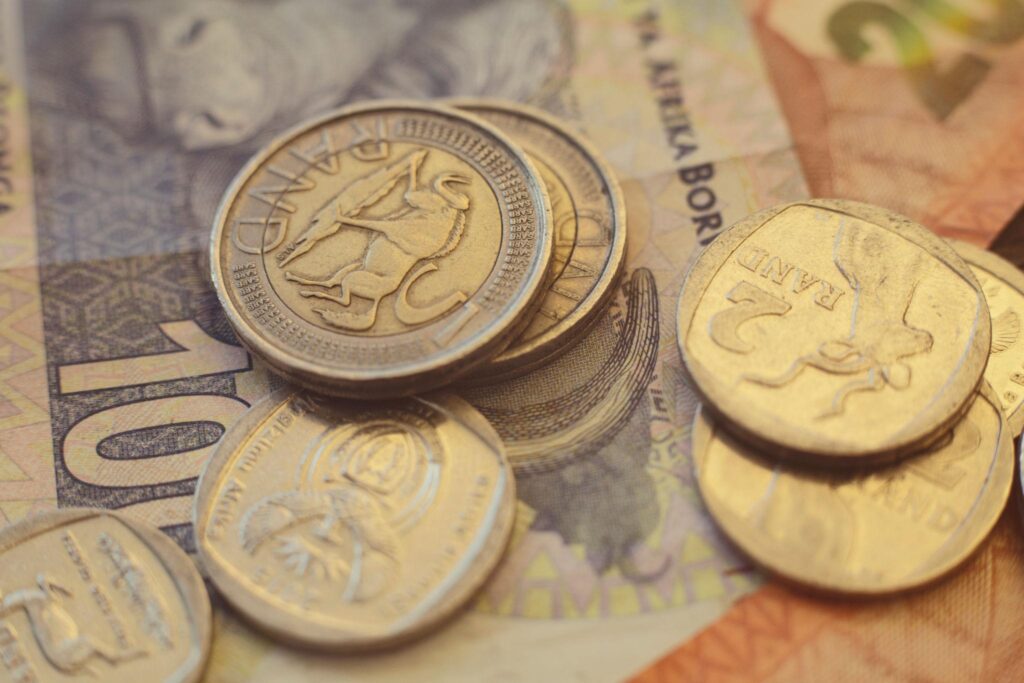
Did you know the south africa rand currency was worth 1.40 US dollars when it first came out in 1961? This surprising fact shows how much the world’s money can change a country’s currency over time.
The money system is based on 100 cents. A comma is used to separate the main amount from the change. It’s a vital component of the local economy and is shown with the capital letter R.
Keeping up with zar currency news is key. This money is used in the Common Monetary Area. This area links many countries, making the ZAR a powerful tool for trade and stability in the south.
Key Takeaways
- The ZAR launched with a value higher than the American dollar in 1961.
- The capital letter R serves as the official sign for all pricing.
- Each unit of money consists of 100 smaller cents.
- Locals use a comma as the decimal separator in bookkeeping.
- This system functions across several nations in a unified monetary zone.
- It acts as a primary driver for regional economic growth and trade.
What Is the South African Rand?
The rand is South Africa’s official currency. It’s known worldwide in financial markets. It’s called ZAR, based on the ISO 4217 standard.
Official Currency of South Africa
The South African rand is the legal money in South Africa. It’s issued by the South African Reserve Bank. It’s key to the country’s economy, helping with transactions in many areas.
ZAR Currency Code and International Classification
The ISO 4217 code for the South African rand is ZAR. This code is important for foreign exchange, financial reports, and international trade. It helps tell the rand apart from other currencies worldwide.
Countries and Territories Using the Rand
Even though the rand is South Africa’s official currency, it’s used elsewhere too. Eswatini, Lesotho, and Namibia use it or have it pegged to their own currencies. This shows the rand’s big role in Southern Africa’s economy.
The rand’s impact goes beyond South Africa. It shows its big role in regional trade and economic activities.
Historical Background of the Rand
The Rand’s history is closely tied to South Africa’s politics and economy. To grasp its current state, we must look at its start, the reasons behind its creation, and its growth over time.
Introduction of the Rand in 1961
In 1961, the South African Rand was introduced, changing the country’s money system. It replaced the South African pound at a rate of 2 Rand to 1 pound. This move was part of a larger effort to make money easier to use and align with global standards.
Introducing the Rand was key in setting South Africa’s economic mark. It made trade and business easier, both at home and abroad, by offering a common currency.
Replacing the South African Pound
The choice to swap the South African pound for the Rand was for a more practical and modern money system. The Rand’s adoption followed a global trend towards decimalization in the mid-20th century. This made international trade and financial dealings simpler.
- The Rand was split into 100 cents, making it easier to use.
- This change reduced the old system’s complexity.
- It also showed South Africa’s growing control over its money.
Evolution Through Political and Economic Changes
The Rand’s value has changed a lot over the years due to politics and economics. Economic sanctions, political instability, and global price changes have all affected its value.
The Rand has shown strength and flexibility. Despite issues like high inflation and economic ups and downs, it’s still a major currency in Africa.
Knowing the Rand’s history helps us understand its current and future value. This knowledge is vital for investors, traders, and anyone interested in South Africa’s economy.
South African Rand Symbol and Physical Currency
The Rand is South Africa’s currency, made by the South African Reserve Bank. It has special designs and security features.
The Rand Symbol: R and ZAR
The Rand symbol is key to its identity. The ‘R’ symbol is used in daily transactions and finance. The code ‘ZAR’ stands for the South African Rand worldwide.
In South Africa, ‘R’ is well-known as the Rand symbol. Globally, ‘ZAR’ is used for money exchange and transactions.
Current Coins and Banknotes in Circulation
The South African Reserve Bank makes coins and banknotes. Coins range from 10c to R5. Banknotes are R10 to R200.
Coins and banknotes show South Africa’s culture and history. For example, banknotes feature animals like lions and elephants.
Design Features and Security Elements
Coins and banknotes have advanced security to fight counterfeiting. They use watermarks, holograms, and detailed designs.
Security is a top priority in the Rand’s design. The Reserve Bank keeps updating security to outsmart counterfeiters.
Banknotes also have a special touch for the blind.
The Rand’s currency is more than just money. It shows South Africa’s rich culture and history.
Key Factors Affecting South African Rand Value
Many important factors affect the rand’s value in the foreign exchange market. It’s key for investors, traders, and those interested in South Africa’s economy to understand these.
Economic Indicators and GDP Performance
Economic indicators, especially GDP, greatly impact the rand’s value. A high GDP growth rate makes the rand stronger, showing a healthy economy. But, a drop in GDP growth can weaken the currency.
Key economic indicators that affect the rand include:
- GDP growth rate
- Inflation rate
- Unemployment rate
- Interest rates set by the South African Reserve Bank
These indicators show the health of South Africa’s economy. They help predict growth, influencing investor confidence and the rand’s value.
Commodity Prices and the Mining Sector
South Africa is rich in natural resources, with mining being crucial to its economy. The rand is very sensitive to commodity prices, especially gold and platinum.
When global commodity prices go up, the rand gets stronger. This is because more people want South African exports. But, if prices fall, the rand weakens.
Political Stability and Government Policies
Political stability and government policies are vital for the rand’s value. Political unrest makes investors cautious, weakening the rand.
“Political stability is key to maintaining investor confidence in the South African economy and, by extension, the value of the rand.
Government policies also affect the rand. Stable policies attract foreign investment, helping the rand’s value.
Global Market Sentiment and Risk Appetite
Global market sentiment and risk appetite greatly influence the rand’s value. In times of global uncertainty, investors seek safe currencies, weakening the rand.
But, when investors are more willing to take risks, they invest in emerging markets like South Africa. This can strengthen the rand.
The rand’s value is shaped by many factors. These include domestic economic performance, commodity prices, political stability, and global market trends.
Understanding South Africa Rand Currency Exchange Rates
Knowing how the rand’s exchange rate works is key to understanding South Africa’s money scene. The rand’s value against other currencies is vital for investors, businesses, and people doing international deals.
How ZAR Exchange Rate Is Determined
The rand’s value is shaped by supply and demand in the foreign exchange market. This market is where currencies are traded. The rate changes based on how much people want to buy or sell the rand, influenced by economic signs and events.
Key factors influencing the ZAR exchange rate include:
- Economic indicators like GDP growth, inflation, and interest rates
- Prices of commodities like gold and minerals, as South Africa exports a lot of these
- Political stability and government policies, which affect investor trust
- Global market mood and risk-taking, which impacts rand demand
The Role of the South African Reserve Bank
The South African Reserve Bank (SARB) is very important in setting the rand’s value. The SARB can change interest rates to fight inflation and keep the currency stable. Higher rates can draw in foreign money, making the rand stronger. Lower rates can do the opposite.
Rand Exchange Rate Today: Where to Find Accurate Information
For the latest on the rand’s exchange rate, check financial news sites, currency converters, and the SARB’s website. These places offer real-time exchange rate data, helping you make smart choices.
Factors Causing Daily Exchange Rate Fluctuations
The rand’s value can change every day for many reasons. Some main causes are:
- Changes in global commodity prices
- Shifts in global market mood and risk-taking
- New economic data from South Africa and big economies
- Political news and policy changes in South Africa
Knowing these factors helps predict and react to exchange rate changes.
Rand to USD Conversion Rate and Trends
The rand to USD conversion rate is shaped by many economic factors. It’s key for trade between South Africa and the United States. It affects the cost of imports and exports.
Current Rand to Dollar Conversion
You can find the current exchange rate on financial news sites, currency platforms, or the South African Reserve Bank’s website. For example, if 1 USD = 18 ZAR, one US dollar can be exchanged for 18 South African rand.
Historical ZAR to USD Exchange Rate Analysis
Looking at the rand’s history against the US dollar is insightful. The rand has seen big changes due to economic and political factors. Events like changes in commodity prices, political instability, and global market shifts have caused these changes.
Using a Rand to USD Converter Effectively
To get the most from a rand to USD converter, know it uses real-time data. Be sure the converter is reliable and check for any fees. Also, using it to track historical rates can help see how the exchange rate has changed.
What Drives the Rand to USD Conversion Rate
Many things affect the rand to USD rate. Economic indicators like GDP growth, inflation, and interest rates matter a lot. The mining sector, especially gold, is also important because of South Africa’s resources. Global market feelings and risk also play a role, as investors look for safe currencies during uncertain times.
Rand Conversion Against Other Major Currencies
The rand’s value against major currencies shows South Africa’s economic health. It’s a big player in the global economy. Investors and economists watch it closely. The rand is traded against the Australian dollar (AUD), euro (EUR), and British pound (GBP).
Rand to AUD Exchange Rate
The rand to AUD exchange rate is key for trade between South Africa and Australia. Both countries have strong mining industries. This affects trade and investment decisions.
Many factors influence the rand to AUD rate. For example, commodity prices and economic indicators in both countries matter. A rise in gold prices can make the rand stronger against the AUD if South Africa exports a lot of gold.
“The rand to AUD rate is a critical metric for businesses and investors looking to capitalize on trade opportunities between the two nations,” according to financial analysts.
Rand to Euro Conversion
The rand to euro conversion rate is important for trade with the European Union. The eurozone is a big trading partner for South Africa. This rate is key for economic analysis.
The rand’s value against the euro changes with economic news in the eurozone and South Africa. A strong euro makes South African exports more expensive for Europeans. This can affect demand.
Rand to British Pound Rate
The rand to British pound rate is watched closely, especially because of historical trade ties with the UK. The exchange rate affects tourism, trade, and investment between the two countries.
Changes in the rand to GBP rate come from economic news in both the UK and South Africa. Global economic trends also play a role.
Comparative Rand Value Against Major Currencies
Looking at the rand’s value against many major currencies gives a full picture. This helps spot trends and patterns not seen in a single rate.
The rand’s strength or weakness against different currencies shows broader economic trends or specific challenges. For example, a strong rand against the AUD but a weak rand against the USD might show different economic dynamics.
Understanding these dynamics is crucial for investors and policymakers alike.
Currency Converter South Africa: Tools and Resources
Digital technology has made many currency conversion tools available. For those dealing with the South African rand, using reliable tools is key. It helps in making smart financial choices.
Best Online ZAR Currency Converter Platforms
Many online platforms offer ZAR currency conversion services. XE.com and TransferWise are top choices. They give real-time exchange rates and low fees. These platforms are easy to use and offer extra tools like historical rate charts.
When picking an online converter, look at the exchange rate accuracy and fees. Some platforms offer better rates than others. It’s wise to compare them.
Mobile Applications for South African Rand Converter
Mobile apps make converting currencies easy on the go. Apps like Currency Converter Plus and XE Currency are popular. They give real-time updates and have features like offline use and customizable lists.
Mobile apps are great for quick conversions. They’re perfect for travelers or anyone who needs to check rates often.
Real-Time Exchange Rate Tracking Tools
For constant rate tracking, real-time tools are essential. Sites like Investing.com and ForexLive update currency changes live. They help both investors and businesses make informed decisions.
These tools often have alert features. They notify users of big rate changes, helping them act fast.
Understanding Conversion Fees and Spreads
It’s important to know the fees and spreads when converting currencies. Fees can differ a lot between providers. Choosing the right one can save money.
| Provider | Conversion Fee | Exchange Rate |
|---|---|---|
| XE.com | 1% | Competitive |
| TransferWise | 0.5% | Mid-market rate |
| Currency Converter Plus | Free | Real-time |
“The ability to convert currencies accurately and efficiently is a game-changer for businesses operating globally.”
South Africa Forex Market and Trading the Rand
The South African forex market is lively and key to the country’s finance. It offers traders a chance to work with the rand. This market is among the most active and unpredictable worldwide, drawing many traders.
Overview of the South Africa Money Market
The South African money market is essential for short-term loans and investments. It helps keep the economy running smoothly and affects interest rates. These rates, in turn, impact the rand’s value in the forex market.
Key features of the South African money market include:
- Liquidity provision for banks and other financial institutions
- Short-term investment opportunities for surplus funds
- Influence on short-term interest rates
Rand Forex Trading Basics
Trading the rand in the forex market means knowing how currency pairs work. The rand is often compared to major currencies like the US dollar. Its value changes based on the country’s economy, global prices, and market mood.
Key factors to consider when trading the rand:
- South Africa’s economic performance and GDP growth
- Global commodity prices, particularly gold and platinum
- Political stability and policy decisions

Strategies for Trading the South African Rand
To trade the rand well, you need a good strategy. This includes market analysis, risk management, and knowing what affects the rand’s value. Traders often use technical and fundamental analysis, or both, to make smart choices.
One common strategy is to watch economic indicators and news. For example, a strong GDP report or higher commodity prices can make the rand stronger. This could be a good time to buy.
| Strategy | Description | Risk Level |
|---|---|---|
| Trend Following | Following the direction of market trends | Medium |
| Range Trading | Buying and selling within established price ranges | Low to Medium |
| News-Based Trading | Reacting to news events and economic announcements | High |
Accessing Rand Forex News and Analysis
It’s important to stay updated on market news and analysis for rand forex trading. There’s a lot of information available through financial news sites, forex brokers, and analysis platforms.
“The rand’s volatility presents both opportunities and risks for traders. Staying up-to-date with the latest news and analysis is key to navigating the South African forex market effectively.”
By using these resources and sticking to a disciplined trading plan, traders can handle the South African forex market’s challenges. This helps them make better choices when trading the rand.
Practical Guide to South African Currency Exchange
Understanding South African currency exchange is key for a smooth trip. You need to know where to exchange money and get the best rates. Whether you’re visiting or on business, finding the right place to exchange can save you money.
Where to Exchange South Africa Money
There are many places to exchange currency in South Africa. Here are a few:
- Banks: Most banks offer good exchange rates.
- Currency Exchange Offices: Known as bureaux de change, these are specialized.
- Hotels and Airports: They might not have the best rates.
- Online Platforms: Online services let you exchange money easily before or during your trip.
It’s important to compare rates and fees to find the best deal.
Understanding South African Money Exchange Rate Offers
Exchange rates can change a lot. Knowing the rand exchange rate today is crucial. Some places offer better rates for big transactions.
Also, watch out for extra fees or commissions. Some places might have a good rate but charge more, so it’s not worth it.
Tips for Getting the Best Exchange Rates
Here are some tips to save money:
- Compare Rates: Look at different places’ exchange rates.
- Avoid Dynamic Currency Conversion: It usually has bad rates.
- Use ATMs: Getting cash from ATMs can be cheaper.
- Exchange Large Amounts: Some places give better rates for more money.
Avoiding Common Currency Exchange Pitfalls
Watch out for these common mistakes:
- High Fees: Check for hidden fees.
- Poor Exchange Rates: Always compare rates.
- Scams: Be careful in tourist areas.
By being informed and careful, you can avoid problems with currency exchange in South Africa.
Current Rand Value Analysis and Economic Outlook
The South African rand’s value is a big deal for investors and economists. It’s affected by things like interest rates, inflation, and trade balance. Knowing these factors helps us understand the rand’s current state and what might happen next.
Assessing Current Rand Value Performance
To see how the rand is doing, we look at its value against big currencies like the US dollar, euro, and pound. These exchange rates tell us if the rand is strong or weak globally.
Recent trends in the rand’s value come from both home and abroad. For example, changes in gold and platinum prices matter a lot. This is because South Africa depends a lot on mining exports.
Interest Rates and Monetary Policy Impact
The South African Reserve Bank (SARB) is key in shaping the rand’s value. Higher interest rates can draw in foreign money, making the rand stronger. But lower rates can do the opposite.
The SARB’s decisions on interest rates are based on things like inflation, economic growth, and other big economic factors. So, knowing what the SARB plans is important for guessing the rand’s future.
Inflation and Its Effect on the Rand
Inflation is a big factor in the rand’s value. High inflation can make the rand less valuable and less appealing to investors, causing it to drop in value. But low and steady inflation can help keep the rand strong.
The SARB tries to keep inflation in check. This helps keep the economy stable and supports the rand’s value.
Trade Balance and Current Account Considerations
South Africa’s trade balance and current account also affect the rand’s value. A trade surplus can make the rand go up, while a deficit can make it go down.
Because South Africa relies on mining exports, changes in global prices can really impact the trade balance. This, in turn, affects the rand’s value.
South African Rand Forecast and ZAR Currency News
The rand’s value is shaped by many factors. This makes it important to follow ZAR currency news closely. Economic indicators, political stability, and global market sentiment all affect the rand’s future.
Latest Rand Currency News and Developments
Recent events in South Africa and the global economy have changed the rand’s value. Keeping up with latest rand currency news helps understand its current and future worth.
Recent news includes changes in monetary policy and shifts in commodity prices. Political stability updates also play a big role. For example, the South African Reserve Bank’s interest rate decisions can greatly impact the rand’s value.

Where to Find Reliable ZAR Currency News
Finding trustworthy sources of ZAR currency news is key. Websites like Bloomberg and Reuters, economic analysis reports, and official statements from the South African Reserve Bank are reliable.
- Financial news websites like Bloomberg and Reuters provide up-to-date information on the rand.
- Economic analysis reports from institutions like the International Monetary Fund (IMF) offer in-depth insights into the rand’s performance.
- Official statements from the South African Reserve Bank are crucial for understanding monetary policy decisions.
Short-Term South African Rand Forecast
The short-term forecast for the rand looks at immediate economic indicators and news. Analysts consider current account balances, inflation rates, and political news to predict short-term changes.
| Indicator | Current Value | Projected Change |
|---|---|---|
| Inflation Rate | 4.5% | Stable |
| Interest Rates | 6.0% | Potential Increase |
| Current Account Balance | -R 10 billion | Improvement Expected |
Long-Term ZAR Currency Value Predictions
Long-term predictions for the rand look at broader economic trends and political stability. Experts use models to forecast the rand’s value over the next few years.
South Africa’s economic growth prospects, political developments, and global commodity prices are key. These factors will shape the rand’s long-term value.
Conclusion
The South African rand currency is complex and influenced by many factors. These include economic and political events that affect its value. Knowing about the rand, like its symbol “R” and ZAR code, is key to understanding South Africa’s money world.
We’ve looked at the rand’s history, its physical forms, and what affects its value. This includes commodity prices and global feelings. We’ve also talked about how it compares to other currencies, like the USD, and how to track its value.
Keeping up with ZAR currency news is vital for smart decisions about the rand. By understanding the rand’s ups and downs, people and businesses can handle its unique challenges and chances.
FAQ
What is the official currency of South Africa?
The official south africa rand currency is the South African rand. It is recognized internationally by the code ZAR. The south african rand symbol is just “R.”
Outside South Africa, the rand is also used in Namibia, Lesotho, and Eswatini.
When was the rand first introduced?
The rand was introduced on February 14, 1961. It replaced the South African pound as the legal south africa money. This change happened just before the country became a republic.
The exchange rate was set at two rand for every one pound.
What are the primary factors that influence the south african rand value?
Several factors affect the zar currency value. Key ones include commodity prices like gold and coal. Also, national GDP, political stability, and the South African Reserve Bank interest rates play a role.
The rand also reacts to global market sentiment and investor risk appetite.
Where can I find the rand exchange rate today for travel or business?
For the latest zar exchange rate, check major financial news sites like Bloomberg, Reuters, or CNBC Africa. For real-time rates, use a reliable currency converter south africa service like XE.com or OANDA.
How is the rand to usd conversion rate determined?
The rand to usd conversion is set by the global south africa forex market. The rate changes based on supply and demand for both currencies.
Trade balances and monetary policies of the Federal Reserve and the South African Reserve Bank also influence it.
What is the best way to perform a rand to dollar conversion?
For an exact rand to usd figure, use a digital rand to usd converter. For exchanging money in person, visit banks like Standard Bank, Absa, or First National Bank (FNB).
They offer fair exchange rates with minimal fees.
Is the rand traded against other currencies like the Australian dollar?
Yes, the rand to aud is a common pairing. Both countries are major commodity exporters. Investors watch the rand value against major currencies like the Euro and British Pound.
How can I start rand forex trading?
To start rand forex trading, sign up with a licensed broker like IG Markets or Saxo Bank. Successful trading requires keeping up with rand forex news and zar currency news.
What is the current south african rand forecast for the coming months?
The south african rand forecast depends on inflation and the South African Reserve Bank’s interest rate decisions. Short-term changes are common due to rand currency news.
Long-term predictions are based on global trade trends and the country’s fiscal discipline.
What should tourists know about using a zar currency converter or exchanging money?
Tourists should use a zar currency converter app to stay updated on the current rand value. Avoid street traders and use zar currency exchange booths at major airports like OR Tambo International Airport or Cape Town International Airport.
This ensures authentic banknotes and a competitive rand exchange rate today.

Adam G
This post was created by Adam G, a seasoned financial writer with a passion for explaining currency exchange and market movements