

The Mauritanian Ouguiya (MRU) is more than just the official currency of Mauritania. It represents the country’s economic heart. Introduced in 1973, the Ouguiya has seen many changes, including a big update in 2018.
The Central Bank of Mauritania is key in managing the Mauritanian Ouguiya. They handle its release and rules to keep the economy stable. Knowing about the Ouguiya is vital for anyone interested in Mauritania’s economy, whether for travel or investment.
Key Takeaways
- The Mauritanian Ouguiya is the official currency of Mauritania.
- The Central Bank of Mauritania is responsible for issuing and regulating the Ouguiya.
- The currency was revalued in 2018 to improve its economic standing.
- Understanding the Ouguiya is crucial for economic engagement with Mauritania.
- The Ouguiya has a rich history since its introduction in 1973.
The Currency of Mauritania: An Overview
The Mauritanian Ouguiya is the official currency of Mauritania. It has a unique feature that makes it different from most other currencies. Understanding the Ouguiya and its role in the Mauritanian economy is key.
What is the Ouguiya?
The Ouguiya was introduced in 1973 as Mauritania’s monetary unit. It’s special because it’s not divided into decimal units like most currencies. Instead, it’s split into 5 khoums. The Mauritanian currency code is MRO (and MRU for the new Ouguiya introduced in 2018), used in international transactions and currency exchange rates.
The Central Bank of Mauritania
The Central Bank of Mauritania is in charge of the Ouguiya. It’s key to keeping the currency stable and managing the country’s money policy. The bank also deals with currency exchange rates and makes sure there’s enough money in the economy.
| Currency Attribute | Description |
|---|---|
| Currency Name | Ouguiya |
| Currency Code | MRO/MRU |
| Subdivision | 5 Khoums |
| Issuing Authority | Central Bank of Mauritania |
Historical Development of the Mauritanian Ouguiya
In 1973, Mauritania chose the Ouguiya as its official currency, replacing the West African CFA Franc. This change started a new chapter in the country’s money history. It gave Mauritania control over its money matters.
Origins and Introduction in 1973
The Ouguiya’s introduction was a big step for Mauritania’s economy. It replaced the West African CFA Franc, used since colonial times. This change let Mauritania control its economy better.
Introducing the Ouguiya was part of Mauritania’s push for independence. It allowed the country to manage its money and policies more freely. This helped its economy grow.
Currency Reforms Over the Years
Over time, the Mauritanian Ouguiya has seen many changes. In 2018, the currency was redenominated to make transactions easier. This move aimed to boost the currency’s trustworthiness.
These changes have been key to the Mauritanian economy’s current state. They helped control inflation, stabilize the exchange rate, and improve the financial system.
The Ouguiya’s evolution shows Mauritania’s efforts to strengthen its economy. It reflects the country’s dedication to economic stability and independence.
The 2018 Currency Redenomination
In 2018, Mauritania changed its currency, the Ouguiya, in a big way. They replaced the old Ouguiya with a new one at a 1:10 ratio. This made money easier to handle and boosted the currency’s trustworthiness.
Reasons Behind the Reform
The main reasons for this change were to make money easier to use and to show the Ouguiya in a better light. By cutting down on zeros, the government wanted to make financial dealings simpler. This move also helped show Mauritania’s economy as more stable.
This change also made it easier for Mauritania to fit in with global financial systems. It’s key for a country’s economic health to be seen as stable and easy to work with.
Implementation and Public Response
The new currency was introduced step by step to avoid chaos. The Central Bank of Mauritania worked hard to make the switch smooth. They made sure everyone knew about the change through many ways.
At first, some people got confused about the new money and how to use it. But, thanks to good communication and plenty of new currency, things went well. The new currency symbols on the money made it clear what was new.
For people traveling or doing business abroad, knowing about this change is important. It’s especially true when using a currency converter Mauritania to exchange money.
Mauritanian Ouguiya Banknotes and Coins
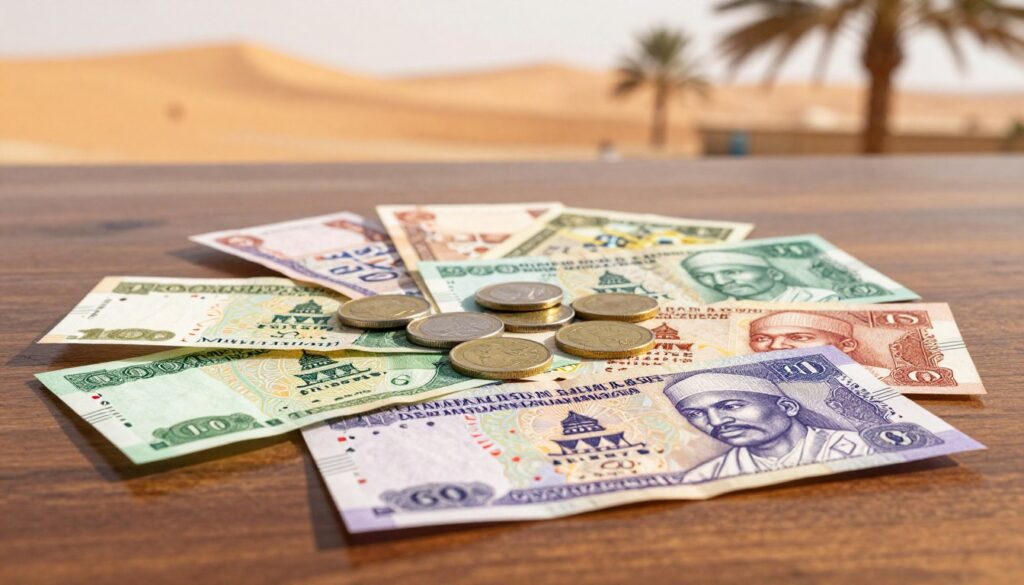
The banknotes and coins of the Mauritanian Ouguiya are more than just money. They tell the story of the nation’s history and identity. Each piece reflects the country’s culture and stunning landscapes, making it a key part of Mauritanian identity.
Current Banknote Denominations and Designs
The Mauritanian Ouguiya banknotes come in different values, each with its own special design. These designs showcase the country’s culture and history. They feature important figures, landmarks, and natural elements.
These banknotes have advanced security features to stop fake money. They use modern printing and security threads. This makes them safe for everyday use.
Coin Denominations and Features
The coins of the Mauritanian Ouguiya match the banknotes in design and theme. They reflect Mauritania’s culture and national identity.
Coins are made to last and have unique features for easy recognition. They are used for small transactions, making them handy for everyday use.
When dealing with foreign exchange, knowing about Mauritanian currency is key. It helps in handling money matters in Mauritania more smoothly.
Exchange Rates and Value of the Mauritanian Currency
The Mauritanian Ouguiya’s value against major currencies is key to the country’s economy. It’s important for businesses, travelers, and investors to know these rates.
Current Exchange Rates Against Major Currencies
The Mauritanian Ouguiya’s (MRU) exchange rate against the US Dollar (USD) and Euro (EUR) changes often. This is due to economic indicators and market trends.
- The current exchange rate is about 1 USD = 40 MRU, though it can change.
- Against the Euro, the rate is roughly 1 EUR = 45 MRU, showing the currency’s value.
For the latest and most accurate exchange rates, check with trusted financial sources or currency exchange services.
Historical Value Fluctuations
The Mauritanian Ouguiya’s value has seen big changes over time. These changes were due to inflation, economic reforms, and global commodity prices.
- In the early 2000s, the Ouguiya saw high inflation, causing it to lose value against major currencies.
- Economic reforms and currency redenomination in 2018 tried to stabilize the currency and boost its global standing.
These shifts show how the Mauritanian economy and its currency are always changing. Keeping an eye on these changes helps understand the country’s economic health.
Banking and Currency Exchange in Mauritania
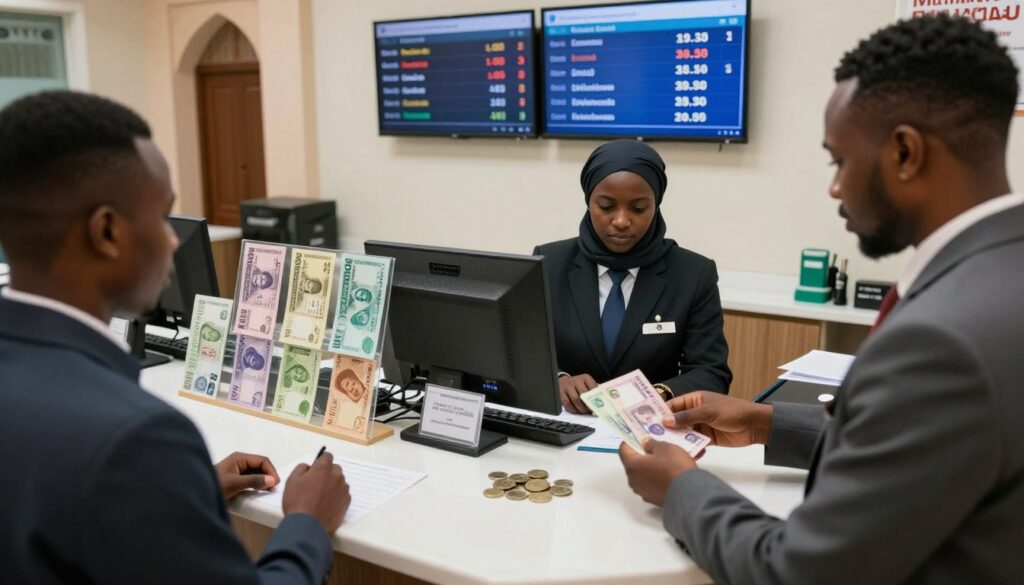
Mauritania’s banking system helps with both local and international money moves. Several big banks work here. The Central Bank of Mauritania is key in keeping the Mauritanian Ouguiya (MRU) stable.
Major Banks and Financial Institutions
Many big banks are in Mauritania. Some top ones are:
- The Banque Nationale de Mauritanie (BNM)
- The Banque Islamique de Mauritanie (BIM)
- The Société Générale Mauritanie
These banks offer services like currency exchange, savings, and loans. They help both people and businesses with their money needs.
Where to Exchange Currency in Mauritania
You can exchange money in several places:
- Major banks
- Currency exchange offices
- Hotels and some tourist spots
It’s best to exchange money at places approved by the government. This way, you get a good rate and follow the rules. The Mauritanian Ouguiya is the local money, shown by “UM”.
Knowing about local banking and where to get financial help is key when visiting Mauritania. The currency code for Mauritanian Ouguiya is MRU. Knowing the current exchange rates helps manage your money well while you’re there.
Practical Information for American Travelers
Knowing about the Mauritanian Ouguiya and local money habits is key for American visitors. When you go to Mauritania, learning about the local money and banking rules can really help your trip.
Using Cash vs. Cards in Mauritania
In Mauritania, cash is the best way to pay, especially in the countryside where cards are hard to find. American visitors should bring enough Ouguiya for their daily needs. Even though some big hotels and restaurants in Nouakchott might take credit cards, it’s smart to have Ouguiya for other things.
Tips for using cash and cards:
- Exchange some money to Ouguiya when you arrive.
- Use safe banks or currency exchange places for deals.
- Keep your cash safe and think about using a money belt.
Tips for Managing Money While Traveling
Handling your money well in Mauritania means knowing the local banking rules and the latest exchange rates. The Central Bank of Mauritania is key in managing the country’s money.
To handle your money well:
- Use a reliable Mauritania currency converter to keep up with exchange rates.
- Don’t exchange money at airports or hotels, as the rates might not be good.
- Watch out for scams and always check if the money is real.
By being informed and ready, American travelers can easily deal with Mauritania’s money scene. This makes for a more fun and worry-free trip.
The Ouguiya and Mauritania’s Economic Outlook
Mauritania’s economic future is closely tied to its currency, the Ouguiya. The country’s economic growth depends on the Ouguiya’s value and stability.
Role in Local Economy
The Ouguiya is key to Mauritania’s economy. It affects trade and commerce, influencing the cost of goods and services.
Impact on Trade: The Ouguiya’s exchange rate against major currencies is crucial. A stable Ouguiya attracts foreign investment and boosts trade.
Digital Payment Trends and Future Developments
Mauritania is slowly adopting digital payment systems. This move could modernize its financial infrastructure and improve the Ouguiya’s role.
Digital Payments: Digital payment methods are becoming more popular. They offer a convenient alternative to cash, likely reducing physical currency use.
The Ouguiya’s future will depend on Mauritania’s economic policies and global financial integration. As digital transactions grow, the currency’s role will evolve.
Conclusion
The Mauritanian Ouguiya is a unique currency with a rich history. It plays a vital role in the country’s economy. Knowing its value and where to exchange it is key for both locals and visitors.
Visitors to Mauritania can exchange their money at major banks or at currency exchange offices. Knowing the mauritanian currency value and where to exchange currency in mauritania ensures a smooth transaction.
Mauritania’s economy and financial systems are growing. The Ouguiya is likely to stay important in the country’s finances. Staying updated on the currency and its exchange rates helps individuals make the most of their money in Mauritania.
FAQ
What is the official currency of Mauritania?
The official currency of Mauritania is the Mauritanian Ouguiya.
What is the currency code for the Mauritanian Ouguiya?
The currency code for the Mauritanian Ouguiya is MRU.
Who manages the Mauritanian Ouguiya?
The Central Bank of Mauritania manages the Mauritanian Ouguiya.
When was the Mauritanian Ouguiya introduced?
The Mauritanian Ouguiya was introduced in 1973.
What was the reason for the 2018 currency redenomination?
The 2018 currency redenomination made transactions simpler and improved the currency’s value.
What are the current denominations of Mauritanian Ouguiya banknotes?
The current banknote denominations are on the Central Bank of Mauritania’s website. They feature various designs and security features.
Where can I exchange currency in Mauritania?
You can exchange currency at major banks and financial institutions in Mauritania. Also, at authorized currency exchange offices.
Is it recommended to use cash or cards in Mauritania?
Using cash is recommended for most transactions in Mauritania. Some businesses may accept major credit cards, though.
How can I manage my money while traveling in Mauritania?
To manage your money, exchange some currency upon arrival. Use local currency for transactions. Be aware of local banking practices.
What is the impact of the Ouguiya on Mauritania’s economy?
The Ouguiya is crucial for Mauritania’s economy. It affects local trade and commerce. Its value can change due to economic factors.
Are digital payment trends expected to grow in Mauritania?
Yes, digital payment trends are expected to grow in Mauritania. This is due to more mobile phones and government support for digital payments.
What is the current exchange rate of the Mauritanian Ouguiya against major currencies?
The current exchange rate is on the Central Bank of Mauritania’s website or through currency conversion services.

Adam G
This post was created by Adam G, a seasoned financial writer with a passion for explaining currency exchange and market movements