Did you know the Mozambican Metical (MZN) is Mozambique’s official currency? This country is growing economically and has a rich culture. Knowing the local currency is key for a successful trip or business venture.
The Mozambican Metical is crucial for Mozambique’s economy. Its value affects how much you can buy and your financial choices. When you visit Mozambique, you’ll need to exchange your money for Meticais to shop and pay for things.
Key Takeaways
- Understand the Mozambican Metical (MZN) as the official currency.
- Learn about the importance of local currency for travelers and businesses.
- Discover the significance of the Metical in Mozambique’s economy.
- Find out how to exchange your money for Meticais.
- Understand the impact of the Metical’s value on your financial decisions.
The Mozambican Metical at a Glance
Exploring Mozambique means knowing the local currency, the Metical. The Mozambican Metical, or MZN, is used for daily transactions. It’s the official currency in the country.
Basic Facts and Features
The Mozambican Metical has unique features. Its symbol is “MT,” but “MZN” is used internationally. The Bank of Mozambique manages the Metical, ensuring economic stability.
Key Features of the Mozambican Metical:
- Currency Code: MZN
- Currency Symbol: MT
- Issuing Authority: Bank of Mozambique
Banknotes and Coins in Circulation
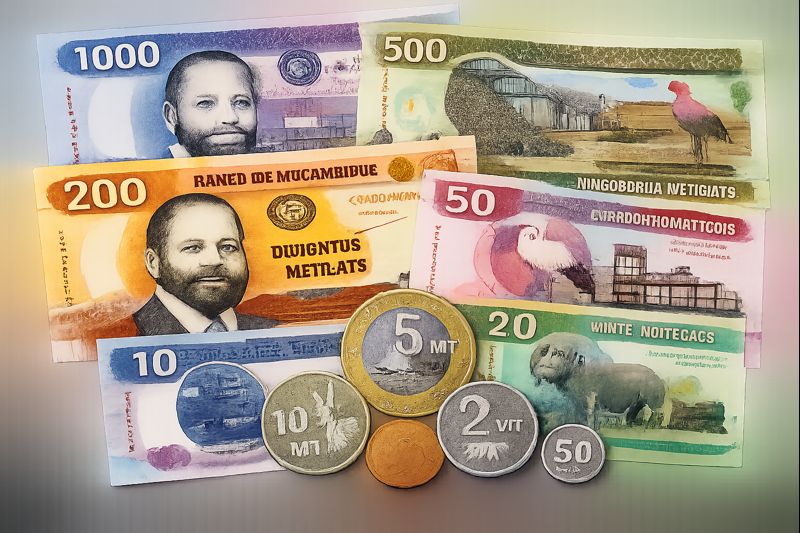
The Metical comes in various banknotes and coins. Banknotes range from 20 to 1,000 Meticais. Coins are available in 1, 2, 5, and 10 Meticais, but smaller coins are rare.
| Denomination | Type |
|---|---|
| 20, 50, 100, 200, 500, 1000 | Banknotes |
| 1, 2, 5, 10 | Coins |
Knowing the different types of currency helps you manage money in Mozambique better.
Historical Evolution of Mozambique Currency
Mozambique’s currency has changed a lot since the colonial times. Its money history is linked to its politics and economy.
From Portuguese Colonial Era to Independence
Before gaining freedom in 1975, Mozambique used the Portuguese escudo. After independence, Mozambique started its own money system.
Creating a national currency was key for economic freedom. The new government had to make a system that helped the economy grow.
Introduction of the First Metical (1980)
In 1980, Mozambique got its first national currency, the Metical (MZN). The Metical was a big step for Mozambique, showing it was free from old money rules.
Key features of the first Metical:
- Replaced the escudo as the official currency
- Initially pegged to a basket of currencies
- Aimed to stabilize the economy and facilitate trade
The 2006 Currency Redenomination
In 2006, Mozambique changed its currency. They made the Metical worth 1,000 times more. This was to make money easier to handle and fight inflation.
The change had big effects on the economy, like:
- Made money dealings simpler
- Reduced the amount of money around
- Helped fight inflation by cutting down money
Knowing about Mozambique’s currency history helps us understand its economic ups and downs. The changes show how the country has dealt with global economic shifts.
Current Exchange Rates and Value of the MZN
Exploring Mozambique’s finances means knowing the MZN’s current exchange rate is key. The Mozambican Metical’s value against major currencies affects your money decisions. This is true for investing, traveling, or doing business in Mozambique.
MZN to USD Conversion Rates
The exchange rate between the Mozambican Metical (MZN) and the United States Dollar (USD) is important. As of the latest updates, 1 USD is about 63.5 MZN. This rate changes due to economic factors like inflation, trade, and foreign investment.
Exchange Rate Trends (2020-2023)
Looking at the MZN to USD exchange rate trends from 2020 to 2023 shows some patterns. The Metical has mostly gone down against the USD, with some ups and downs.
| Year | Average Exchange Rate (1 USD = MZN) |
|---|---|
| 2020 | 62.1 |
| 2021 | 63.2 |
| 2022 | 64.5 |
| 2023 | 63.5 |
Comparison with Other Major Currencies
Looking at the MZN with other major currencies helps understand its value better. Against the Euro (EUR), the MZN has also gone down, but less than against the USD. The exchange rate with the South African Rand (ZAR) is more stable, thanks to their economic and geographical ties.
Knowing these exchange rates is crucial for smart decisions in trade, investment, and travel. The MZN’s value against major currencies affects your spending, investment gains, and financial planning in Mozambique.
Economic Factors Influencing the Mozambican Metical
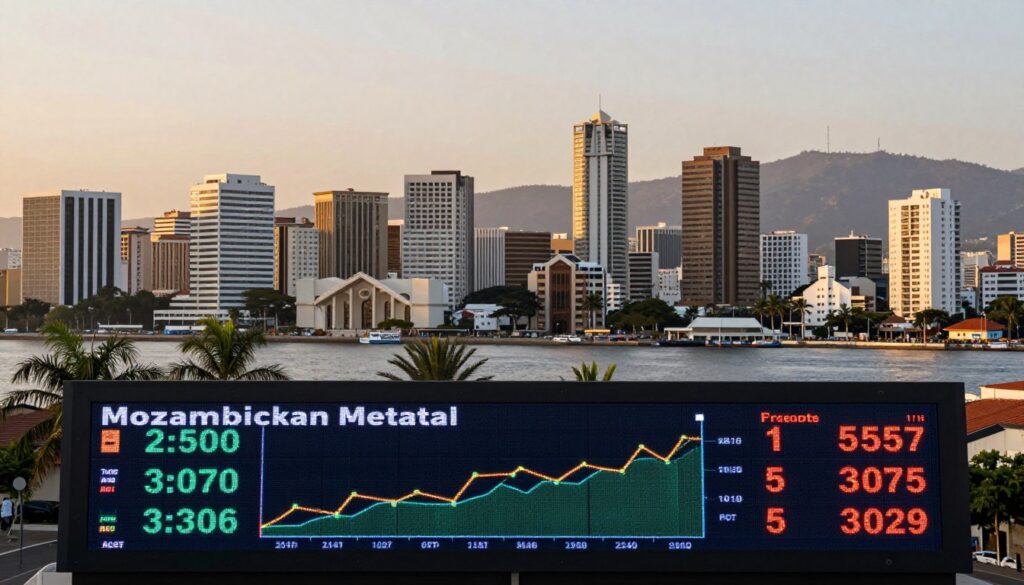
It’s important for investors and travelers to know what affects the Mozambican Metical. The Metical’s value changes due to many economic factors. Knowing these helps you understand the currency market better.
Inflation Rates and Central Bank Policies
Inflation rates greatly affect the Mozambican Metical’s value. High inflation means the currency’s worth goes down because things cost more. The Bank of Mozambique, the central bank, tries to keep things stable by controlling money and interest rates.
Impact of Natural Resource Discoveries
Discoveries of gas and minerals greatly impact Mozambique’s economy and the Metical. These finds attract more foreign investment, which can make the currency stronger. But, they can also cause economic ups and downs if not handled well.
External Debt and Foreign Aid Effects
External debt and foreign aid also play big roles in the Metical’s value. Too much debt can scare off investors, making the currency weaker. But, foreign aid can help keep the economy stable and support the currency, especially when times are tough.
In summary, the Mozambican Metical’s value is shaped by many economic factors. It’s key to understand these to make smart choices, whether investing or traveling. By staying informed about inflation, central bank actions, natural resource finds, debt, and aid, you can better manage the Mozambican currency.
Banking and Currency Exchange Systems in Mozambique
Understanding the banking and currency exchange systems in Mozambique is key. The financial sector has grown a lot, serving both locals and visitors. It offers a variety of services.
Structure of the Banking Sector
The banking sector in Mozambique is mainly led by a few big banks. The Bank of Mozambique is the central bank. It controls the financial sector, keeps things stable, and sets exchange rates.
Commercial banks provide services like managing accounts, loans, and currency exchange. Big names include Millennium BIM, Standard Bank, and Nedbank. They have many branches, making banking easy to access.
Official vs. Parallel Exchange Markets
Mozambique has two currency exchange markets: official and parallel. The official exchange rate is set by the Bank of Mozambique. Banks and authorized dealers use this rate. But, the parallel exchange market has different rates.
| Exchange Market | Characteristics | Exchange Rate |
|---|---|---|
| Official Market | Regulated by the Bank of Mozambique | Official rate (e.g., 1 USD = 63.5 MZN) |
| Parallel Market | Unregulated, higher risk | Variable rate (e.g., 1 USD = 65-70 MZN) |
Digital Banking and Mobile Money Services
Digital banking and mobile money services have changed how people manage money in Mozambique. M-Pesa is a popular choice for sending money, paying bills, and getting credit with just a phone.
Digital banking is convenient, saves money, and includes more people, especially in rural areas. Traditional banking is not always available there.
Practical Guide to Using Mozambique Currency for American Travelers
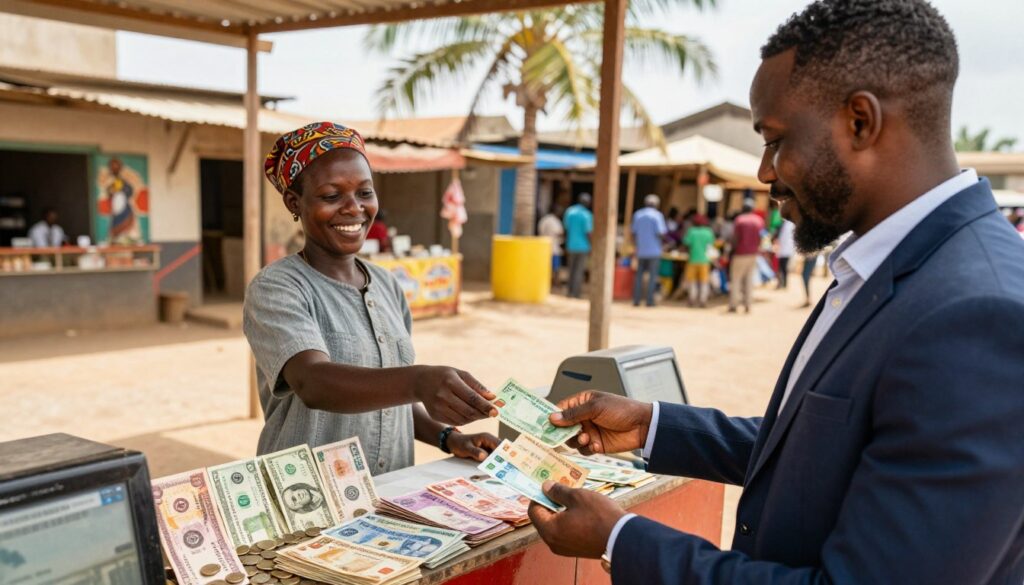
Traveling to Mozambique means getting to know the Mozambican Metical (MZN). It’s key for managing your money well. As an American, knowing the local currency makes your trip smoother.
Cash Requirements and Accessibility
In Mozambique, cash is essential, especially outside big cities like Maputo. You’ll need Metical for most things. ATMs are found in bigger towns, but having local cash for rural areas is wise.
Tips for accessing cash: Stick to trusted banks and know any withdrawal limits. Some ATMs might not take foreign cards, so have a plan B.
Credit Card Acceptance and Limitations
Credit cards are getting more common in Mozambique, especially in tourist spots and big hotels. But, they’re still not everywhere, especially in rural areas.
Visa and Mastercard are more accepted than American Express. Tell your bank you’re traveling to avoid card issues.
Currency Exchange Tips and Best Practices
You can exchange your money for Metical at airports, banks, or currency offices. Watch out for exchange rates and fees, as they can change a lot.
Best practices: Check rates before exchanging a lot. And don’t exchange at airports or hotels, as rates are worse there.
Understanding the Mozambican Metical helps you prepare for your trip. You’ll have a more relaxed and enjoyable time traveling.
Business and Investment Considerations with the MZN
Investors interested in Mozambique’s economy need to know about the Mozambican Metical. The MZN’s value affects investment returns. It’s important to understand what influences it.
Foreign Exchange Controls and Regulations
Mozambique has rules to keep its economy stable. Investors must follow these rules. This includes converting foreign money to MZN for local costs. Knowing these rules helps in planning investments.
Repatriation of Profits and Currency Conversion
Getting profits out of Mozambique means converting MZN to foreign currency. This process has rules and restrictions. Investors need to know these to manage their money well.
Hedging Strategies Against Currency Volatility
Currency changes can risk investments in Mozambique. Using forward contracts and options can reduce these risks. These tools help protect investments from bad currency moves.
In summary, understanding the Mozambican Metical is key for good investments in Mozambique. Knowing about foreign exchange rules, getting profits out, and using hedging strategies helps investors make smart choices and handle risks better.
Recent Developments in Mozambique’s Currency Market
Recent changes in Mozambique’s currency market are due to central bank actions and global economic shifts. Knowing these factors is key for smart financial choices.
Central Bank Interventions (2022-2023)
The Bank of Mozambique has worked hard to keep the Metical stable. They’ve managed foreign exchange and adjusted money policies to fight global economic ups and downs.
Key actions include:
- Changing reserve needs for banks
- Using open market operations to control money flow
- Stabilizing the Metical in the foreign exchange market
Impact of Global Economic Factors
Global trends have greatly affected the Metical’s value. Changes in commodity prices, global demand, and trade policies have hit Mozambique’s economy hard.
IMF Programs and Currency Stability
The International Monetary Fund (IMF) has been key in supporting Mozambique’s economy. Their programs aim to stabilize the currency, improve governance, and boost sustainable growth.
| Year | IMF Program | Currency Stability Impact |
|---|---|---|
| 2020 | Extended Credit Facility | Moderate |
| 2022 | Policy Support Instrument | Significant |
| 2023 | Continued Policy Support | Ongoing |
By keeping up with these updates, you can better understand Mozambique’s currency market. This knowledge helps you make smarter financial choices.
Conclusion: Future Outlook for the Mozambican Metical
Exploring the Mozambican Metical shows how vital it is to know the currency’s value and exchange rate. The Metical has seen big changes since it started, especially with the 2006 redenomination.
The future of the Mozambican Metical will be shaped by many economic factors. These include inflation rates, central bank policies, and the effects of natural resource discoveries. These elements will keep changing the currency’s value against major currencies like the USD.
For investors and travelers, keeping up with Mozambique’s currency market is key. As the country’s economy grows, watching the Metical’s value and exchange rate is crucial. Knowing these trends helps you make better financial choices in Mozambique.
FAQ
What is the official currency of Mozambique?
The official currency of Mozambique is the Mozambican Metical (MZN).
What is the currency symbol for the Mozambican Metical?
The currency symbol for the Mozambican Metical is “MT” or “MZN”.
Can I use USD in Mozambique?
While USD is widely accepted in tourist areas, it’s recommended to use the local currency, Mozambican Metical, for most transactions.
How do I exchange currency in Mozambique?
You can exchange currency at banks, currency exchange offices, or some hotels. It’s also possible to use ATMs to withdraw Mozambican Metical.
What are the available denominations of Mozambican Metical banknotes and coins?
The available denominations of Mozambican Metical banknotes are 20, 50, 100, 200, 500, and 1000 MZN. Coins are available in denominations of 1, 2, 5, and 10 MZN.
Are credit cards widely accepted in Mozambique?
Credit cards are accepted in some major hotels, restaurants, and tourist facilities, but cash is still the preferred payment method in many places.
How can I avoid exchange rate losses when traveling to Mozambique?
To minimize exchange rate losses, use reputable currency exchange services. Avoid exchanging money at airports or tourist areas. Have some local currency for initial expenses.
What is the current exchange rate of MZN to USD?
The current exchange rate of MZN to USD can be found on reliable currency conversion websites or through your bank.
Can I send money to Mozambique using online services?
Yes, you can send money to Mozambique using online money transfer services. Be aware of the fees and exchange rates applied.
How does the Mozambican government regulate foreign exchange?
The Mozambican government regulates foreign exchange through the Bank of Mozambique. It oversees the country’s monetary policy and foreign exchange controls.

Adam G
This post was created by Adam G, a seasoned financial writer with a passion for explaining currency exchange and market movements