
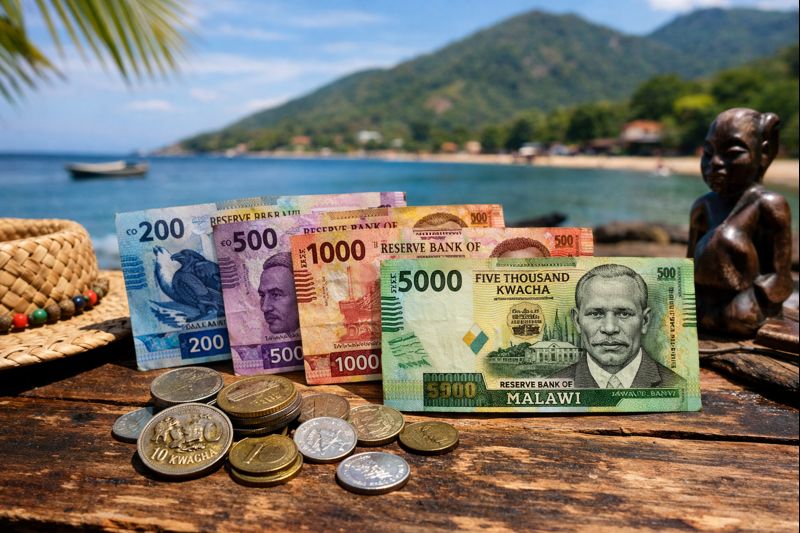
Did you know the Malawian Kwacha has been Malawi’s official currency since 1971? It replaced the Malawian pound, playing a key role in the country’s economy.
The switch to the Kwacha was a big change. It showed how the global economy and Malawi’s independence were growing. Knowing about the Malawian Kwacha helps us understand Malawi’s financial journey.
Key Takeaways
- The Malawian Kwacha was introduced in 1971.
- It replaced the Malawian pound as the official currency.
- The Kwacha has significant cultural and economic importance.
- Understanding its history helps grasp Malawi’s financial evolution.
- The Malawian Kwacha reflects the country’s growing independence.
The Evolution of Malawi Currency Through History
Exploring Malawi’s currency history reveals a rich tapestry shaped by colonialism and independence. This journey mirrors the country’s economic and political changes over time.
Pre-Colonial Currency Systems
Before colonial rule, Malawi used traditional currencies like bartering and items like ivory and cloth. These systems were key for local trade.
Colonial Era and the Pound
Colonial rule brought the British pound sterling to Malawi. This linked Malawi’s economy to Britain’s, shaping its monetary policies. As colonialism influenced the economy, the pound became a common currency.
“The adoption of the British pound sterling during the colonial era had a lasting impact on Malawi’s monetary system.”
Birth of the Malawian Kwacha in 1971
In 1971, Malawi introduced the Kwacha, a step towards economic freedom. The Kwacha replaced the Malawian pound, marking a key moment in financial history. The name “Kwacha” means “dawn” in Chichewa, signifying a new beginning.
The evolution of Malawi’s currency shows the country’s growth through various economic and political stages. It culminated in the Kwacha, a symbol of national identity and sovereignty.
Understanding the Malawian Kwacha Today
Exploring the Malawian economy means knowing about the Kwacha. The Malawian Kwacha is key to the country’s money matters. Its value impacts many parts of the economy.
Current Status of the Malawian Kwacha
The Malawian Kwacha has seen ups and downs in value. The Reserve Bank of Malawi works hard to keep it stable. Today, the Kwacha is still the official money used in Malawi.
ISO Code and International Recognition
The ISO code for the Malawian Kwacha is MWK. This code is important for dealing with money worldwide. The Reserve Bank of Malawi issues the currency and keeps it trustworthy. This makes it easier for people and businesses to handle money globally.
Malawi Currency Denominations and Design
The Malawian Kwacha comes in different sizes, each with its own look and safety features. You’ll see the rich culture and history in every note and coin.
Banknotes in Circulation
The Reserve Bank of Malawi prints banknotes with famous people and places from Malawi’s past. These notes show off the country’s culture and big moments. For example, the MK20 note has Dr. Hastings Kamuzu Banda, the first president of Malawi.
There are banknotes for MK20, MK50, MK100, MK200, MK500, MK1000, and MK2000. Each has its own special design. These notes are more than money; they tell Malawi’s story and culture.
Coins and Their Specifications
Malawi also has coins in different amounts. Each coin is made differently, so they stand out. You can find coins for MK1, MK5, and MK10, each with its own look and feel.
Coins often have national symbols or important signs. This adds to Malawi’s cultural identity. The way they’re made also makes them safer from fake money.
Security Features and Anti-Counterfeiting Measures
The Malawian Kwacha has special safety features to stop fake money. Banknotes have watermarks, holograms, and tiny prints. Coins are made in special ways too. The Reserve Bank of Malawi keeps improving these features to fight fake money.
So, you can be sure the money in Malawi is real. This makes financial deals safe and reliable.
Symbols and Cultural Significance on Malawian Money
The Malawian currency is more than just money. It’s a way to show off the nation’s rich culture and history. When you look at the Malawian kwacha, you’ll see symbols and cultural elements that are important to the country.
National Heroes and Landmarks Featured
The currency in Malawi highlights national heroes and landmarks. These have shaped the country’s history. Figures like Dr. Hastings Kamuzu Banda, the first president, are on the money.
Cultural Elements in Currency Design
The design of Malawian currency includes cultural elements. These show the country’s diverse heritage. Traditional patterns and motifs are used, making the currency beautiful and meaningful.
This mix of modern and traditional makes the Malawian kwacha stand out. It promotes national pride and identity.
The Reserve Bank of Malawi: Guardian of the Currency
The Reserve Bank of Malawi protects the Malawian currency, keeping it stable and trustworthy. It is the heart of Malawi’s financial system.
Role and Responsibilities
The Reserve Bank of Malawi issues the Malawian Kwacha and sets monetary policy. It keeps the economy stable by managing money and foreign exchange. It also watches over the banking sector.
By controlling money and setting interest rates, the bank guides the economy’s path.
| Responsibility | Description |
|---|---|
| Monetary Policy Implementation | Managing interest rates and money supply to influence economic conditions. |
| Currency Issuance | Issuing the Malawian Kwacha, ensuring its availability and integrity. |
| Banking Supervision | Overseeing commercial banks to maintain financial stability. |
Monetary Policy Implementation
The Reserve Bank of Malawi uses tools like interest rates and money supply to shape the economy. It aims to control inflation, boost growth, and create jobs. Good monetary policy is key to keeping the Malawian currency strong and supporting growth.
For example, when inflation is high, the bank might raise interest rates to slow down spending. But if the economy is slow, it might lower rates to encourage more borrowing and investment.
Malawi Foreign Exchange Market Dynamics
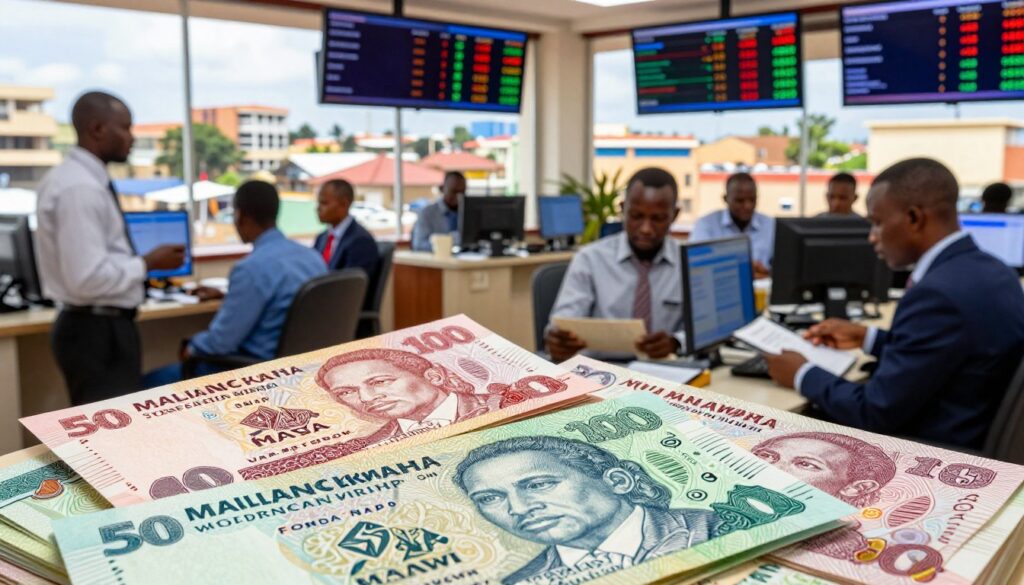
It’s important for investors and travelers to know about the Malawi foreign exchange market. The Malawian Kwacha is traded against major currencies. Its exchange rate changes due to different economic factors.
Major Currency Pairs with the Kwacha
The Malawian Kwacha is mainly traded against the US Dollar, Euro, and British Pound. These pairs are key for international trade and investment in Malawi.
| Currency Pair | Description | Typical Use |
|---|---|---|
| MWK/USD | Kwacha to US Dollar | International trade, tourism |
| MWK/EUR | Kwacha to Euro | Trade with European Union |
| MWK/GBP | Kwacha to British Pound | Historical trade ties, tourism |
Factors Affecting Malawi Forex Rates
Several factors affect Malawi’s forex rates. These include inflation rates, interest rates, and trade balances. Political stability and economic indicators also play a big role.
For example, during political instability, the Kwacha might drop against major currencies. This happens because investor confidence falls.
Historical Exchange Rate Trends
Looking at historical exchange rate trends helps predict the future of the Malawian Kwacha. Over time, the Kwacha has seen ups and downs against major currencies. These changes are due to both local and global economic conditions.
Understanding these trends helps investors and travelers make better financial decisions in Malawi.
Practical Guide to Using Malawi Currency for Travelers
Planning a trip to Malawi? Knowing about the local currency and payment methods is key for a smooth trip. The Malawian Kwacha is the official money. Learning how to use it and other payment options will make your trip better.
Cash vs. Card Usage in Malawi
In Malawi, cash is mostly used, especially in rural areas. Major credit and debit cards work in big towns and tourist spots. Still, it’s smart to carry enough cash, especially the local currency, for shopping and eating out. Some places might charge more for card payments.
Currency Restrictions for Tourists
There are no big rules for tourists bringing foreign money into Malawi. But, you must tell customs if you have more than $10,000 USD. Also, you can’t take the local currency, the Kwacha, out of the country. So, use or exchange your Kwacha before you leave.
Tipping Customs and Price Expectations
Tipping in Malawi is common in the tourism industry. A 10% tip is usual for good service. At markets, it’s normal to negotiate prices. So, be ready to haggle.
| Payment Method | Acceptance | Tips |
|---|---|---|
| Cash (Malawian Kwacha) | Widely accepted, especially in rural areas | Have small denominations for easier transactions |
| Credit/Debit Cards | Accepted in major towns and tourist areas | Be aware of potential extra charges |
How to Navigate Malawi Money Exchange Services
Traveling to Malawi means you’ll need to exchange your money. The local currency is the Malawian Kwacha (MWK). This is key to enjoying your trip fully.
Banking Services for Currency Exchange
Banks in Malawi are great for exchanging currency. They offer safe and reliable services. The Reserve Bank of Malawi and other commercial banks have forex bureaus. Here, you can exchange your money for a good exchange rate, especially for US dollars.
Forex Bureaus and Their Operations
Forex bureaus are also available, especially in tourist spots and big cities. They are allowed to exchange currency and work longer hours than banks. It’s smart to compare rates at different bureaus. Some might charge more, so always check the Malawi exchange rate first.
Tips for Getting the Best Exchange Rates
To get the best rates, avoid exchanging at airports or hotels. They usually have worse rates. Use Malawi currency converters online to see current rates. Also, having some local currency when you arrive is helpful, as not all places take credit cards.
| Exchange Service | Average Rate (1 USD) | Commission |
|---|---|---|
| Banks | 800 MWK | 1-2% |
| Forex Bureaus | 810 MWK | 2-3% |
| Hotels | 750 MWK | 5% |
Economic Factors Influencing the Malawian Kwacha
Economic factors greatly affect the Malawian Kwacha. It’s important to look at these factors closely. The Kwacha’s value is influenced by many economic elements.
Inflation and Its Impact
Inflation is a key factor affecting the Malawian Kwacha. High inflation rates can make the currency value drop. This happens because the Kwacha’s buying power goes down.
Inflation often comes from too much money in circulation. This can be due to many reasons, including money policy decisions. The Reserve Bank of Malawi works hard to control inflation through its policies.
Agricultural Dependency and Seasonal Fluctuations
Malawi’s economy relies a lot on agriculture. This makes the Kwacha sensitive to seasonal changes. Agricultural productivity affects the country’s foreign earnings, which in turn affects the currency’s value.
When there’s a drought or a bad harvest, the economy can take a hit. This can cause the Kwacha to lose value.
International Aid and Foreign Investment Effects
International aid and foreign investment also play big roles in the Malawian Kwacha. Foreign investment can bring in much-needed capital. International aid provides financial support when needed.
But, relying too much on these can make the currency unstable. Changes in global aid policies or investor confidence can cause the exchange rate to swing.
The mix of these economic factors makes the Malawian Kwacha’s value unpredictable. It’s key to understand these factors for anyone dealing with the Malawian currency. This includes traders, investors, and travelers.
Future Outlook for Malawi Currency and Economy
The future of the Malawian Kwacha is closely tied to digital financial solutions and economic stability. As Malawi’s financial scene evolves, digitalization and economic reforms will greatly impact the currency.
Digitalization Efforts and Mobile Money
Malawi is advancing in digitalization, with mobile money gaining traction. This move aims to boost financial inclusion, cut transaction costs, and streamline money handling. The Reserve Bank of Malawi is crucial in guiding these digital steps to benefit the economy and stabilize the Kwacha.
Some benefits of digitalization include:
- More people in rural areas can access financial services
- Businesses save on cash handling costs
- Transactions are safer
Economic Reforms and Currency Stability Initiatives
Malawi is also focusing on economic reforms to stabilize the Kwacha and boost the economy. These efforts include controlling inflation, better managing foreign exchange, and improving the business environment. By achieving a stable economy, Malawi hopes to draw more foreign investment and support long-term growth.
| Economic Reform | Objective | Expected Outcome |
|---|---|---|
| Inflation Control | Reduce inflation rates | Stability in prices |
| Foreign Exchange Management | Improve forex reserves | Stability in Kwacha value |
| Business Climate Enhancement | Simplify business regulations | Increased foreign investment |
With these reforms in place, Malawi’s economy is set to become stronger and more stable. The Kwacha will play a key role in the country’s financial dealings.
Conclusion: The Importance of Understanding Malawi’s Financial Landscape
Knowing about the Malawian Kwacha and the country’s financial scene is key. You’ve learned about the currency’s history, symbols, and how it works. This knowledge is crucial for understanding the Malawian economy.
The Reserve Bank of Malawi is important for keeping the currency stable. By knowing what affects the Kwacha, like inflation and farming, you get the financial landscape’s complexity.
Malawi is growing economically, with steps towards digital money and reforms. Keeping up with the Malawi currency and financial scene is important. It helps you make smart choices, whether you’re investing, traveling, or just interested in Malawi’s economy.
FAQ
What is the Malawian Kwacha?
The Malawian Kwacha is Malawi’s official currency. It was introduced in 1971, replacing the Malawian pound.
What is the ISO code for the Malawian Kwacha?
The ISO code for the Malawian Kwacha is MWK.
Who is responsible for issuing the Malawian Kwacha?
The Reserve Bank of Malawi issues the Malawian Kwacha.
What are the different denominations of Malawian currency?
The Malawian Kwacha comes in various banknote and coin sizes. Each has its own design and security features.
What are the major currency pairs with the Malawian Kwacha?
Major currency pairs with the Malawian Kwacha include USD/MWK, GBP/MWK, and EUR/MWK.
How can I exchange my currency for Malawian Kwacha?
You can exchange your currency for Malawian Kwacha at banks, forex bureaus, or currency exchange services.
What are the factors that affect the value of the Malawian Kwacha?
The Malawian Kwacha’s value is influenced by inflation, agricultural dependency, international aid, and foreign investment.
Can I use credit or debit cards in Malawi?
Some businesses in Malawi accept credit or debit cards. But it’s wise to carry cash, especially in rural areas.
Are there any currency restrictions for tourists in Malawi?
Tourists should know about any currency restrictions in Malawi. It’s best to check with authorities before your trip.
What is the current status of the Malawian Kwacha in terms of international recognition?
The Malawian Kwacha is recognized internationally. Its value is set by the foreign exchange market.
How does the Reserve Bank of Malawi implement monetary policy?
The Reserve Bank of Malawi regulates the money supply and sets interest rates. It also works to maintain financial stability.
What are the security features of Malawian banknotes?
Malawian banknotes have security elements like watermarks, holograms, and microprinting. These prevent counterfeiting.
What is the role of digitalization efforts in Malawi’s economy?
Digitalization, including mobile money, is key in Malawi’s economy. It improves financial inclusion and access to services.
What are the economic reforms aimed at stabilizing the Malawian Kwacha?
The Malawian government and the Reserve Bank of Malawi have introduced reforms. These include fiscal discipline and monetary policy changes to stabilize the currency.

Adam G
This post was created by Adam G, a seasoned financial writer with a passion for explaining currency exchange and market movements