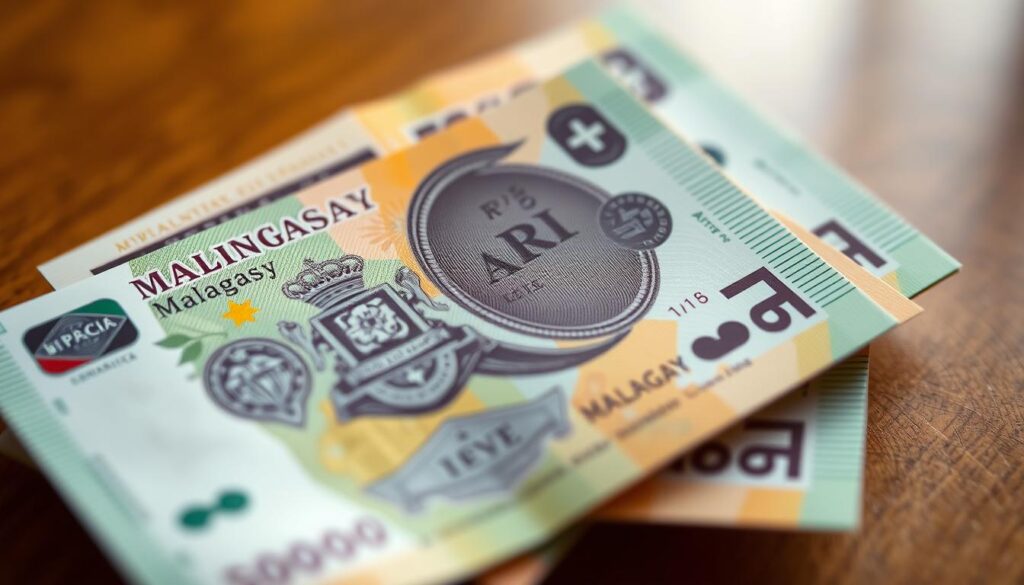
Madagascar has its own special currency, the Malagasy Ariary. It’s the official money used in the country. It’s very important for buying things and doing business.
The Malagasy Ariary is known as MGA and shown as Ar. It’s made and controlled by the Central Bank of Madagascar. If you’re going to Madagascar or doing business there, knowing about the local money is key.
Key Takeaways
- The Malagasy Ariary is Madagascar’s official currency.
- It is issued and managed by the Central Bank of Madagascar.
- Understanding the local currency is crucial for travelers and businesses.
- The Malagasy Ariary is abbreviated as MGA and symbolized as Ar.
- It plays a vital role in the country’s transactions and trade.
The Malagasy Ariary: Madagascar’s Official Currency
The Malagasy Ariary is Madagascar’s official currency. It is managed by the Central Bank of Madagascar. This currency is key for the country’s economy, helping with transactions everywhere.
Basic Information About the Ariary
The Malagasy Ariary is the legal money in Madagascar. It replaced the Malagasy franc in 2005. It’s divided into five iraimbilanja, but coins are not used anymore.
“The introduction of the Ariary marked a significant change in Madagascar’s monetary system, reflecting the country’s efforts to modernize its economy,” according to financial analysts.
Currency Code (MGA) and Symbol (Ar)
The international code for the Malagasy Ariary is MGA. Its symbol is Ar. These are used worldwide in financial dealings and currency exchange.
- Currency Code: MGA
- Currency Symbol: Ar
The Central Bank of Madagascar
The Central Bank of Madagascar issues the Malagasy Ariary. It also keeps its value stable. The bank manages the country’s money policy, ensuring the Ariary’s worth through economic actions.
| Role | Responsibility |
|---|---|
| Currency Issuance | Issuing the Malagasy Ariary |
| Monetary Policy | Managing inflation and maintaining currency stability |
Historical Background: From Franc to Ariary
To understand Madagascar’s currency, we must look at its history. This includes the switch from the Franc to the Ariary. The country’s money system was influenced by its colonial past and later economic changes.
Colonial Currency History
Madagascar’s money story started with the Malagasy Franc during colonial times. The Franc was used until 2005, when the Ariary became the official currency. The Franc was tied to the French Franc, showing Madagascar’s ties to France.
The Franc’s use greatly affected Madagascar’s economy. It was closely tied to France’s money system. This link impacted trade and money dealings between Madagascar and France.
The 2005 Currency Reform
In 2005, Madagascar changed its currency to the Ariary. This was more than just a name change. It was a move towards a more independent money policy.
The goal of the reform was to boost Madagascar’s economic freedom. The Ariary was set as the official currency, with 1 Ariary equal to 5 Malagasy Francs. This change was part of efforts to update the country’s financial system.
| Year | Currency | Significant Event |
|---|---|---|
| Colonial Era | Malagasy Franc | Introduction of Franc |
| 2005 | Ariary | Currency Reform |
Evolution of the Currency Name
The name “Ariary” comes from the local language. It shows Madagascar’s cultural roots. The introduction of the Ariary was a big step in the country’s economic history.
This change also shows Madagascar’s efforts to stand out economically. The Ariary is now a key part of Madagascar’s money scene.
As Madagascar grows economically, its currency history is a reminder of its complex past. It shows the country’s journey towards economic freedom.
What Currency Does Madagascar Use Today?
The Malagasy Ariary is Madagascar’s currency today. It was introduced in 2005 and is key to the country’s economy.
Current Status of the Ariary
The Malagasy Ariary is Madagascar’s official currency. It’s used in most transactions. It replaced the Malagasy Franc, changing the country’s money system.
The Central Bank of Madagascar issues the Ariary. It manages the country’s money and keeps the currency stable.
The Dual Denomination System
Madagascar uses a dual currency system. Prices are shown in both Ariary and Franc. This helps those who are used to the Franc.
- Prices are commonly displayed in both Ariary and Franc.
- Businesses often quote prices in both currencies to accommodate customers.
- The dual system helps maintain continuity with the past while embracing the new currency.
Local Currency Terminology
Locals have special terms for the currency. Knowing these terms is useful for visitors and businesses.
The term “Ariary” is common. But, some older terms related to the Franc are still used.
Using both modern and traditional terms shows Madagascar’s currency is changing.
Malagasy Ariary Banknotes: Designs and Denominations
The Malagasy Ariary banknotes show off Madagascar’s rich culture and stunning nature. They are more than just money; they tell the story of the country’s history, its wildlife, and its people.
Current Banknote Series
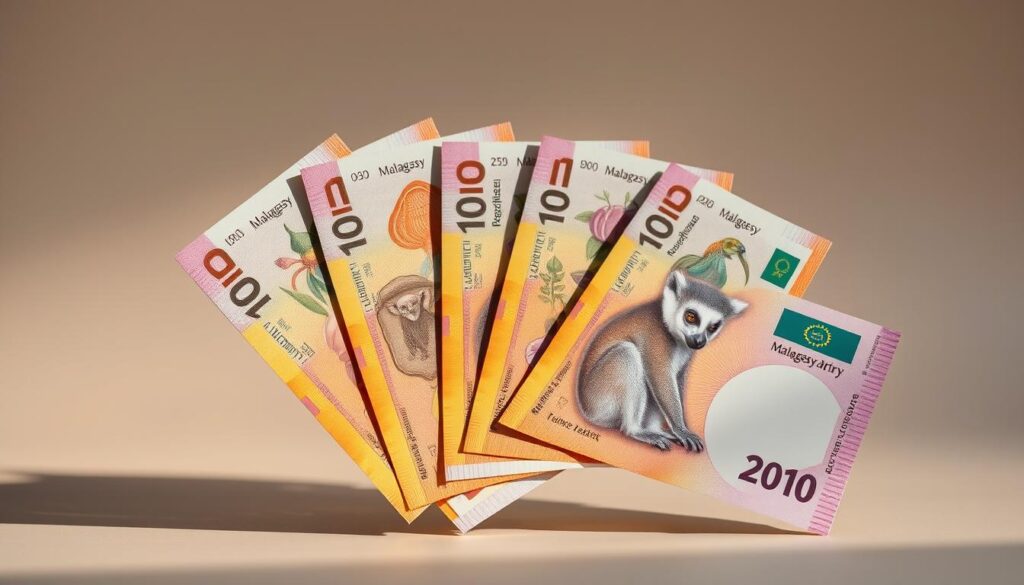
The latest series of Malagasy Ariary banknotes has different values, from 100 to 20,000 Ariary. Each note is special, showing off Malagasy culture and the country’s beauty. You can find banknotes for 100, 200, 500, 1,000, 2,000, 5,000, 10,000, and 20,000 Ariary.
Security Features and Authentication
The Malagasy Ariary banknotes have advanced security to stop fake money. They use watermarks, holograms, and detailed designs that are hard to copy. Each note has its own security features, making them safe to use.
For example, the 10,000 and 20,000 Ariary notes have even more security, like color-shifting ink and raised printing.
Cultural and Natural Elements on Banknotes
The designs on the Malagasy Ariary banknotes celebrate Madagascar’s culture and nature. They show pictures of unique animals, important people, and cultural symbols. For instance, some notes have pictures of lemurs and fossa, while others show traditional Malagasy art and buildings.
These elements make the banknotes beautiful and help share Malagasy culture and its wildlife with the world.
Coins of Madagascar: From Iraimbilanja to Ariary
The Malagasy Ariary coinage system has a rich history. It evolved from the traditional iraimbilanja to the modern coins used today. Madagascar’s currency has changed a lot, showing the country’s economic and cultural growth.
Current Coin Denominations
The current coins in Madagascar are part of the Ariary series. They replaced the Malagasy Franc. These coins come in different values to help with daily transactions. The most common coins are 1, 2, 5, 10, and 20 Ariary.
| Denomination | Material | Diameter (mm) | Weight (g) |
|---|---|---|---|
| 1 Ariary | Brass | 20 | 3 |
| 2 Ariary | Brass | 22 | 4 |
| 5 Ariary | Nickel-plated steel | 24 | 5 |
| 10 Ariary | Nickel-plated steel | 26 | 6 |
| 20 Ariary | Bimetallic | 28 | 7 |
Design Elements and Materials
The design of Malagasy Ariary coins shows Madagascar’s culture and beauty. They are made from brass, nickel-plated steel, and bimetallic materials. This makes them durable and resistant to wear.
Circulation and Usage Patterns
Coins in Madagascar are used for small purchases. The Ariary coinage system is key to the country’s money system. The Central Bank of Madagascar manages the coins, keeping them a reliable way to exchange money.
In conclusion, Madagascar’s coins, from iraimbilanja to Ariary, are crucial for the economy. Knowing about their denominations, design, and use helps us understand Madagascar’s culture and economy.
Current Exchange Rates and Value of the Malagasy Ariary
Knowing the current exchange rate of the Malagasy Ariary is key for travelers and businesses in Madagascar. The rate of the Ariary against major currencies like the US Dollar (USD) affects the economy. This includes tourism and international trade.
Ariary to USD Conversion
The Malagasy Ariary to USD conversion rate is watched closely in Madagascar. The latest data shows the rate changes daily due to economic factors.
Here’s a sample exchange rate table for better understanding:
| Currency | Exchange Rate (1 USD) |
|---|---|
| MGA (Malagasy Ariary) | 4,000 |
| EUR (Euro) | 0.85 |
| GBP (British Pound) | 0.75 |
Comparison with Other Major Currencies
The Malagasy Ariary is traded against the USD, Euro (EUR), and British Pound (GBP). Rates against these currencies also change due to global economic trends.
Historical Exchange Rate Trends
Looking at historical trends helps understand the Malagasy Ariary’s performance. Over time, the Ariary has seen both ups and downs against major currencies.
Factors Affecting Daily Fluctuations
Several factors cause daily changes in the Malagasy Ariary’s exchange rate. These include:
- Economic indicators like inflation and GDP growth
- Global commodity prices, especially for exports like vanilla and nickel
- Political stability and government policies
- Tourism and foreign investment
Knowing these factors helps predict future exchange rate trends. It’s crucial for making smart decisions in the foreign exchange market.
Currency Exchange in Madagascar: What Travelers Should Know
Knowing how to exchange currency in Madagascar helps you manage your money better. You can exchange money at different places, but it’s important to know the best ways to do it without trouble.
Official Exchange Locations and Banks
In Madagascar, you can exchange currency at banks and authorized offices. Banks are the safest, offering good rates and a secure place to exchange money. The Banky Foiben’i Madagasikara (Central Bank of Madagascar) is a major bank that provides reliable services.
- Banks: Major banks offer currency exchange services during business hours.
- Authorized Exchange Offices: These offices are licensed to provide exchange services and may offer more convenient hours than banks.
- Hotels and Resorts: Some high-end hotels and resorts may also offer currency exchange, though the rates might not be as favorable.
Black Market and Informal Exchanges
While official places are best, some might find black market or informal services. It’s important to stay away from these, as they can have bad rates or scams. The black market might seem to offer better rates, but the risks are too high.
“Using unofficial exchange services can expose travelers to significant risks, including fraud and theft.”
Tips for Getting the Best Rates
To get the best rates in Madagascar, follow these tips:
- Compare rates among different banks and authorized exchange offices.
- Avoid exchanging money at airports or hotels, as rates tend to be less favorable.
- Use ATMs to withdraw local currency (Malagasy Ariary) when possible, as this often provides a better rate than exchanging cash.
- Be cautious of scams and always verify the authenticity of the currency received.
Currency Declaration Requirements
When arriving in or leaving Madagascar, you need to know about currency declaration. There’s no limit on how much foreign currency you can bring, but declaring large amounts is wise to avoid customs trouble.
Remember, taking more than 1 million Ariary (about $250 USD) out of the country needs a declaration. Always check with the authorities or your airline for the latest rules.
Using Foreign Currency in Madagascar
Many visitors to Madagascar ask about using foreign money. The official currency is the Malagasy Ariary. But, some places in tourist areas might take foreign money too.
Acceptance of US Dollars and Euros
The US Dollar is often accepted in tourist spots, hotels, and big businesses. Euros might be accepted too, but less often. Remember, where you are and what you’re buying affects if they take foreign money.
Credit Cards and ATM Availability
Credit cards are getting more common in Madagascar, especially in big places and hotels. Visa and Mastercard are more accepted than others. You can find ATMs in big towns and cities to get Ariary with your card.
But, tell your bank you’re traveling to avoid any problems with your card.
Digital Payment Options
More places in Madagascar are starting to take mobile payments. But, this is still rare outside big cities.
Currency Restrictions for Travelers
You can bring foreign money into Madagascar without big issues. But, you must tell them if you have over 1,000,000 Ariary (or its value). Don’t exchange money on the black market because it’s risky and not good for you.
In short, while some places take foreign money, the Ariary is best for buying things. Bring a mix of credit cards, ATMs, and local money for a smooth trip.
Madagascar’s Economy and Its Impact on Currency Value
Madagascar’s economy is key to the Malagasy Ariary’s value. The country’s economic health is shaped by inflation, trade balance, and tourism.
Economic Factors Affecting the Ariary
The Malagasy Ariary’s value is influenced by several economic factors. Inflation is a major one. When inflation goes up, the Ariary’s value often goes down.
Inflation and Purchasing Power
Inflation in Madagascar can come from many sources. These include money policy, economic growth, and outside factors. A bit of inflation is good for growth, but too much is bad.
| Year | Inflation Rate (%) | Ariary Value (USD) |
|---|---|---|
| 2020 | 4.2 | 1 USD = 3,900 Ar |
| 2021 | 3.8 | 1 USD = 4,100 Ar |
| 2022 | 5.1 | 1 USD = 4,300 Ar |
Trade Balance and Currency Stability
Madagascar’s trade balance is also important for the Ariary’s stability. A trade surplus can make the currency stronger. But a trade deficit can weaken it.
Tourism’s Influence on Currency Demand
Tourism has a big impact on the Malagasy Ariary’s demand. More tourists mean more people want the local currency. This can make the Ariary stronger.
The mix of these economic factors makes the Malagasy Ariary’s value complex. Knowing these dynamics helps predict currency changes and make smart choices.
Practical Money Tips for Visitors to Madagascar
Traveling to Madagascar means knowing the local currency, the Malagasy Ariary. It’s key for a smooth trip. Visitors need to manage their money well to enjoy their journey fully.
Budgeting with Ariary
Understanding the Malagasy Ariary is vital for budgeting in Madagascar. The Ariary is the official currency. Visitors should know the current exchange rates. It’s wise to have local currency ready for immediate needs upon arrival.
- Exchange some money upon arrival for initial expenses.
- Use local currency for small purchases and transactions.
- Keep larger denominations for significant expenses.
Common Prices in Madagascar
Knowing typical prices in Madagascar helps with budgeting. Here are some costs:
| Item | Approximate Price (Ar) |
|---|---|
| Meal at a local restaurant | 10,000 – 20,000 |
| Water bottle | 1,000 – 3,000 |
| Local transport ride | 1,000 – 5,000 |
Avoiding Currency Scams
Be careful of currency scams, especially when exchanging money. Here’s how to avoid them:
- Exchange money at official banks or currency exchange offices.
- Be wary of black market exchange offers.
- Count your money carefully before leaving the exchange counter.
Emergency Money Situations
In emergencies, having extra money is essential. Visitors should:
- Inform their bank of travel plans to avoid account restrictions.
- Have a backup credit or debit card.
- Know the location of nearby banks or ATMs.
Knowing these money tips helps visitors navigate Madagascar’s financial scene. This way, they can enjoy their trip without stress.
Conclusion: Understanding Madagascar’s Currency Landscape
Knowing the local currency is key for a smooth trip in Madagascar. The Malagasy Ariary is the official money and is very important for the economy. We’ve looked at its history, design, and how it affects both travelers and locals.
The Ariary is the main way people trade in Madagascar. To make the most of your visit, learn about exchange rates and use Ariary for shopping. Also, know where to exchange money.
Understanding the Malagasy Ariary helps travelers move around easily. Whether you’re exchanging money, using cards, or making digital payments, knowing about the local currency makes your trip better.
As Madagascar’s economy grows, knowing about its currency is vital. The Malagasy Ariary is not just money; it’s a symbol of Madagascar’s identity. It helps you dive deeper into the local culture and economy.
FAQ
What is the official currency of Madagascar?
The official currency of Madagascar is the Malagasy Ariary. It’s abbreviated as MGA and symbolized as Ar.
What is the currency code for the Malagasy Ariary?
The currency code for the Malagasy Ariary is MGA.
Who is responsible for issuing and managing the Malagasy Ariary?
The Central Bank of Madagascar issues and manages the Malagasy Ariary.
What was the currency used in Madagascar before the Malagasy Ariary?
Before the Malagasy Ariary, the Malagasy Franc was used.
When did Madagascar switch from the Malagasy Franc to the Ariary?
Madagascar switched to the Ariary in 2005 as part of a currency reform.
Are prices in Madagascar still sometimes listed in both Ariary and Franc?
Yes, prices in Madagascar are sometimes listed in both Ariary and Franc.
What are the available denominations of Malagasy Ariary banknotes?
Malagasy Ariary banknotes range from 100 to 20,000 Ariary.
What are some of the security features of Malagasy Ariary banknotes?
Malagasy Ariary banknotes have security features to prevent counterfeiting. These include watermarks, holograms, and other advanced security measures.
What is depicted on the Malagasy Ariary banknotes?
Malagasy Ariary banknotes show Madagascar’s rich culture and natural beauty. They feature various cultural and natural elements.
What denominations of coins are currently in circulation in Madagascar?
Coins in Madagascar include the Iraimbilanja and other denominations up to 1 Ariary. Sometimes, higher denominations are available.
How can I exchange my currency for Malagasy Ariary?
You can exchange your currency for Malagasy Ariary at official exchange locations, banks, or use ATMs.
Should I avoid using the black market for currency exchange in Madagascar?
Yes, avoid the black market for currency exchange. It’s risky and may result in counterfeit currency or bad exchange rates.
Are US Dollars and Euros widely accepted in Madagascar?
While some businesses accept US Dollars and Euros, the Malagasy Ariary is preferred for most transactions.
Can I use credit cards and ATMs in Madagascar?
Yes, credit cards and ATMs are available in major cities and tourist areas. However, acceptance may vary.
What economic factors affect the value of the Malagasy Ariary?
The value of the Malagasy Ariary is influenced by inflation, trade balance, and tourism.
How can I avoid currency scams in Madagascar?
To avoid currency scams, use official exchange services. Be aware of current exchange rates. Avoid exchanging money with unauthorized individuals.
What should I do in an emergency money situation in Madagascar?
In an emergency, have a backup plan. This could be a credit card or access to funds through a bank or services like Western Union.

Adam G
This post was created by Adam G, a seasoned financial writer with a passion for explaining currency exchange and market movements
 English
 简体中文
简体中文 Español
 Deutsch
 Français
 العربية
 Polski