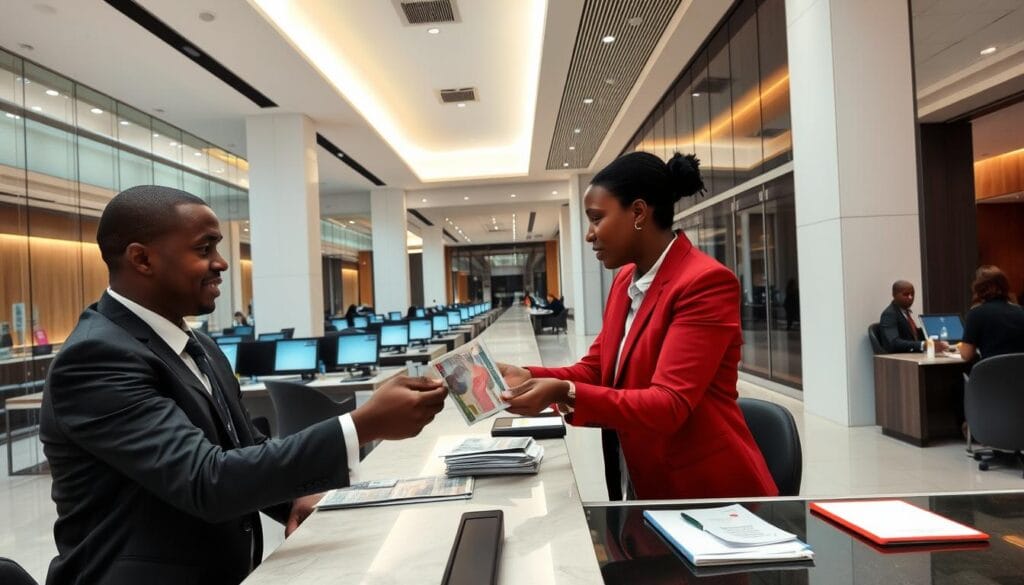
前往 赤道几内亚 means getting to know the local economy. It’s a cash-based economy, so most deals are done with cash.
这 中非金融合作法郎 is the official money here. It’s also used in five other Central African countries. Knowing this is key for travelers.
Learning about the local currency makes your trip to 赤道几内亚 smoother. You’ll find it easier to handle everyday money matters.
要点总结
- 这 中非金融合作法郎 is the official currency of Equatorial Guinea.
- Equatorial Guinea operates as a cash-based economy.
- 这 Central African CFA Franc is used by six independent states in Central Africa.
- Credit and debit cards are not widely accepted in the country.
- Travelers should be prepared to use physical money for transactions.
中非金融合作法郎:赤道几内亚的官方货币
这 中非金融合作法郎 是 赤道几内亚的 official currency. It plays a key role in the country’s economy. This currency is part of a larger system used by several countries in Central Africa.
了解非洲金融共同体法郎区
这 中非金融合作法郎 is used by six countries. These are Cameroon, Central African Republic, Chad, Republic of the Congo, Equatorial Guinea, and Gabon. This shared currency helps these countries work together economically and stay stable.
Key Features of the CFA Franc Zone:
- Economic integration among member countries
- Fixed exchange rate with the Euro
- Monetary cooperation through the Bank of Central African States (比阿克)
货币代码和符号
这 货币 code for the 中非金融合作法郎 is XAF. It’s often shortened to F.CFA. 了解货币 code is important for financial dealings in today’s world.
| 货币 | 代码 | 象征 | Pegged to |
|---|---|---|---|
| 中非金融合作法郎 | XAF | F.CFA | Euro (1 Euro = 656 XAF) |
The XAF is pegged to the Euro at a fixed rate of 656 Francs to 1 Euro. This stable exchange rate helps with planning and transactions.
Historical Development of Currency for Equatorial Guinea
Exploring Equatorial Guinea’s financial history 是关键。 country’s currency has changed a lot over time. This change was shaped by its complex past and economic shifts.
Pre-Colonial and Colonial Era Currencies
Before European colonizers arrived, different currencies were used in Equatorial Guinea. Commodity-based currencies like cowrie shells and iron bars were common. The pre-colonial era had many exchange systems, showing the local economies’ diversity.
Colonial rule brought big changes. The Spanish used the peseta during their rule. Later, Equatorial Guinea got its own currency, the ekwele.
| 货币 | Period Used | 显著特点 |
|---|---|---|
| Cowrie shells | Pre-colonial | Used as commodity money |
| Spanish peseta | Colonial era | Influenced by Spanish economy |
| Ekwele | Post-independence to 1985 | Replaced by CFA Franc |
Transition to the CFA Franc System
In 1985, Equatorial Guinea joined the 中非金融合作法郎 (XAF) system. This replaced the ekwele at a rate of 1 franc = 4 bipkwele. This move aimed to link the economy with the regional one.
切换到 CFA Franc system helped Equatorial Guinea’s economy. It made trade easier with other CEMAC countries. It also brought 货币稳定.
Knowing this history helps us understand Equatorial Guinea’s current financial scene. It shows its role in the regional economy.
Equatorial Guinea Banknotes and Coins in Circulation
To understand Equatorial Guinea’s economy, knowing about its 钞票 和 coins 是关键。 中非金融合作法郎 is the official currency. It comes in different banknote and coin 面额.
Current Banknote Denominations and Security Features
The Central African 非洲金融共同体法郎 钞票 in Equatorial Guinea have several 面额. You can find 500, 1000, 2000, 5000, and 10,000 francs. These 钞票 have 安全功能 like watermarks, holograms, and detailed designs to fight counterfeiting.
Here’s a quick look at the banknote 面额 and their main 安全功能:
| 面值 | 安全功能 |
|---|---|
| 500法郎 | Watermark, microprinting |
| 1000 francs | Hologram strip, raised printing |
| 2000 francs | Security thread, watermark |
| 5000 francs | Color-shifting ink, hologram |
| 10,000 francs | Multiple watermarks, raised printing |
Coin Denominations and Commemorative Issues
The Central African 非洲金融共同体法郎 coins in Equatorial Guinea have various denominations. You can find 1, 2, 5, 10, 25, 50, 100, and 500 francs. These coins show the cultural and economic sides of the region through their designs.
Commemorative coins are also available. They mark important events or anniversaries. These coins are not just for money but also for collecting.
Current Exchange Rates and Currency for Equatorial Guinea
To enjoy your trip to Equatorial Guinea, knowing the 最新的 汇率 is key. The Central African CFA Franc (XAF) is the local currency. Its value against the USD can greatly affect your spending.
The XAF is tied to the Euro, so its value changes with the Euro’s rate. This means the XAF’s worth against the USD also shifts.
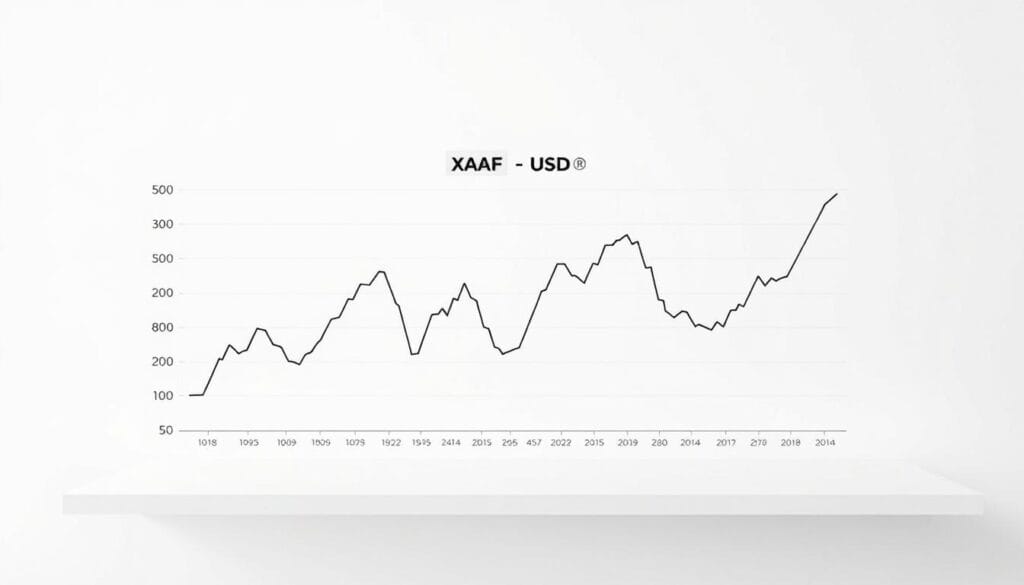
XAF兑USD汇率
Use online currency converters or financial sites to check the XAF 到 XAF 美元 rate. The rate changes due to economic factors. For the latest and most accurate rates, rely on trusted currency conversion services.

Exchange Rate Trends and Forecasts
会心 汇率走势 helps you plan better. The XAF’s link to the Euro affects its value against the USD. Economic forecasts and global trends play a big role in these rates.
| 货币对 | 当前利率 | 趋势 |
|---|---|---|
| XAF/USD | 650 | 稳定的 |
| EUR/USD | 1.10 | 波动 |
Using Online Currency Converters for Equatorial Guinea
在线的 currency converters are handy for checking rates. They offer up-to-date data for planning your budget. Always choose a reliable service for accurate rates.
Banking and Financial System Structure
It’s important to know about the banking system in Equatorial Guinea. This knowledge helps you understand the country’s financial scene. The financial setup is designed to help the economy grow, with key players in the field.
中非国家银行(BEAC)的作用
The Bank of Central African States (比阿克) is the central bank for Equatorial Guinea and other countries. It controls the money supply and keeps the 金融体系 stable. 比阿克 also issues the Central African CFA Franc, which is the local currency.
BEAC manages the country’s foreign exchange, sets interest rates, and watches over banks. It works hard to keep the economy stable. This helps the country grow and makes it easier to do business.
商业银行业概况
Commercial banks in Equatorial Guinea offer many financial services. They help both individuals and businesses. These banks follow rules set by BEAC to ensure they are safe and reliable.
They provide services like savings accounts, loans, and international money transfers. This helps the economy and makes sure more people can access financial services. A strong banking system is key for the country’s growth.
了解 Equatorial Guinea’s banking and 金融体系 helps you understand the financial scene. It prepares you to make smart choices about your money in the country.
Practical Currency Exchange Tips for American Travelers
赤道几内亚的 currency system might seem tricky to American travelers. But knowing where to exchange currency can make a big difference. As you prepare for your trip, understanding currency exchange will help ensure a smooth and enjoyable journey.
Official Exchange Locations in Major Cities
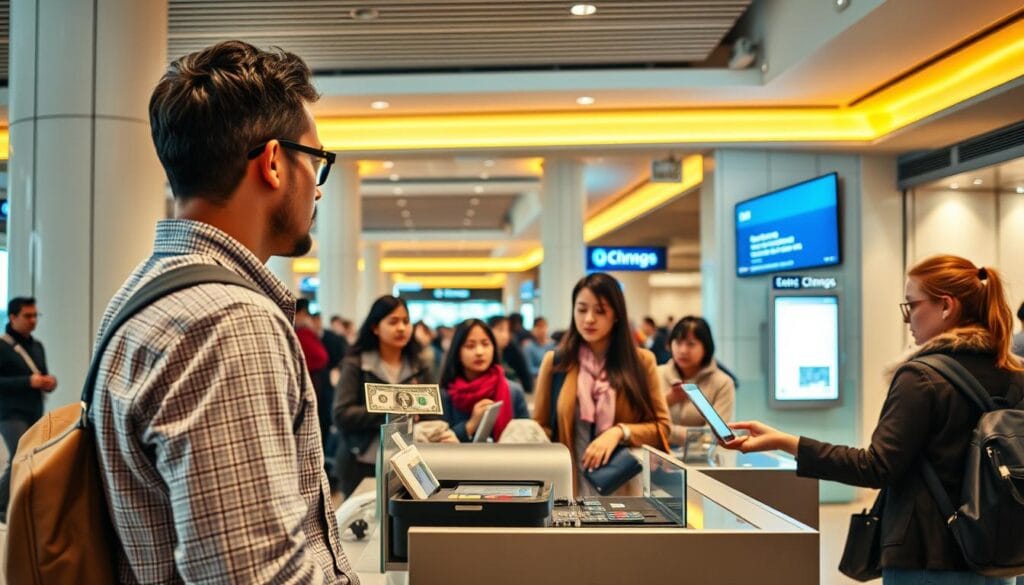
In major cities like Malabo and Bata, you can find official exchange locations. Here, you can exchange your money for the local currency, the Central African CFA Franc (XAF). It’s advisable to exchange your currency at these authorized locations to avoid scams or bad 汇率.

Airport and Hotel Exchange Services
At Malabo International Airport, you can exchange your currency at the airport’s office. Some hotels in Malabo and Bata also offer currency exchange services. But their rates might not be as good as official exchange locations. Be sure to check the rates and any associated fees before making a transaction.
Credit Card and ATM Availability
Credit card acceptance is limited in Equatorial Guinea. But you can use your card at some larger hotels, restaurants, and tourist facilities. There are also a few ATMs in Malabo and Bata that accept Mastercard and Visa. It’s a good idea to have some local currency for smaller purchases and transactions where credit cards are not accepted.
Currency Exchange Documentation Requirements
When exchanging currency, you may need to show identification, like your passport. It’s also a good idea to have some knowledge of the current exchange rates to ensure you’re getting a fair deal. Some exchange locations might require more documentation, so it’s best to be prepared.
Economic Factors Influencing Equatorial Guinea’s Currency
Equatorial Guinea is a big oil producer in sub-Saharan Africa. Its economy heavily relies on oil exports. This affects the stability of its currency, the Central African CFA Franc (XAF).
The oil industry has a big impact on the economy. It brings in a lot of money. But it also changes 汇率 and economic stability.
Oil Industry Impact on Currency Stability
The oil industry is key to Equatorial Guinea’s economy. It makes up a big part of the GDP. Changes in oil prices affect the country’s earnings and the XAF’s value.
Key statistics illustrating the oil industry’s impact:
| 年 | Oil Production (barrels per day) | GDP增长率(%) | XAF/USD Exchange Rate |
|---|---|---|---|
| 2020 | 120,000 | -2.5 | 550 |
| 2021 | 115,000 | 3.2 | 580 |
| 2022 | 110,000 | 2.1 | 600 |
Recent Economic Developments Affecting Exchange Rates
Recent changes in oil production and prices have hit Equatorial Guinea’s economy. These changes affect the XAF’s value against the USD.
To keep up with exchange rates and economic news, it’s important to watch reliable sources and forecasts.
货币管制与限制
Equatorial Guinea has rules for bringing in and taking out money. It’s important for travelers and businesses to know these rules to avoid trouble.
Import and Export Limitations
The Central African CFA Franc is used in Equatorial Guinea. Travelers can bring in foreign currency without limits. But, it’s important to tell customs about big amounts to avoid problems.
Exporting money has its own rules. Exporting a lot of CFA Francs might need permission. Always check the latest rules before trying to take out a lot of money.
Reporting Requirements for Large Transactions
In Equatorial Guinea, big money deals must be reported. Deals over a certain amount need to be told to the Bank of Central African States (BEAC).
Also, banks have to report any strange money deals to fight money laundering. So, make sure all your money dealings are real and well-documented.
To follow these rules, you should:
- Look up the latest rules on bringing in and taking out money.
- Always tell about big money deals.
- Keep all your money dealings documented.
By knowing and following these money rules, you can stay out of trouble and have a smooth time with money in Equatorial Guinea.
数字支付和移动支付选项
The financial world in Equatorial Guinea is changing fast. New digital payment 和 移动支付 options are coming in. These changes make life easier for both locals and visitors.
Available Electronic Payment Systems
一些 electronic payment systems are now in Equatorial Guinea. 移动支付服务 are especially popular. They let users make financial moves with their phones.
This has helped more people get into the financial world. It’s especially true in places where banks are hard to find.
Digital wallets and other electronic payment platforms are also showing up. They give users many ways to handle their money. These systems are safe, with things like encryption and two-factor authentication to keep transactions safe.
Future Fintech Developments
The future of fintech in Equatorial Guinea is bright. There’s a push to make digital payment systems better. 区块链技术 and other new ideas are being looked at to make transactions safer and faster.
As fintech grows, we’ll see easier-to-use services. This will make the financial world more accessible. It will also cut down on the need for cash, making everything more efficient and convenient.
Regional Economic Integration and Monetary Policy
Being part of CEMAC has big effects on Equatorial Guinea’s economy and money policy. As a CEMAC member, Equatorial Guinea works with other countries to grow their economies together. This helps them trade better and work together more.
CEMAC’s Role in Regional Integration
CEMAC helps countries in the area work together better. They use the Central African CFA Franc (XAF) as their money. This makes it easier for them to trade with each other.
CEMAC Membership Benefits
Being in CEMAC helps Equatorial Guinea a lot. They get:
- Help in working with their neighbors
- A stable money backed by France
- Easier trade because they all use the same money
- Help with money policy from the Bank of Central African States (BEAC)
The BEAC says, “Using one money in CEMAC cuts down on risks and costs. This helps trade and investment grow.”
Potential Currency Reforms and Their Implications
There are talks about changing the money in CEMAC. Some want a new money instead of the CFA Franc. This could change a lot for Equatorial Guinea’s economy.
Changing the money could bring good things like:
- More control over money policy for each country
- Less need for France to back their money
- More freedom for each country’s economy
But, changing money is a big deal. It needs careful thought to avoid problems.
As Equatorial Guinea looks to the future, it’s important to understand how joining CEMAC and possible money changes affect it. This is key for businesses and investors.
Conclusion: Essential Currency Knowledge for Equatorial Guinea Visitors
When planning your trip to Equatorial Guinea, 了解货币 is key. The Central African CFA Franc is the official money. Understanding its rules, exchange rates, and financial services is important.
You can exchange money at official spots in big cities, airports, and hotels. Knowing the current exchange rates is crucial to save money. Online currency converters can keep you updated on rates.
Having the right currency knowledge makes your visit to Equatorial Guinea better. As a visitor, 了解货币 helps avoid problems. It ensures your trip is smooth and enjoyable.
常问问题
赤道几内亚的官方货币是什么?
The official currency of Equatorial Guinea is the Central African CFA Franc (XAF).
Is the Central African CFA Franc used in other countries besides Equatorial Guinea?
Yes, it’s used by six countries in Central Africa. These include Cameroon, Central African Republic, Chad, Republic of the Congo, and Gabon, along with Equatorial Guinea.
What is the currency code and symbol for the Central African CFA Franc?
The code is XAF, and it’s known as F.CFA.
Is the Central African CFA Franc pegged to any other currency?
Yes, it’s pegged to the Euro. This keeps the exchange rate stable.
What were the currencies used in Equatorial Guinea before adopting the Central African CFA Franc?
Before 1985, Equatorial Guinea used different currencies. This was during its colonial and pre-colonial times.
What denominations are available for Central African CFA Franc banknotes and coins?
Banknotes and coins come in various denominations. They have advanced 安全功能 to fight counterfeiting.
How can I get the current exchange rate for the Central African CFA Franc to USD?
You can find the current exchange rate online. Use 货币 converters to see the rate between the Central African CFA Franc and USD.
What is the role of the Bank of Central African States (BEAC) in Equatorial Guinea’s financial system?
The Bank of Central African States (BEAC) oversees the 金融体系. It works to maintain stability and issues the currency.
赤道几内亚普遍接受信用卡吗?
不,, credit cards are not widely accepted. But, you can find ATMs in larger cities.
Are there any regulations regarding the import and export of currency in Equatorial Guinea?
Yes, there are rules for importing and exporting currency. Large transactions might need to be reported to authorities.
Are digital payment and mobile money options available in Equatorial Guinea?
是的,, digital and mobile payment options are growing. You can use electronic payment systems and look forward to fintech advancements.
What are the benefits of Equatorial Guinea’s membership in CEMAC?
Being part of CEMAC shows Equatorial Guinea’s commitment to regional economic integration. It could bring economic stability and cooperation with other members.